Why Do Properties Appear in Wrong Locations on Real Estate Portals?
6 de agosto de 2026 · 5 min min read
Discover why properties appear in incorrect zones on DR portals and how to verify the real location before your first contact.
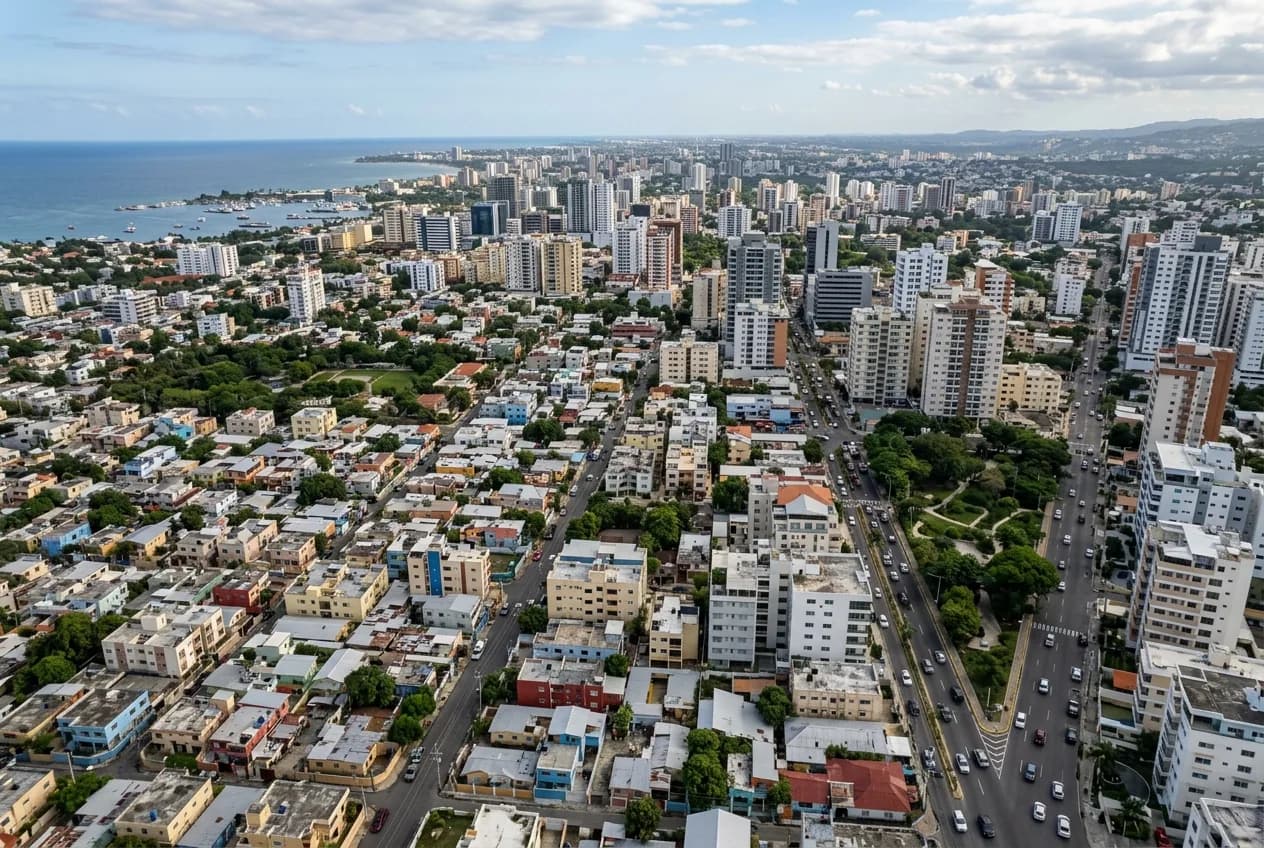
Why Do Properties Appear in Wrong Locations on Dominican Real Estate Portals?
It happens to you constantly: you find an apartment "in Piantini" for an incredible price, you contact the agent, and it turns out it's in Los Alcarrizos. Or you see a house "in Santiago" that's really in a rural area 40 minutes from downtown. The frustration is understandable, but the problem isn't you.
The property classification system in the Dominican Republic runs on an honor system that no one supervises. Traditional portals trust that each agent writes the location correctly, without verifying whether it matches reality.
The Hidden Problem of Manual Classification
Corotos, SuperCasas, Facebook Marketplace, and other portals all work the same way: the agent types the area where they say the property is, and that information automatically appears in the listing. There's no cross-checking. No real coordinates. No oversight.
Toca Timbre
Propiedades reales. Agentes verificados. Tú decides sin miedo.
This creates three problems that buyers experience frequently:
Optimistic classification: An agent publishes a property "in Naco" when technically it's on the edge with another less expensive zone. From their perspective, it's "close" to Naco. From yours, you paid Naco prices for a different location.
Genuine geographic error: Especially common with new agents who don't fully master sector boundaries. A property shows up in Gazcue when it's really in the Colonial Zone.
The traffic strategy: Some agents intentionally classify properties in more-searched zones to generate more leads, hoping to "educate" the buyer afterward about the real location.
The Real Experience of the Dominican Buyer
 Carla has been searching for an apartment in Santo Domingo for three weeks. She works in the Colonial Zone and wants something "close" to avoid rush-hour traffic. She's contacted eight different agents after seeing properties "in Downtown" or "in Gazcue".
The conversation is always similar:
— "Hi, I saw the apartment you listed in Gazcue for RD$4.5 million" — "Oh yes, but that one's more toward Ciudad Nueva" — "Ciudad Nueva? The listing says Gazcue" — "Yes, but it's close. Do you want me to show it to you?"
Carla wastes time. The agent loses credibility. And both end up frustrated by a process that should be more straightforward.
Why This Happens Systematically
Manual classification without verification creates perverse incentives. Agents know more people search for Piantini than Los Alcarrizos. More people filter for "Santiago Downtown" than "rural Santiago". It's basic digital marketing math.
But the real cost is paid by the buyer: wasted time, incorrect expectations, and growing distrust of the entire search process.
Traditional portals don't solve this because their model depends on volume of listings, not precision. The more agents publish, the better for their traffic. Verifying locations requires resources they'd rather not invest.
How to Identify Real Locations Before Making Contact
Before messaging any agent, you can reduce these surprises by verifying some details:
Ask for the specific street: Don't accept just "Piantini" or "Naco". Ask for the exact street or at least the specific area ("near which avenue").
Use Google Maps as reference: If they give you an approximate address, look it up before getting excited about the price or photos.
Notice consistency in their profile: If an agent has 20 properties "all in premium zones", it's statistically unlikely.
Compare prices by zone: An apartment in Piantini for RD$3 million probably isn't in Piantini, or has serious problems.
The Value of Real Coordinates
Some more structured systems use GPS coordinates instead of manual classification. This means each property appears at its exact location on the map, regardless of what the agent types.
The difference is significant: instead of seeing "Apartment in Piantini", you see a specific point on the map that lets you evaluate the real location before any contact. No surprises. No wasted time. No incorrect expectations.
The Impact on Your Buying Process
Incorrect location doesn't just affect your time. It affects your entire financial analysis. If you're calculating how much to spend based on "living in Piantini", but the property is really in another area, all your numbers change: resale value, rental ease in the future, commute time, nearby services.
Starting with correct information from the first moment lets you make more informed decisions and avoid the frustration of restarting your search each time you discover a property isn't where you thought.
A Necessary Reflection on the Process
The Dominican real estate market doesn't have to be a maze of confusing information. The technology exists to show precise locations. The difference lies in choosing platforms that prioritize accuracy over volume.
Your time has value. Your buying process deserves clarity from first contact. And a property's real location should be the first thing you know, not the last thing you discover.
If you're going to spend months of your life and a significant portion of your savings on a property, you deserve to start with correct information. Where you start searching determines the quality of everything that follows.
To explore properties with verified locations through real coordinates, you can use Toca Timbre, an app where buyers can see the exact location of each property on the map and contact verified agents directly via WhatsApp. You can explore it at: Toca Timbre
Frequently Asked Questions
Is It Legal for Agents to Publish Properties in Incorrect Locations?
There's no specific regulation prohibiting classification errors on real estate portals. However, misleading information could be considered false advertising. Most cases are genuine errors or subjective interpretations of "close to" a zone, rather than intentional deception.
How Can I Verify if a Location is Correct Before Contacting the Agent?
Ask for the specific street or exact reference point before scheduling visits. Use Google Maps to verify the real area. Compare the price with similar properties in that specific area. If there are obvious inconsistencies, ask directly about the exact location.
What Do I Do If I Discover a Property Isn't Where the Listing Says?
Communicate directly with the agent to clarify if it was an error. If the real location doesn't interest you, simply thank them and continue your search. You can report systematic incorrect information to the portal where the listing appeared, though most don't have active verification processes.
Sources
- How to Verify If an Account or Profile Is in Good Condition — https://www.facebook.com/100080242003696/posts/c%C3%B3mo-verificar-si-una-cuenta-o-un-perfil-est%C3%A1-en-buenas-condiciones/753340064017387/
- Information About Verified Pages and Profiles — https://www.facebook.com/help/www/196050490547892?locale=es_LA
- SOLUTION: Temporary Restriction on Facebook — https://www.youtube.com/watch?v=ixvTzbiyaEA
- Confused About the Difference Between Your Personal Facebook Account — https://www.instagram.com/reel/DLIisCySUBT/
- Types of Facebook Profiles You Should Know — https://www.tiktok.com/@diegocabreramonetizacion/video/7505974314554985734