Why the Same Apartment Appears in Different Neighborhoods
4 de agosto de 2026 · 5 min min read
Discover why a property might show up in Piantini on one portal and Naco on another. The real location matters more than you think.
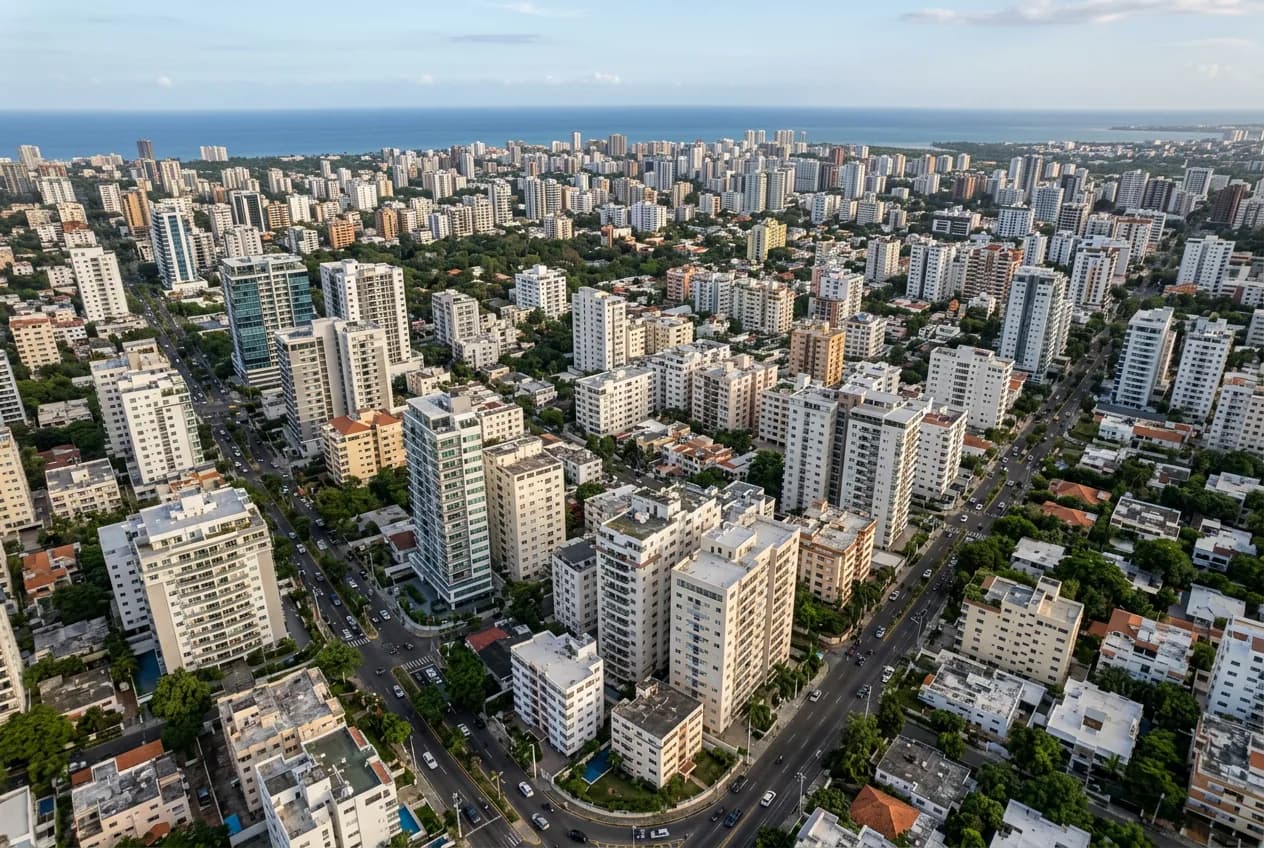
Why the Same Apartment Shows Up in Different Neighborhoods Across Portals
Carla had been apartment hunting in Santo Domingo for two weeks. She saved several favorites on Corotos and SuperCasas, but something caught her attention when comparing the same properties across different portals.
A RD$4.5 million apartment appeared as "Piantini" on Corotos, "Naco" on SuperCasas, and when she found it on another platform, the map pin clearly fell in Paraíso. Same price, same photos, same agent contact number.
The Problem with Manual Classification on Real Estate Portals
In the Dominican Republic, most real estate portals rely completely on what the agent writes when publishing. There's no location verification. If the agent considers their property "near Piantini" or "in the Naco area," they simply select that option from the dropdown menu.
Toca Timbre
Propiedades reales. Agentes verificados. Tú decides sin miedo.
This practice creates real confusion for those searching for home purchase in the Dominican Republic, especially when border neighborhoods overlap or when agents interpret each sector differently.
How This Affects Your Property Search
 Imagine you're filtering by "Piantini" because you want to be close to the metro and specific shopping centers. A perfect apartment appears in your search. You put down RD$50,000 based on the location. When you visit, you discover it's actually 15 minutes' walk away from where you expected.
Or worse: you're planning your move to Santo Domingo from New York. You research the neighborhood, look at Street View, calculate distances to work. Everything based on what the portal says. You arrive and reality is different.
Why Location Confusion Happens
Neighborhood marketing: Agents know certain areas have better perception and higher demand. An apartment on the border of two sectors naturally gets promoted with the more attractive area's name.
Fuzzy borders: Unlike some countries, many Dominican neighborhoods don't have officially defined boundaries. The borders between Piantini, Naco, and Paraíso can be interpreted several ways.
Lack of verification: Traditional portals don't cross-reference the address with real coordinates. The system trusts the agent classified it correctly.
The Impact on Your Home-Buying Process
This location confusion directly affects your first contact with a real estate agent. When you call asking about "the Piantini apartment," you're already starting the conversation with inaccurate information.
Verified real estate agents typically clarify exact location from the first contact. But in a market where anyone can post properties, this clarification doesn't always happen.
What to Do Before Contacting the Agent
Before getting excited about a property based solely on the neighborhood it shows in the portal:
-
Request the exact address: A serious agent has no problem providing the specific street once you show real interest.
-
Use satellite maps: Google Maps lets you see exactly what's around the real address.
-
Ask for nearby landmarks: "Is it closer to the Metro or to the Malecón?" gives you better context than just the sector name.
-
Confirm travel times: If location is important to you, ask about real commute times to key places.
The Importance of Real Coordinates in Real Estate Searches
More modern portals have started implementing GPS coordinate systems for each property. This means you see a pin on the map that corresponds to the real approximate location, not the neighborhood the agent chose from a menu.
This technology is especially valuable for buyers living outside the country who depend entirely on digital information to make decisions. Seeing exactly where the property falls on the map eliminates assumptions and misunderstandings.
The Emotional Cost of Wrong Expectations
Beyond the practical side, there's an emotional cost when the real location doesn't match your expectations. After falling in love with "her Piantini apartment" and discovering it was actually in another neighborhood, Carla felt distrust toward the entire home-buying process.
That initial distrust can turn what should be an exciting experience into a process full of doubts. Every new property generates the question: "Is it really where it says it is?"
A Reflection on Starting Your Search
Location is probably the most important factor in real estate, but also the easiest to misunderstand in traditional portals. It's not that agents want to deceive—they simply work with systems that allow subjective interpretation.
Clarity from the start isn't a luxury, it's a necessity. Knowing exactly where you're considering living or investing lets you make informed decisions and reduces the natural anxiety of the home-buying process.
Next time you see a property that interests you, remember that the neighborhood name is just the starting point. The real location determines whether that property actually works for your life.
Exploring With Greater Clarity
If you want to explore the Dominican real estate market with more precision from the start, tools like Toca Timbre show properties with real coordinates on an interactive map. The app connects buyers with verified agents and allows direct WhatsApp contact, eliminating location confusion from the first moment. You can explore options at Toca Timbre
Frequently Asked Questions
Why don't agents put the exact address in portals?
Many agents avoid publishing full addresses for property security and to ensure first contact goes through them. However, a professional agent should provide specific location once you establish serious communication. The key is finding portals that verify approximate location without compromising security.
How do I know if I'm really seeing the correct location?
The most reliable way is asking the agent for specific nearby references and verifying them on Google Maps. Ask about supermarkets, gas stations, or known points within 5 minutes' walk. An agent who knows the property well can give you these references without hesitation.
What should I do if I discover the location is different after reserving?
If the location difference is significant and affects your buying decision, you have the right to review your reservation. Document the discrepancy between what was advertised and reality. An ethical agent should be transparent about locations from the start and work with you to resolve misunderstandings.
Sources
- Toca Timbre — Verified properties in the Dominican Republic — https://www.tocatimbre.com/
- SuperCasas.com - Dominican Republic - sale and rental — https://m.supercasas.com/
- Real Estate Listings on Corotos - Buy and Sell — https://www.corotos.com.do/ssl/santo-domingo/distrito-nacional/residencial-rosmil/c/inmuebles?page=2&q%5Bsorts%5D=published_at+desc&srsltid=AfmBOopimD5IYCUEf3COUueKa8CPcecjdvZLJZ_WgcGiMbf4trDi4Dqd
- Toca Timbre (@tocatimbrerd) · Santiago — https://www.instagram.com/tocatimbrerd/