Why the location you see online isn't where the property actually is
1 de abril de 2026 · 5 min min read
Real estate portals show the area the agent typed in, not actual coordinates. Learn how to verify before contacting.
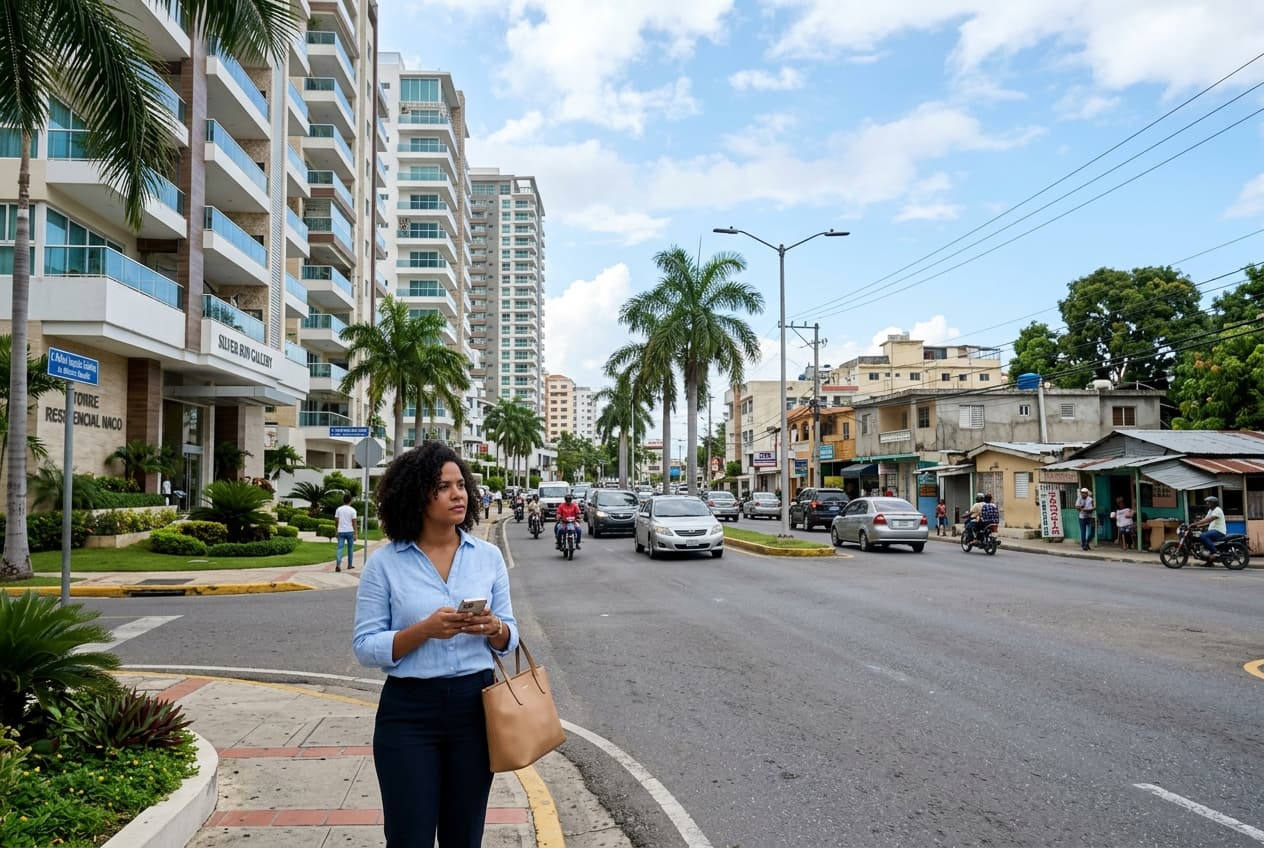
When Carla saw the apartment on SuperCasas, everything seemed perfect. Two bedrooms, RD$4.2 million, location: Naco. The price matched the area, the photos looked good, and the agent's number responded quickly. She scheduled a viewing for Saturday.
When she arrived at the address they sent, she realized something: it wasn't in Naco. It was six blocks beyond the boundary, technically in a different neighborhood. Same district, but a completely different price per square meter reality.
The problem nobody explains about online listings
Most buyers assume that real estate portals verify the location they show for each property. This belief is incorrect—and it's expensive.
Toca Timbre
Propiedades reales. Agentes verificados. Tú decides sin miedo.
In the Dominican Republic, platforms like Corotos, SuperCasas, and Facebook Marketplace work the same way: the agent writes down the area where they want to classify their property, and that information appears in your search with no verification whatsoever. There's no system that confirms whether that property actually falls within the boundaries of the stated neighborhood.
This means that when you filter by "Naco" or "Piantini," you're seeing properties that someone decided to label that way, not necessarily properties actually located there.
How location classification really works
The home-buying process starts with an online search, but this is where the first confusion appears. Portals depend entirely on the information entered by whoever posts the listing.
When a real estate agent uploads a property, they select the area from a dropdown menu or type the neighborhood name. There are no verified GPS coordinates, no cross-validation with official maps, no oversight.
This creates situations like Carla's: properties that appear in premium neighborhoods but are actually located in bordering areas or even different neighborhoods altogether, with different values per square meter.
The importance of real coordinates in your search
In the Dominican Republic, the government requires precise coordinates for cadastral surveys through Regulation 695-22. However, this precision doesn't reach the real estate portals where most people start their property search in the DR.
Verifying the actual location before your first contact with a real estate agent allows you to:
- Confirm that the price matches the actual neighborhood
- Evaluate the accessibility and services of the exact area
- Avoid unnecessary trips to misclassified properties
- Negotiate from an informed position
The National Geographic Institute offers free georeferencing services, but this process takes about a month and requires that you've already identified a specific property.
Signs that the location may be misclassified
Prices inconsistent with the area
If you find a property significantly cheaper than the neighborhood average, consider that it may be located in a bordering area or different neighborhood.
Vague location descriptions
Listings that mention "near" or "close to" without specifying exact streets often indicate that the property isn't in the main neighborhood mentioned.
Photos that don't show the surroundings
When images focus only on interiors and avoid showing exterior views or neighborhood references, it can be a sign of imprecise location.
How to verify before contacting any agent
Before calling or messaging an agent, you can take steps to verify the information:
- Request the exact address: A legitimate agent can provide at least the main street or specific landmarks.
- Use Google Maps to verify: Search the address provided and confirm it actually falls within the stated neighborhood boundaries.
- Compare with average price: Research the price per square meter in the real neighborhood versus the advertised one.
- Ask for GPS coordinates: Professional verified real estate agents can provide this information.
The difference between stated area and actual location
María, another buyer, found three listings of the same apartment on different platforms. One classified it as "Piantini," another as "Naco," and the third as "Mirador Sur." Same apartment, three different areas, three different price ranges.
This situation illustrates why you need to see the exact point on a map before investing time in contacting agents or scheduling viewings.
When you have the real coordinates, you can evaluate specific factors like:
- Actual proximity to public transportation
- Access to medical and educational services
- Traffic levels in the exact area
- Safety of the specific neighborhood
Why this matters in your buying process
Starting your home purchase in the Dominican Republic with incorrect location information affects all subsequent decisions. From financial evaluation to agent selection, everything is based on that first impression of where the property is.
An apartment on the border between Naco and Villa Juana doesn't have the same value as one in central Naco, yet both can appear classified the same way on traditional portals.
This precision from the start not only saves you time, but allows you to make informed decisions about financing, since banks also evaluate the collateral value based on the actual location of the property.
A clearer search from the beginning
The Dominican real estate market is growing, but the way properties are searched online maintains outdated systems that don't prioritize location accuracy.
Verifying coordinates before contacting agents isn't paranoia; it's a practice that lets you start your buying process with clarity about what you're actually evaluating.
Toca Timbre is an app where buyers can explore properties with real coordinates, allowing you to see exactly where each property falls on the map before contacting agents via WhatsApp. You can explore at Toca Timbre.
Frequently asked questions
Why do agents misclassify locations?
It's not always intentional. Many times agents use the better-known neighborhood closest to the property to make searching easier, or they classify based on how they perceive neighborhood boundaries. The lack of automatic verification on portals allows this practice to continue.
How can I verify GPS coordinates for a property?
You can request the coordinates directly from the agent or use services from the National Geographic Institute. You can also ask for the exact address and verify in Google Maps that it actually falls in the stated neighborhood. Some newer portals already include verified coordinates.
What do I do if I discover the location is wrong after contacting the agent?
Be direct but polite. Explain that you need to confirm the exact location before proceeding. A professional agent will understand your concern and provide the correct information. If there's resistance or evasion, consider looking for other options.
Sources
- Positioning and Georeferencing of points — IGN República Dominicana