Properties in San Francisco de Macorís: What Most People Overlook
27 de noviembre de 2026 · 5 min min read
Learn how to organize your property search in San Francisco de Macorís: area, budget, agent, and visit, before committing to anything.
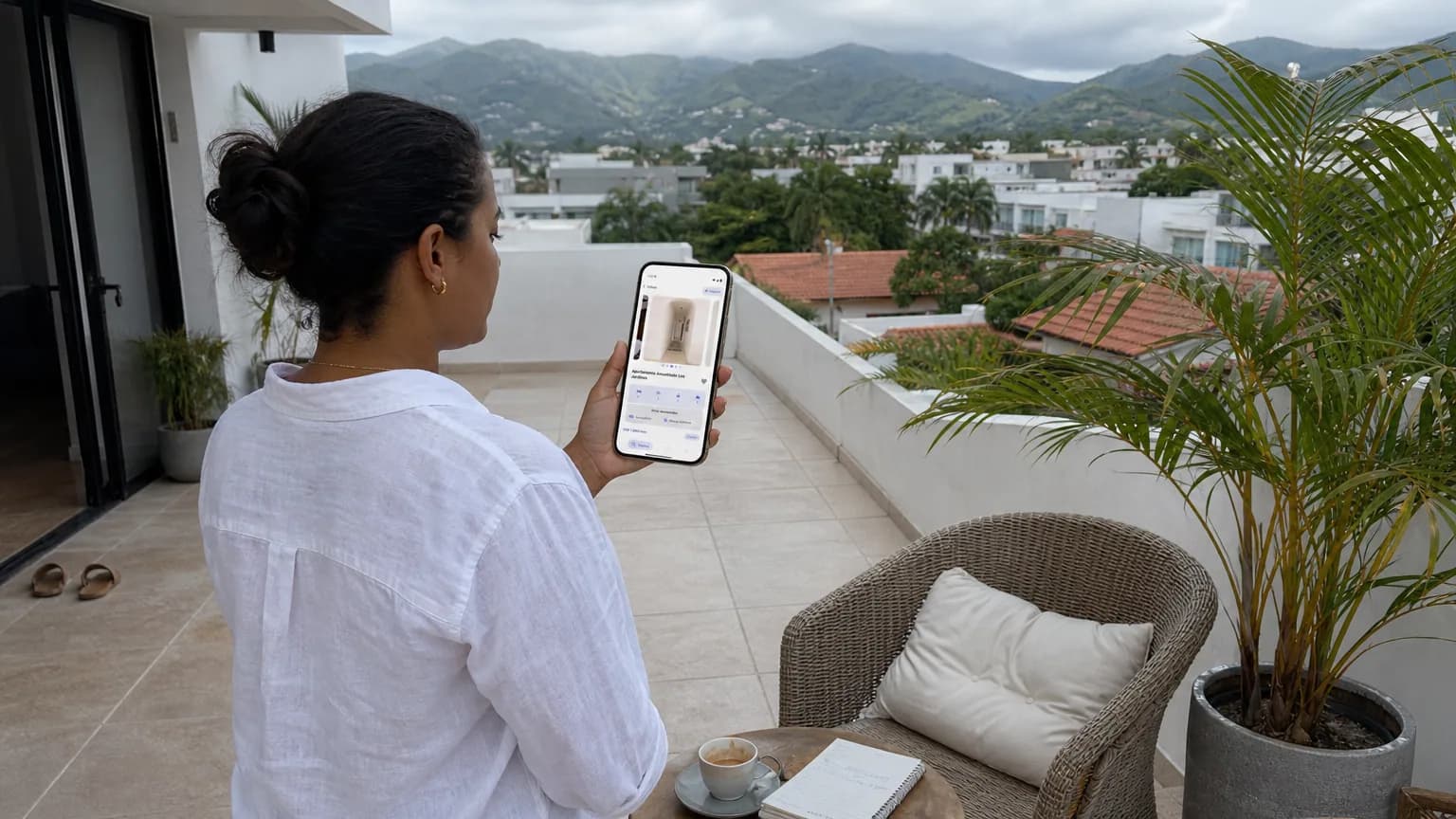
Searching for properties in San Francisco de Macorís feels like what many people experience in other cities across the country: there are options, but they arrive disorganized. Ads on social media, WhatsApp messages, prices in pesos and dollars, photos with no address. Most people look at Santo Domingo, Santiago, or Punta Cana, so this city in the Cibao region falls off the radar for many buyers.
The fact that few people look at it doesn't make it risky or special. It just means there is less organized information and it helps to have a method. This article doesn't list properties or recommend agents. It explains how to make sense of the process, from scrolling to the visit.
Properties in San Francisco de Macorís: What You See and What You Don't
When someone starts exploring, they find apartments, houses, and land in different developments. Listed prices vary widely. Some apartments are advertised from around RD$7 million, and others in dollars, in ranges from about US$73,000 to US$138,000. That contrast tells you something important: comparing properties based only on photos leads to wrong conclusions. Size, finish level, floor, location, and what the price includes all change.
Toca Timbre
Verified properties, certified agents. You just decide.
These figures are listed prices and can change. They help you form an initial idea of the range, but they don't mean two properties are comparable.
A Common Misconception: “If the listing is informal, it's suspicious”
 Many buyers believe that a post with few photos, a slow reply, or a short description is already a sign of a scam. That isn't necessarily true. In a smaller market that relies heavily on social networks and messaging, it's normal to see listings in different formats, properties passed between several intermediaries, and irregular response times.
It helps to separate two things:
- Market friction: little visible inventory, outdated listings, slow replies, irregular formats. It's uncomfortable, but it can be normal.
- Lack of traceability: not knowing who is selling, not being able to confirm the owner, pressure to pay before reviewing documents, or terms that keep changing. This does require stopping and verifying.
A normal process can start with an informal conversation, but it should move toward verifiable information. If the opposite happens, it's worth remembering why “reserve today” is a red flag.
Carla's Moment: Twenty Listings and No Answers
Carla lives outside the city and starts saving listings. Within a few days she has a folder with twenty options, but she doesn't know which area suits her, how much she can really pay, or who is behind each ad. She feels she has made a lot of progress and, at the same time, that she hasn't decided anything.
She asks a cousin who lives in San Francisco de Macorís. The conversation helps: her cousin knows the streets, travel times, and landmarks. But her cousin's priorities aren't Carla's. A close person's opinion adds context; it doesn't replace an order.
That frustration is normal. It doesn't mean Carla is doing something wrong. It means the market doesn't offer her a clear path and that she has to build one herself.
The Five-Step Process, From Scrolling to the Visit
- Choose the area. Before looking at five apartments, define two or three possible areas based on work, family, schools, services, road access, noise, water, electricity, and parking. If you don't know the city, an exploratory visit to the neighborhoods is worth more than saving twenty more listings. To help with this, it may be useful to search for property in the DR with clear criteria and useful maps.
- Set a total budget. The listed price is not the full cost. Consider the down payment, initial deposit, legal fees, applicable taxes or charges, registration, appraisal, financing, moving costs, and possible repairs.
- Work with an identifiable agent. Instead of messaging every account, choose one or two intermediaries who respond with their full name, company, contact details, and the scope of their representation. There are three official sources for verifying a real estate agent, including checking the company's RNC with the DGII.
- Visit a few well-filtered options. Three visits with good criteria are better than five in a row without any. Before going, ask for the approximate address, final price, square meters, maintenance fee, availability, and delivery conditions. During the visit, check that the photos match the property and observe ventilation, dampness, noise, access, and the condition of the installations.
- Investigate documents before committing. The visit is not a purchase decision.
What Happens After the Visit
If a property moves forward, the legal review should happen before you hand over a significant sum or sign a promise to purchase. The guides consulted agree on reviewing the Certificado de Título (Title Certificate), requesting a recent certification of legal status to detect liens or lawsuits, confirming the seller's identity and authority to sell, reviewing the survey (deslinde) and plans, and checking for unpaid taxes or maintenance debts. A sale without an approved survey can prevent registration with the land registry.
The prudent step is to hire an independent attorney, chosen by you and not only by the seller or developer. If an agent avoids this topic, it's worth reviewing the warning signs when they avoid talking about registration.
Final Thoughts
The problem isn't that you're looking outside the most mentioned cities, or that the local market is less polished. The problem is a system that forces the buyer to build the order on their own. Scrolling is useful for discovering possibilities; the decision is made outside the screen, with local context, disciplined comparison, and independent verification. Moving slowly, in this order, is also progress.
If you want to explore the market more clearly, Toca Timbre is an app where buyers can view properties listed by agents and contact them directly on WhatsApp. You can learn more here: Toca Timbre. No rush: it's simply a place to start looking with more order.
Frequently Asked Questions
Is it a good idea to search for properties in San Francisco de Macorís if I live in another city?
It's possible, as long as you don't do it only from a screen. It's worth defining two or three areas and making at least one exploratory visit to understand travel times, noise, and services. Photos don't show that.
It also helps to be clear about your total budget and to work with an identifiable intermediary, so you don't rely on scattered messages.
How do I know if an informal listing is a warning sign?
A listing with few photos or slow replies is not a risk on its own. The important signal is a lack of traceability: no one explains who is posting, in what capacity they are acting, or what the next formal step is. Pressure to send money before reviewing documents is also a signal.
If the terms can't be put in writing or verified, the prudent thing is to stop.
What documents should be reviewed before buying in the city?
At a minimum, the Certificado de Título and the Certificación de Estado Jurídico from the Registro de Títulos (Title Registry). You confirm that the owner, location, and measurements match, and you check whether there are mortgages, seizures, or other encumbrances. Where applicable, the survey (deslinde) is also reviewed.
Proof of payment of the IPI (property tax), municipal fees (arbitrios), and maintenance fees may also be requested. An independent attorney can review this with you. This is general guidance, not personalized legal advice.
Sources
On Toca Timbre
- Why 'reserve today' is a red flag in the Dominican Republic
- How to search for property in the DR without the hassle and with useful maps
- How to verify a real estate agent in the DR: 3 official sources
- Does your agent avoid talking about registration? Warning signs in the DR
External references