Title vs. Possession: The Hidden Trap When Buying a House in the DR
15 de junio de 2026 · 5 min min read
The difference between clean title and informal possession determines everything in real estate purchases in the Dominican Republic. Here's what to look for.
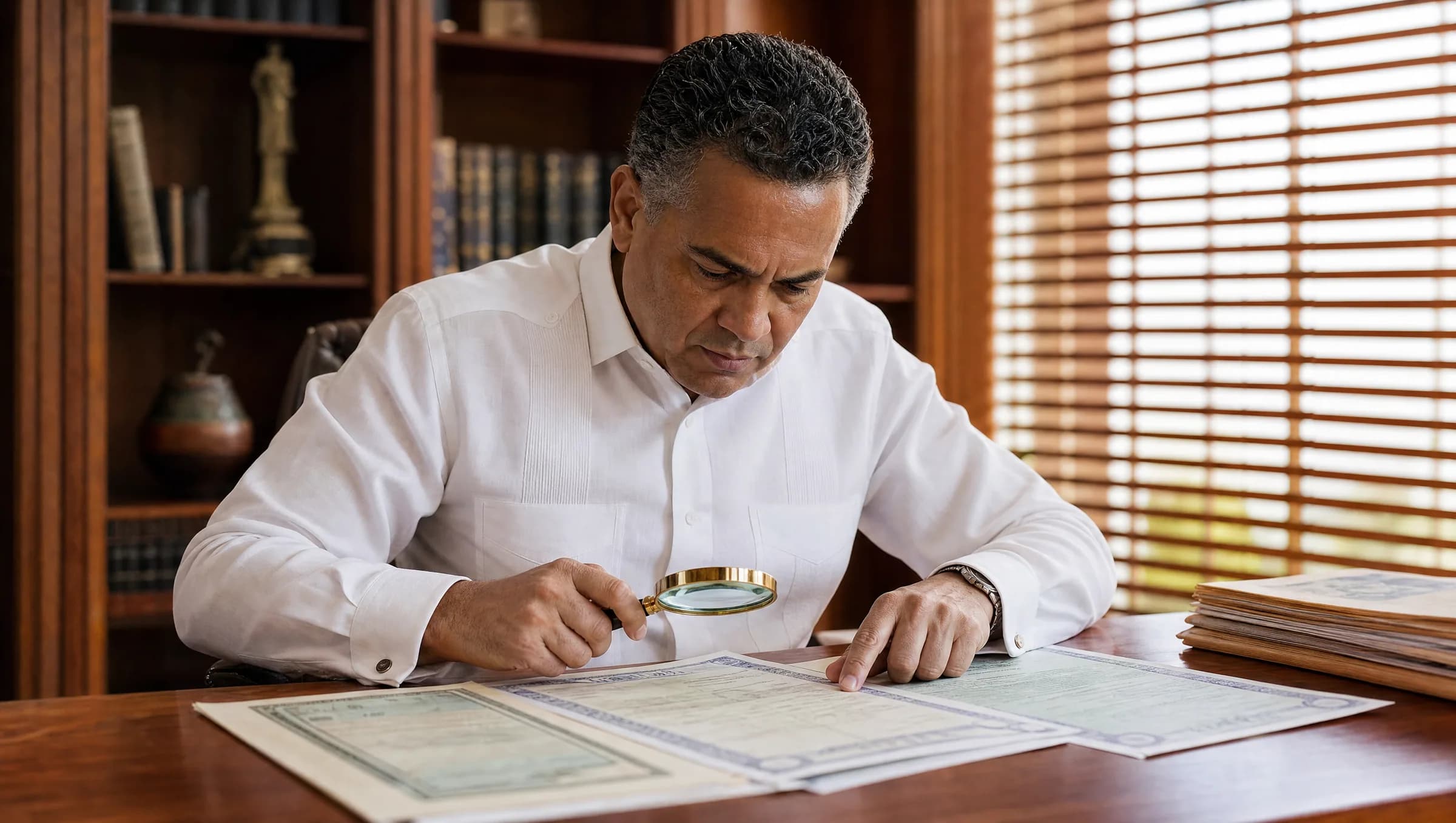
Title vs. Possession: The Hidden Trap When Buying a House in the DR
Carla has been searching for her first house in Santiago for three months. She's seen dozens of properties, compared prices and even calculated loan installments. But there's something that doesn't appear in any listing and can determine whether her RD$3.5 million investment will be safe or become her worst financial nightmare.
That invisible difference is between buying a property with clean title and buying simple informal possession. And it's the most common trap in Dominican real estate market.
The mistaken belief that costs millions
Toca Timbre
Propiedades reales. Agentes verificados. Tú decides sin miedo.
Many buyers believe if the seller "has always lived there" and has "papers for the property," the purchase is safe. This belief has cost Dominican families millions who discovered too late they'd bought possession rights, not a property with registered title.
The reality is more complex: in the Dominican Republic two distinct legal worlds coexist. The formal world of the Title Registry, where every property has official documents issued by the State, and the informal world of possessions, where families occupy and use land without registered title backing that occupation.
What really means having a clean title
A clean title in the Dominican Republic means there exists a Title Certificate in effect, issued by the Title Registry, where clearly appears:
- The current owner
- The exact property data (location, size, borders)
- The folio and registration number
- Any liens or encumbrances (mortgages, seizures, lawsuits)
When you buy with clean title, the Dominican State officially recognizes you as owner of that specific property. You can sell it, mortgage it, inherit it, and develop it without major legal restrictions.
Correct verification includes not only requesting title copy, but obtaining a Certification of the Property's Legal Status confirming current owner, whether pending conflicts exist, and if the official survey matches the physical reality of the land.
The dangerous world of informal possession
Informal possession includes situations like:
- Inherited properties without formal partition process
- Land where family "has always lived" but without title
- Improvements built on other people's land
- Rights transmitted only through private agreements without registration
The typical case: inheritance without partition
Imagine the Rodríguez brothers inherited a house in La Vega 15 years ago. One of them, Miguel, lives in the house and pays utilities. The other brothers agree Miguel "keeps the house." But they never did the legal process: heir declaration, partition, and registration in Miguel's name.
When Miguel tries to sell the house to Carla for RD$2.8 million, technically he has no legal power to do so. The property still belongs to their deceased father, and any brother can later claim rights or block the sale.
Why you need a verified agent
This title versus possession difference is exactly why you need verified real estate agents in Dominican Republic. An average buyer doesn't have tools or knowledge to identify these document traps.
A verified professional agent:
- Demands complete documentation before showing the property
- Accompanies the client to the Title Registry for verification
- Coordinates with lawyers to identify hidden liens or irregularities
- Knows the process of real estate due diligence
- Operates under formal companies with clear identity and proven history
Without this professional filter, the buyer is exposed to trusting appearances: "everything is fine because I was shown papers," without knowing those papers might be insufficient or the property has hidden conflicts.
Title Certificate vs Noted Certificate
Within the formal system, you must also understand the difference between Title Certificate and Noted Certificate:
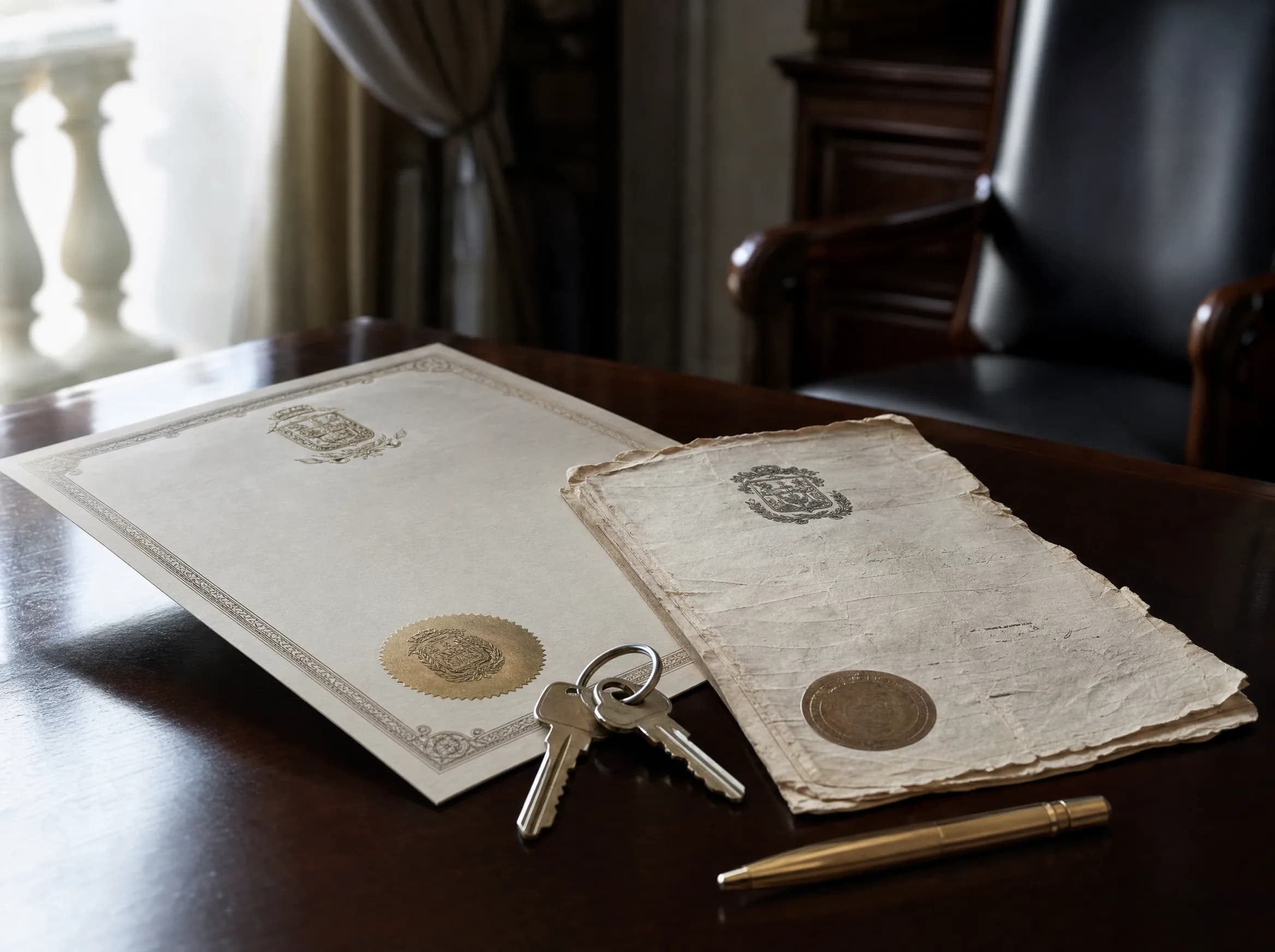
Title Certificate: Document proving full ownership of an already individualized property, with its own cadastral number and approved surveying. It's the property's "ID card."
Noted Certificate: Document proving property rights over a portion of a larger parcel that hasn't yet been individually cadastrally surveyed. You are owner, but in shared ownership with others, until surveying is completed.
Both are official documents, but Title Certificate offers greater security and ease for future sales, mortgages, and developments.
The signals you must recognize
When exploring the Dominican real estate market, these are warning signs:
- Seller doesn't present official title, only verbal or handwritten agreements
- Talks about "improvement rights" instead of full ownership
- Documentation is blurry photocopies without official seals
- Evades questions about the property's registry status
- Pressures to sign without time for legal verification
- Asks for cash payments without official receipts
The real economic difference
A property with clean title in a Santiago residential area can cost RD$4.2 million. The same house with informal possession problems might be offered at RD$2.8 million. That RD$1.4 million difference isn't a "bargain": it's the estimated cost and risk of legal processes needed to regularize the property.
Some buyers consciously take that risk, but the difference is deciding with complete information, not discovering it after signing.
An informed decision, not a surprise
The goal isn't to avoid every property without perfect title. The goal is to understand what you're buying. If you decide to buy a property with Noted Certificate or even informal possession situations that can be regularized, do so knowing:
- What state the regularization process is in
- What steps remain to reach clean title
- Who assumes costs and time of those processes
- What real risks are involved
With that information, you can negotiate fair prices, establish appropriate purchase conditions, and avoid costly surprises.
The importance of first contact
All this reinforces a fundamental reality: where you start your home search determines everything that follows. If you begin exploring properties through verified agents who know these processes, your purchase experience will be safer and more organized from day one.
If you start with informal sellers or unverified agents, you might spend months seeing properties you can never safely buy, or worse, buying legal problems disguised as opportunities.
To explore the Dominican real estate market with more clarity from the start, you can use tools like Toca Timbre, an application where buyers can see properties published by agents and contact them directly by WhatsApp. The platform lets you begin your search connecting from first moment with real estate professionals.
Frequently Asked Questions
How can I verify if a property has clean title?
You must request the original Title Certificate from the seller and obtain a Certification of the Property's Legal Status directly from the Title Registry. This certification will show whether there are liens, seizures or pending conflicts. A verified agent or specialized lawyer can accompany you in this process.
Is it safe to buy a property with Noted Certificate?
Noted Certificate is an official document that does accredit property rights, but over a parcel not yet individually surveyed. You can buy with relative safety, but must understand that for easy development or resale, you'll probably need to complete the surveying process to obtain Title Certificate.
What do I do if I discover a property I'm interested in has possession problems?
You don't necessarily need to discard it, but must evaluate with a specialized lawyer what steps and costs exist to regularize the situation. Some possessions can become clean titles through cleanup processes, but this takes time and money. The decision should be informed, not improvised.
Sources
- Real estate fraud in Dominican Republic: warning signs and advice to protect yourself
- Real estate scams in Dominican Republic 2025
- Real estate scams in Dominican Republic: growing concern threatening the market
- How to avoid real estate scams in Dominican Republic and protect your investment
- How to avoid real estate scams in Dominican Republic
- I have a Title Certificate or a Noted Certificate
- Regulation for control and reduction of noted certificates