What Happens If You Buy Without Verifying the Survey in the Dominican Republic
5 de noviembre de 2026 · 5 min min read
Buying without verifying the survey doesn't invalidate the transaction, but it can leave you with a property right that's difficult to locate or transfer. Understand the real risks.
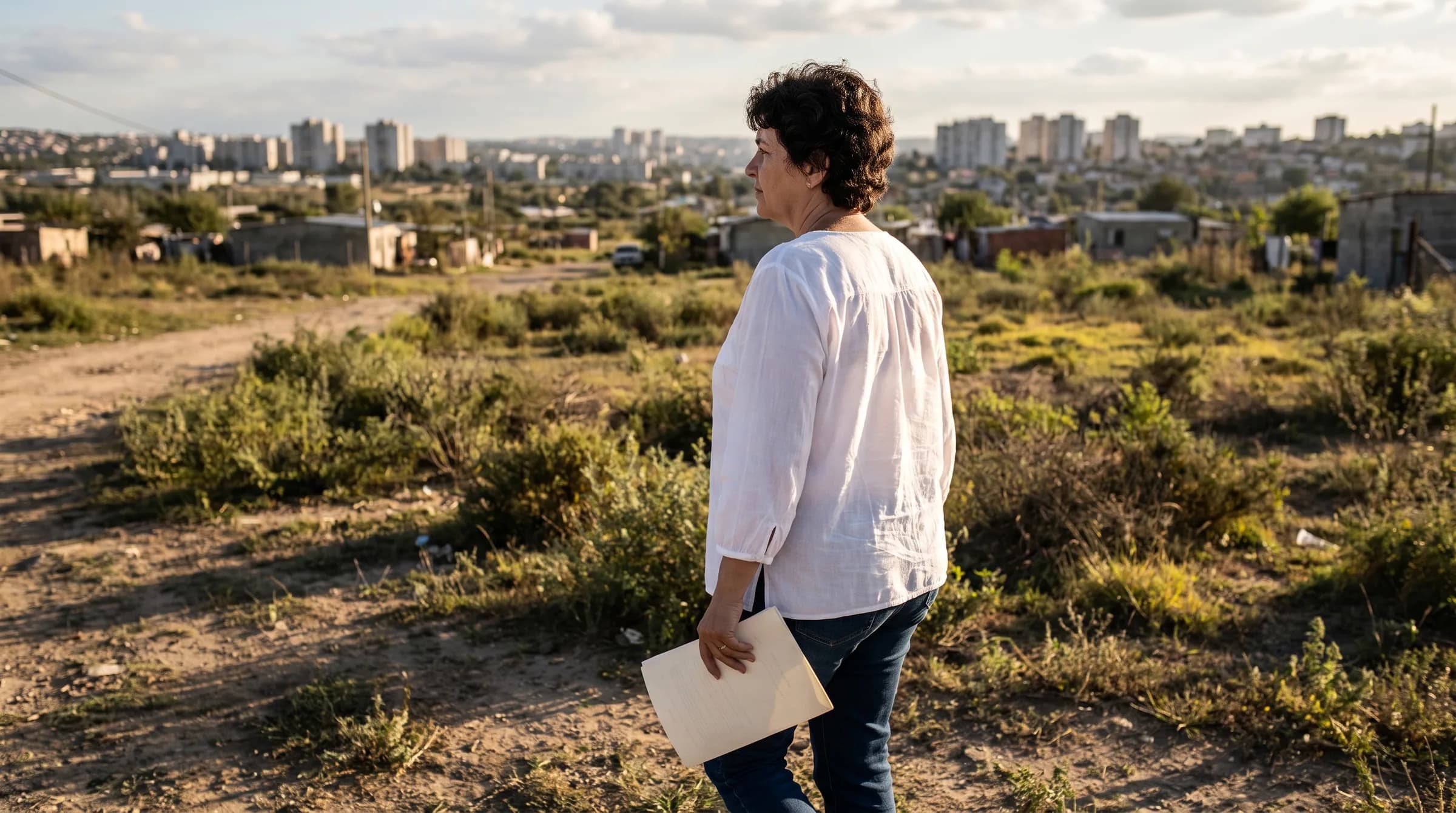
The silent risk of an unverified survey
In the Dominican real estate market, there's a common belief: that reviewing only the registered annotation or promise contract is enough to buy safely. This perception leads many buyers to skip survey verification in the Dominican Republic, thinking it's a minor formality they can handle after signing.
The reality is different. Buying without verifying the survey doesn't automatically mean you'll lose your money or that the transaction is invalid. However, it can leave you with a property right that's difficult to locate physically, transfer in the future, finance, or defend legally.
Why the survey defines your actual right to the land
 According to the Real Estate Registry, the survey is the adversarial process by which rights protected under registered annotations are located, determined, and individualized. In practical terms, it connects your registered right to a specific portion of land: its boundaries, surface area, coordinates, and maps.
Toca Timbre
Verified properties, certified agents. You just decide.
Without this verified connection, your right exists on paper but may be imprecise in physical reality. You don't know exactly which portion of land belongs to you, where your boundaries end, or whether there's any overlap with neighboring properties.
Laura's story: when the problem shows up later
Laura found a lot advertised on the outskirts of Santo Domingo for RD$2,800,000. The seller showed her a registered annotation, an option contract, and photos of the land. Since another interested buyer was "about to sign" and the price fit her RD$3,000,000 budget, she decided against paying for an independent review that would cost an extra RD$45,000.
At that moment, Laura felt she was being practical: why spend more money on "formalities" when she already had the main documents? The agent assured her the survey was straightforward and could be done after purchase.
When she tried to close a gate six months later and applied for a construction loan, she hired a surveyor. The survey revealed three problems: the location indicated by the seller didn't exactly match the registered description, part of the area overlapped with a neighboring occupancy, and another section was affected by an undeclared easement.
Laura's right existed, but not over the specific portion she believed she'd bought.
What it really means not to verify the survey
The official Registry documentation covers several technical elements for the survey: certification of the property's legal status, boundary markers and measurement record, technical report, maps, boundary photos, and the parcel's coordinates.
When you buy without this verification, you assume several risks:
- Imprecise location: The physical land may not match the registered description
- Overlaps: Part of "your" area may be legitimately occupied by neighbors
- Hidden restrictions: Easements or limitations may exist and not be declared
- Different surface area: The actual area may be smaller than promised
- Future difficulties: Problems obtaining financing, selling, or inheriting
The correction process: more expensive than prevention
Laura had to invest additional time and money to resolve her situation. She paid for a complete survey, reviewed registry records, notified interested parties, and negotiated with the seller a correction to the original deal.
The process required specific technical and legal documents. According to the official guide, documentation can be filed with the competent Regional Cadastral Survey Office or through the Virtual Cadastral Survey Office.
What would have initially cost her RD$45,000 in advance verification ended up costing RD$180,000 in corrections after the fact, plus eight months of paperwork.
Survey verification in the Dominican Republic: what to check before buying
Before making a deposit, consider these elements:
Registry documentation: Request a recent legal status certificate, confirm who appears as the owner, and review whether there are any liens or encumbrances.
Survey status: Ask explicitly whether the property is surveyed, who has the maps and coordinates, and whether the transfer includes an already individualized portion.
Physical verification: Compare the land shown to you with the registered description through a licensed surveyor.
Legal review: A real estate attorney can review the chain of title, the contract, and the real feasibility of transfer.
Future responsibilities: If the right is under a registered annotation, define who will assume the survey cost, how much it will be, and what happens if discrepancies appear.
The intermediary's role in the process
Your choice of agent also influences the quality of information you receive. Verified agents associated with professional organizations tend to explain these technical aspects more clearly, while informal sellers may downplay their importance.
An experienced agent should explain the actual survey status to you, not present it as "a simple formality" when it can involve technical and legal complexities.
Reflection: prevention vs correction
The survey isn't an absolute guarantee against all real estate conflict. Documentary errors, zoning restrictions, or neighbor disputes can still exist. However, skipping its verification eliminates one of the most important checks before you commit your money.
Laura's lesson was clear: verifying the survey before buying may require time and professional fees, but discovering problems after signing generally costs much more and severely limits your negotiating options.
Where you start your real estate search directly influences the quality of guidance you receive on these technical aspects.
If you're considering buying a property, the Toca Timbre platform lets you explore options posted by verified agents and contact them directly via WhatsApp to ask the right questions from your first conversation. You can start your search here: Toca Timbre
Frequently asked questions
Can I legally buy without the land having a survey approved?
Yes, it's possible to buy rights covered by registered annotations without a prior survey. However, this means you're acquiring a right over a portion that hasn't been physically individualized. The transfer will be valid, but complications can arise when trying to locate exactly which area belongs to you or when attempting to obtain bank financing.
How much does it cost to verify the survey before buying?
Advance verification typically includes surveyor fees (RD$35,000-60,000), basic legal review (RD$25,000-40,000), and registry certifications (RD$2,000-5,000). While it represents an initial investment of RD$60,000-100,000, it's usually considerably less than correcting problems after buying, when your negotiating power is reduced.
What if I discover survey problems after signing the purchase?
Your options depend on the contract you signed and the specific nature of the problem. You might have the right to require the seller to complete the survey, request a proportional price reduction, or in extreme cases, cancel the transaction. However, these steps require legal processes that can take months or years, while your money remains committed.
Sources
- Real Estate Registry Survey Guide — https://ri.gob.do/wp-content/uploads/Tramites/DNMC/DESLINDE.pdf
- Law 108-05 on Real Estate Registry — https://docs.republica-dominicana.justia.com/nacionales/leyes/ley-108-05.pdf
- Proposal for Regulation on Parcel Regularization and Survey — https://ri.gob.do/wp-content/uploads/consulta_publica/PROPUESTA_REGLAMENTO_PARA_REGULARIZACION_PARCELARIA_Y_DESLINDE-PCP.pdf
- Association of Real Estate Agents and Firms — https://aei.com.do/
- Cadastral Survey Procedures — https://ri.gob.do/wp-content/uploads/Tramites/MC/Deslinde.pdf