Your First Contact With a Real Estate Agent Defines Everything
30 de julio de 2026 · 5 min min read
Your first contact with an agent sets the tone for your entire purchase. Discover why choosing before you write protects you in the Dominican market.
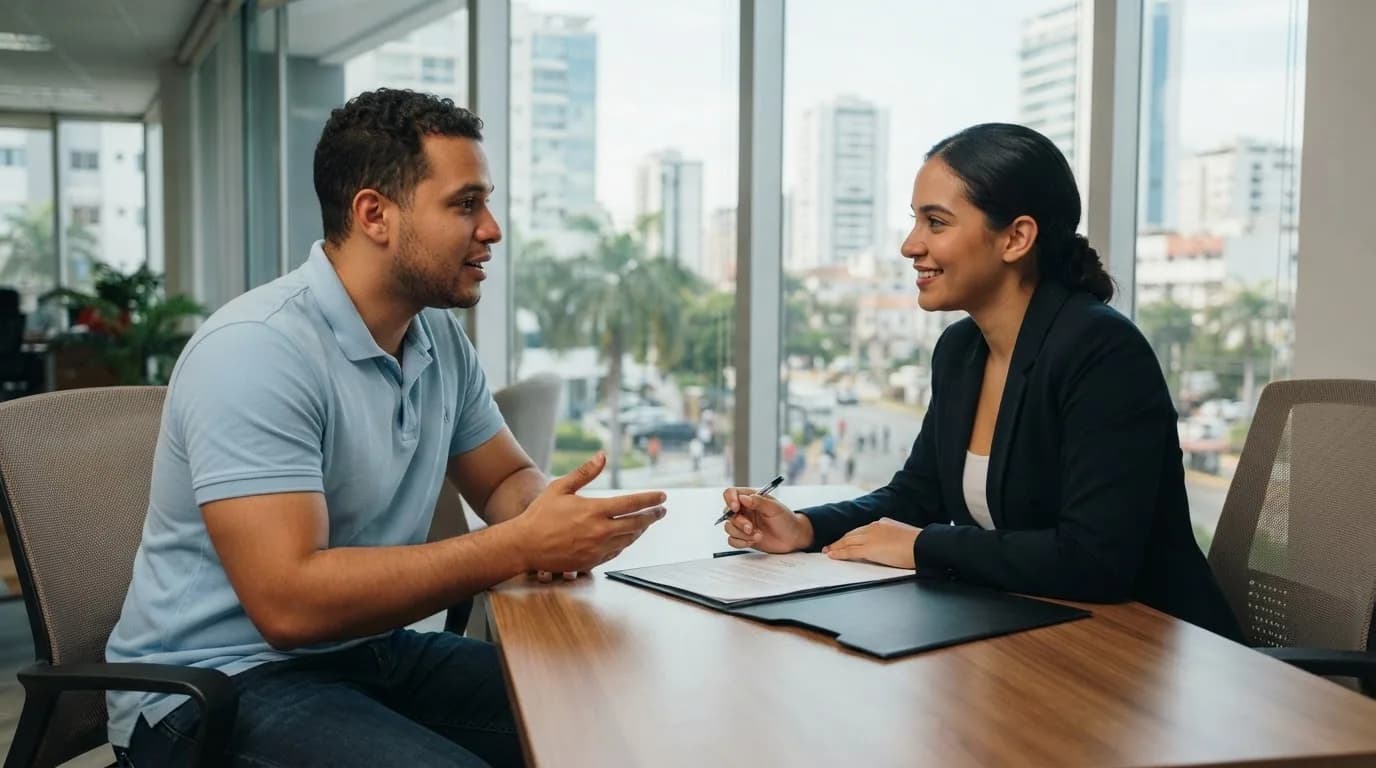
Your First Contact With a Real Estate Agent Defines Everything That Comes After
In the Dominican Republic, most buyers make the same impulsive decision: they see a property they like on Facebook or Instagram, and immediately message the first contact with a real estate agent who appears in the comments or responds fastest over WhatsApp. It seems natural, even efficient. But this apparently logical sequence reverses the order of a process that, when it involves sending money from abroad or savings accumulated over years, requires more structure.
The problem isn't the emotion of finding an attractive property. The problem is that starting with the photo and then looking for representation puts protection of your money second, when it should be first.
The Common Belief: "First I See What I Like, Then I Find Who Helps"
This logic relies on how real estate portals and social media work: algorithms showing visually attractive properties, descriptions generating aspiration, and buttons inviting you to "contact now." It's the same online purchase pattern we use for lower-value items, where getting it wrong is manageable.
Toca Timbre
Propiedades reales. Agentes verificados. Tú decides sin miedo.
But in Dominican real estate, where no centralized multiple listing system exists and regulations can vary widely, this approach creates clear vulnerabilities. When your first contact with an agent stems from emotion over a specific property, you lose the chance to objectively evaluate who's behind that offer: whether they're licensed, have a physical office, provide verifiable references, or have real market experience.
Why Your First Contact With a Real Estate Agent in the Dominican Republic Is Your Most Important Decision
 Andrés, 34-year-old Dominican living in New York, spent two years saving to buy an apartment in Santo Domingo. One Saturday morning while browsing Facebook, he saw a new project in Naco that excited him: modern finishes, reasonable price, delivery in 18 months. Without much thought, he wrote the WhatsApp number in the comments.
The person who responded was extremely friendly and quick. They sent more photos, a model video, and explained that only "a few units" were left. Within three days of chatting, Andrés had sent documents to reserve the apartment and transferred US$5,000 as initial deposit.
Only when he wanted to involve a lawyer to review the contract did he discover his "agent" had no registered physical office, the developer had only one previous project never delivered, and the land still had pending permit issues. Andrés didn't lose his money—the project eventually materialized—but spent months in anxiety that could have been avoided if he'd started with the agent, not the property.
What Changes When You Reverse the Process
Starting by identifying and pre-selecting verified agents before exploring specific properties completely reorganizes the purchase experience. Instead of reacting emotionally to each offer appearing on social media, the buyer builds a trust relationship with a professional who can explain the market, filter options, and detect red flags before large sums get involved.
This approach offers concrete benefits:
Preventive protection: A good agent verifies developer background, permit situation, and consistency between titles and sellers before showing properties.
Market context: Someone truly knowing zone values can identify overpricing or below-market offers that might hide problems.
Professional network: Established agents have relationships with real estate lawyers, inspectors, and other professionals necessary for due diligence.
Reduced anxiety: When the agent is chosen by objective criteria—not WhatsApp response speed—the buyer has more confidence in the entire process.
The Real Cost of Contacting "Whoever Responds First"
In a market where part of the intermediaries still operate informally, without business registry or verifiable address, choosing an agent by speed of response is like hiring financial services without checking credentials. Other regulated sectors in the Dominican Republic, like insurance, require licenses, documentation, and annual renewal precisely because the state recognizes the risk of uncontrolled intermediaries.
While the real estate market doesn't have the same regulation as insurance, buyers can apply similar filters: confirm the agent has physical presence in the country, identifiable online reputation, and some verifiable track record. This doesn't guarantee problems never happen, but significantly reduces the chance of fraud or bad experiences.
For Dominicans abroad sending money from another country, the difference is even more marked. Investing time at the start to identify verified agents is much cheaper than bearing the potential cost of not having trustworthy local representation.
A Reflection on Order of Decisions
In the Dominican Republic, where you begin your search determines everything that follows. If you start with photos, your process will be reactive: you'll respond to offers without complete market context. If you start with the agent, your process will be strategic: you'll explore options under professional supervision.
It's not about eliminating emotion when finding your ideal property. It's about protecting that emotion with proper information and representation, so the final decision combines both heart and the peace of mind of having done things right.
If you're considering buying property in the Dominican Republic, you can explore the market more clearly using Toca Timbre, an app where buyers can see properties published by agents and contact directly over WhatsApp. The difference is you can review the agent's profile before messaging, reversing the traditional order to make better decisions from the start. You can explore options at: Toca Timbre
Frequently Asked Questions
How can I verify if a real estate agent is trustworthy in the Dominican Republic?
Start by verifying they have a physical office with real address, identifiable online presence with reviews or testimonials, and business registry if they operate as a company. It's also useful to ask for references from previous clients and confirm they have specific experience working with buyers sending money from abroad. A serious agent won't have problems providing this information.
What if I find a property I like but don't know the agent handling it?
Before contacting the agent directly, research their profile, search for online reviews, and verify they have a physical office. If you decide to continue, proceed with caution: avoid sending money before complete due diligence, and consider involving an independent lawyer to review documents, even if the agent offers "their" trusted lawyer.
Is it normal for a real estate agent to ask for money upfront just to show me properties?
No. A serious agent should never ask for money upfront just to show properties or send basic information. Payments should only arise after you decide to reserve a specific property, and they must be backed by formal contracts specifying refund conditions. If an agent pressures for advance payments without clear justification, it's an important red flag.
Sources
- Complete guide to buying property in the Dominican Republic
- From dream to reality: the definitive guide to buying property in the Dominican Republic as a foreigner
- Practical advice for buying property in the Dominican Republic
- Property purchase process in DR
- Buying a house in the Dominican Republic
- How to buy real estate in the Dominican Republic: advice and recommendations
- Local physical agent license