Mortgage Loans in the Dominican Republic: Real Requirements and Payments in 2025
11 de octubre de 2026 · 6 min min read
Discover the real requirements, monthly payments, and closing costs for mortgage loans in the Dominican Republic. Clear information to buy without surprises.
Mortgage Loans in the Dominican Republic: What You Really Need to Know
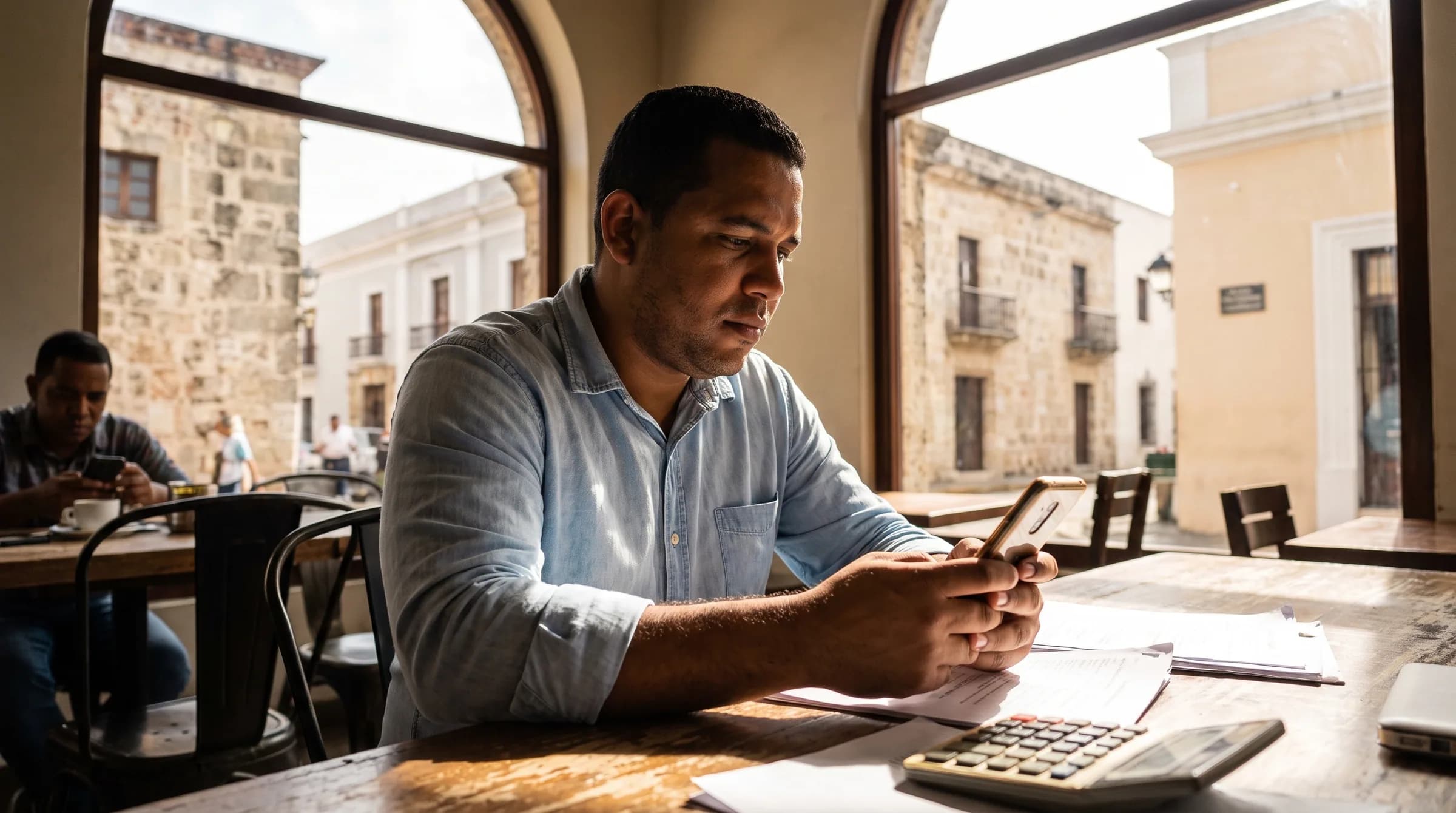
Carlos has been saving for his down payment for three months now. Every time he talks to someone different—a friend, a family member, an acquaintance—he gets different information about mortgage loans in the Dominican Republic. "The bank finances you up to 90%," one person tells him. "You need at least 30% down," another assures him. "Interest rates are through the roof," a third comments. By the end of the day, Carlos has more questions than answers.
This confusion isn't by accident. The Dominican real estate market operates with fragmented information, where each person shares their particular experience as if it were a universal rule. The reality is that understanding mortgage loans requires separating facts from opinions, and knowing exactly what to expect at each step of the process.
How Much Do Banks Really Finance?
The most common belief is that "all banks finance the same way." In practice, most Dominican financial institutions cover between 70% and 90% of the appraised or purchase value of the property, but this percentage depends on multiple factors that many buyers don't consider.
Toca Timbre
Verified properties, certified agents. You just decide.
The actual financing percentage is determined by your credit profile, demonstrable income, employment history, and the type of property. A government employee with five years at the same job can access 85-90% financing, while a self-employed worker with variable income might be limited to 70-75%, even with the same average income.
This means your down payment isn't just "the 10% or 20% they told me." It's the complement to what the bank is willing to finance based on your specific situation, plus all the closing costs we'll go over next.
Requirements That Actually Matter
 Dominican banks request standard documentation: valid ID, completed application, income evidence, and property appraisal. But the difference lies in how they evaluate that information.
For salaried employees: payroll stubs for the past three to six months, work letter with tenure and salary information, and bank statements reflecting regular deposit of those earnings.
For self-employed workers: tax returns, financial statements, contracts for recurring services, and banking history that shows consistent income flow. This group faces more scrutiny and may need a larger down payment.
Credit history is decisive. A 30-day late payment on a credit card six months ago may not disqualify you, but it will affect your interest rate. Banks also evaluate your debt capacity: typically, your total financial commitments should not exceed 30-35% of your net income.
Real Market Interest Rates
According to recent data from the Superintendencia de Bancos, average interest rates for mortgage loans in the Dominican Republic range between 10.8% and 11.2% annually. However, this figure is only the starting point.
Banks offer mixed schemes: fixed rate for the first 3, 5, or even 10 years, then variable rate. A preferred customer can secure rates from 8-9% annually, while higher-risk profiles may pay more than 11%.
The difference in your monthly payment is significant. For a RD$3,000,000 loan over 20 years:
- At 9% annual: approximate monthly payment of RD$27,000
- At 11% annual: approximate monthly payment of RD$31,000
That RD$4,000 monthly difference adds up to an additional RD$960,000 over the life of the loan.
Closing Costs: The Bill Many Forget
This is where many buyers are surprised. Legal and closing fees typically represent between 5% and 8% of the property value, broken down like this:
Transfer tax: Approximately 3% of the value Registration and filing fees: Around 2% of the value Legal and notary fees: Variable depending on complexity Official appraisal: Fixed cost ranging from RD$15,000 to RD$30,000 Insurance: Borrower's life insurance and property insurance (may be charged monthly)
For a RD$4,000,000 property, these costs can add up to between RD$200,000 and RD$320,000 in additional cash you need to have available at closing.
The Process Step by Step
The typical process takes between 30 and 60 days from pre-approval to disbursement:
- Pre-qualification: The bank evaluates your profile and indicates a tentative amount
- Formal application: You submit complete documentation
- Credit evaluation: The bank verifies income and history
- Appraisal: A professional appraiser values the property
- Final approval: The bank confirms amount, rate, and conditions
- Closing: You sign the contract and the mortgage is formalized
Each step has its internal timelines, and any missing document or inconsistency can delay the process. The key is to prepare all documentation from the start and maintain regular communication with your account executive.
Reflection: Beyond the Numbers
A mortgage loan isn't just access to money; it's a financial commitment that will last between 15 and 30 years. The most important decision isn't getting the fastest approval, but fully understanding the terms and ensuring that the monthly payment fits comfortably into your current and projected financial situation.
Peace of mind comes from preparation. Before falling in love with a specific property, know your real financing capacity, prepare your documentation, and understand all costs involved. This will allow you to negotiate from a position of knowledge, not anxiety.
If you're considering buying a home in the Dominican Republic, it's important to start your search with clear information and verified contacts. Toca Timbre is an app where you can explore properties listed by real estate agents and contact them directly via WhatsApp to ask specific questions about financing and terms. You can explore available options at Toca Timbre
Frequently Asked Questions
Can I get a mortgage loan if I'm self-employed?
Yes, but you'll need more robust documentation. Banks require tax returns, financial statements, and evidence of recurring income for at least two years. They also commonly request a larger down payment (25-30%) and offer rates slightly higher than for salaried employees.
How long do I need to be at my current job to apply?
Most banks require a minimum of one year of job tenure, though some accept six months for professionals with prior experience in the same field. For self-employed workers, they look for at least two years of demonstrable business activity.
Can I use bonuses or commissions as part of my income to qualify?
Banks typically consider only 50-70% of variable income (bonuses, commissions, overtime) for payment capacity calculations. You'll need to show that this income has been consistent for at least 12-24 months through bank statements and employment certifications.
Sources
- Reference Rates — https://www.bdi.com.do/media/mewd0t3x/tasas-de-referencia-22-octubre-2024.pdf
- Financing Calculator — https://www.calculafinanciamiento.com/republica-dominicana/hipoteca/guia/
- Mortgage Loan Guide — https://terrenitord.com/prestamo-hipotecario-republica-dominicana/
- Buying a Home in DR — https://bolsillopractico.com/propiedades/comprar-vivienda-rd-requisitos-costos/
- Mortgage Rates 2024 — https://www.elcaribe.com.do/panorama/dinero/la-tasa-para-prestamos-hipotecarios-aumento-3-2-por-ciento-en-un-ano/
- Housing Loans — https://inmobiliario.do/como-conseguir-un-prestamo-para-comprar-vivienda-en-republica-dominicana-guia-practica/
- Mortgage Requirements 2025 — https://asvenrd.com/blog/requisitos-para-prestamos-hipotecarios-en-republica-dominicana-2025/26408
- Popular Mortgage — https://popularenlinea.com/Personas/Paginas/prestamos/prestamo-hipotecario-en-rd-para-adquisicion-1ra-y-2da-vivienda.aspx
- APAP Mortgage Loan — https://apap.com.do/wp-content/uploads/2021/05/Prestamo-Hipotecario_BP.pdf
- Mortgage Market Law — https://dgapp.gob.do/wp-content/uploads/2020/10/Ley-de-Mercado-Hipotecario-y-Fideicomiso.pdf