Construction Loans in the Dominican Republic: What You Need to Know
11 de octubre de 2026 · 5 min min read
Avoid surprises with construction loans in the DR. Discover how partial disbursements work and why a verified agent makes all the difference.
Construction Loans in the Dominican Republic: What You Need to Know
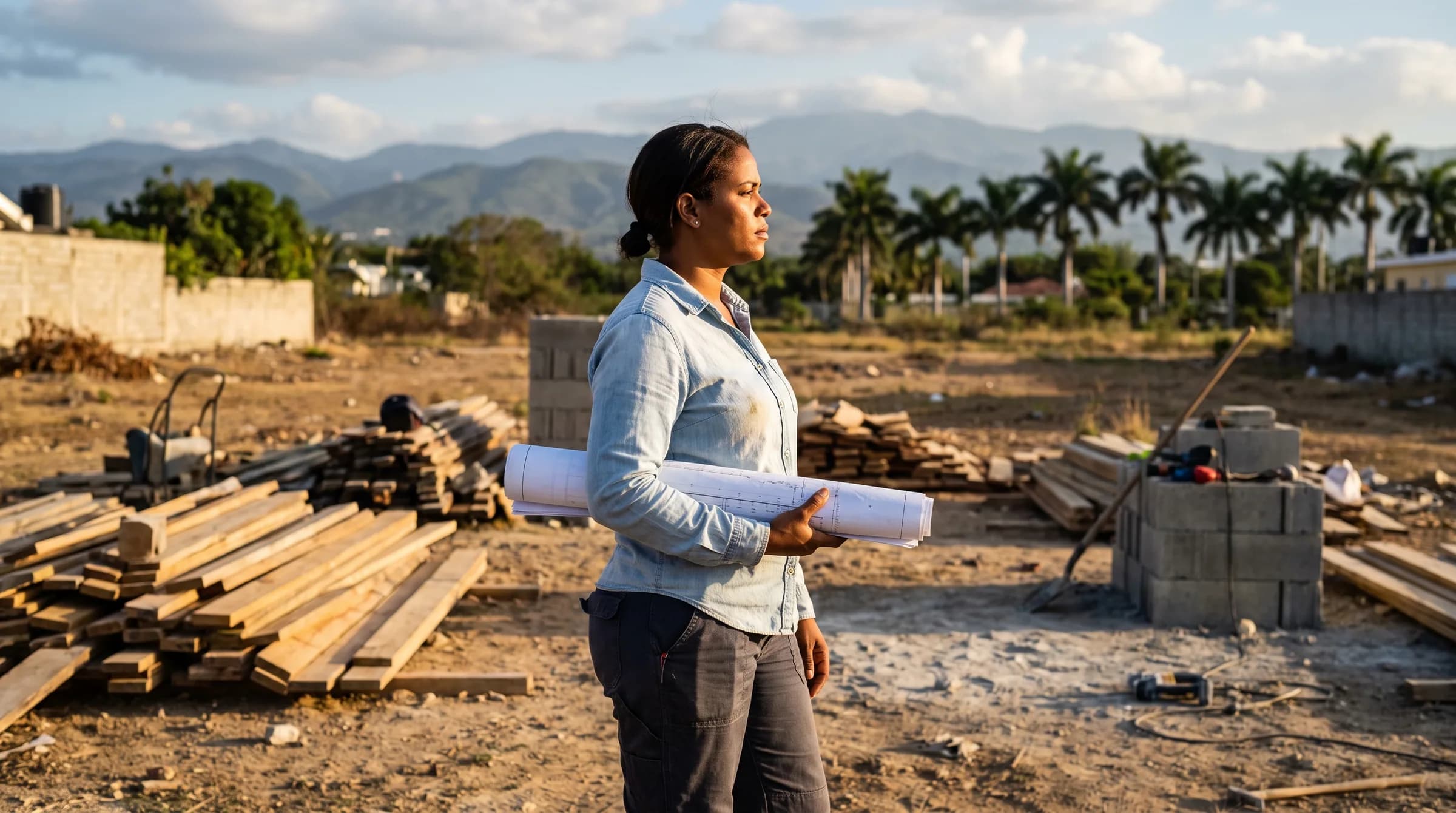
María had spent months planning to build her first home in Santiago. After meeting the requirements and getting bank approval for her construction loan in the Dominican Republic, she signed the contract confident that she'd have all the money available to start the project right away. Three weeks later, when she contacted the bank for her first disbursement, she discovered a reality no one had explained clearly to her: she'd only receive a fraction of the loan upfront, and the rest would arrive in stages based on construction progress.
This situation is more common than you might think in the Dominican market. The gap between what first-time buyers expect and how these loans actually work creates confusion, delays, and unnecessary stress in construction projects.
The Most Costly Misconception
Most first-time builders assume a construction loan works like a traditional mortgage: you request RD$2,000,000, get approved, and receive the full amount to manage during the build. This assumption is completely disconnected from how Dominican banks actually operate.
Toca Timbre
Verified properties, certified agents. You just decide.
Construction loans in the Dominican Republic work through a system of partial disbursements called "cubicaciones" (measurings). This means the bank releases money in specific stages, only after verifying that construction has progressed according to schedule. An independent engineer must certify each phase before the next payment is authorized.
How the Disbursement System Actually Works
 When Banco Popular, La Nacional, or APAP approves a construction loan, they establish a disbursement schedule that typically breaks down like this:
First disbursement (20-30%): Requires proof that construction has begun and valid building permits are on file.
Intermediate disbursements (15-25% each): Released after technical inspection certifies progress such as foundation complete, structure raised, or basic installations finished.
Final disbursement (15-20%): Authorized upon construction completion per approved plans and receipt of a habitability certificate.
This process can take anywhere from 8 to 18 months, depending on project size and construction speed. During that time, you need your own cash flow to cover expenses between disbursements.
Why a Verified Agent Makes the Difference
Back to María's story: if she'd worked with a verified real estate agent from the start, she would have understood how cubicaciones work before signing anything. A professional certified by the Association of Real Estate Agents and Companies (AEI) knows these processes and can explain the practical implications of every clause.
A verified agent would have helped María in three critical areas:
Realistic financial preparation: Explaining that she'd need her own liquidity to cover initial costs and periods between disbursements, avoiding the trap of miscalculating cash flow.
Coordination with builders: Ensuring the construction schedule aligns with bank inspection dates, reducing delays from miscommunication.
Document review: Verifying that the property is free of liens and all permits are in order before presenting it as collateral to the bank.
In a market where real estate brokerage regulation is still being solidified, working with certified agents significantly reduces the risk of incomplete or incorrect information about financing.
The Real Cost of Winging It
Lack of clarity upfront about construction loans can generate unexpected costs. María had to request an additional personal loan to cover materials while waiting for her second disbursement, increasing her financing costs by approximately RD$45,000 during the first six months.
These kinds of surprises are avoidable with clear information from your first conversation. It's not about avoiding construction loans—it's about fully understanding how they work before you commit to timelines, suppliers, and payment schedules.
Frequently Asked Questions
How long does it take to receive each disbursement from a construction loan?
Generally, 15 to 30 days after requesting technical inspection. The bank schedules the engineer's visit, they assess construction progress and issue certification. If everything checks out, the disbursement processes the following business week. The most common delays happen when construction doesn't match approved plans or permits aren't current.
Can I change the construction schedule after signing for the loan?
Modifications are possible but require prior bank approval. Minor date changes for inspections can be managed directly with your loan officer. Significant changes to design or schedule may require new project evaluation and updated legal documentation, which can delay pending disbursements.
What happens if construction falls behind and I can't keep up with loan payments?
Construction loans typically have grace periods where you only pay interest on the amount disbursed, not the total approved amount. However, if delays are significant, the bank may require formal explanations, schedule review, or even additional collateral. That's why it's critical to plan with realistic time margins from the start.
The Importance of Starting Well-Informed
Building a home with bank financing doesn't have to be an experience full of surprises. The key is understanding the complete process before you sign, not after you hit your first roadblock. A well-planned construction loan becomes an organized tool to make your project real; misunderstood, it can create unnecessary financial stress.
Where you start gathering information determines the quality of decisions you make later. Starting with clarity about financing lets you focus your energy on building, not solving problems that could have been prevented.
If you're considering a construction project and want to explore the market with clear information from the start, Toca Timbre is an app where you can see properties listed by verified agents and contact them directly via WhatsApp. This lets you ask the right questions about financing before committing to any decision. You can explore options at: Toca Timbre
Sources
- Banesco - Construction Loans — https://www.banesco.com.do/empresas/prestamos/construccion/
- Banco Popular - Construction Loan DR — https://popularenlinea.com/Personas/Paginas/prestamos/prestamo-construccion-en-rd-1ra-y-2da-vivienda.aspx
- La Nacional - Construction Loans — https://asociacionlanacional.com.do/docs/info-producto/Info_Producto_Prestamos-Construccion.pdf
- APAP - Company Financing — https://apap.com.do/empresas/financiamientos/
- BDI - Mortgage Loans Construction — https://www.bdi.com.do/prestamos/prestamo-hipotecarios-construccion/
- Toca Timbre - Agent Verification — https://tocatimbre.com/blog/que-verificar-antes-de-enviar-dinero-a-un-agente-inmobiliario
- Bienes Raíces Latinoamérica - Real Estate Agents DR — https://blog.bienesraiceslatinoamerica.com/republica-dominicana-agentes-inmobiliarios/
- Inmobiliario.do - Real Estate Brokerage Regulation — https://inmobiliario.do/avanza-la-regulacion-del-corretaje-inmobiliario-con-anteproyecto-de-ley-enviado-a-comision-de-justicia/