Questions About Real Estate Taxes in Dominican Republic
16 de agosto de 2026 · 6 min min read
Discover the key tax questions every buyer should ask before putting down a deposit on a property. Avoid unexpected tax surprises.
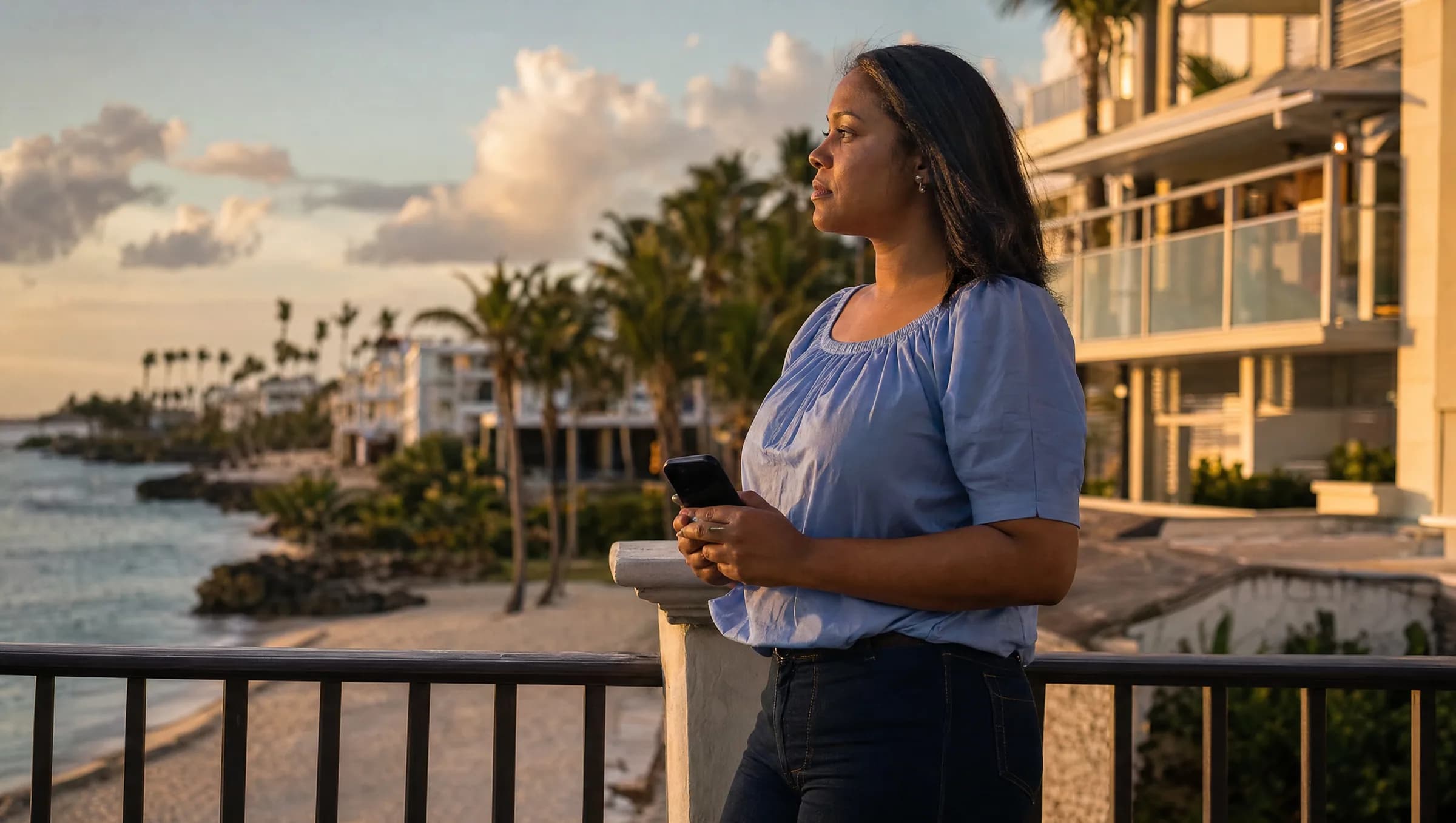
The tax questions that will change your home-buying decision
Carla has spent three months looking at apartments in Punta Cana. She's visited ten properties, all with ocean views, all promising 15% annual returns. She's about to put down a deposit on a studio for $85,000 when she decides to ask a simple question: "How much exactly will I pay in taxes each year?" The agent's answer left her stunned: she'd miscalculated her entire budget.
This story repeats every week in the Dominican real estate market. Buyers focus on the sale price and square footage, but forget that real estate taxes in the Dominican Republic can completely change the financial equation of an investment. It's not that taxes are prohibitive, but that they're often not calculated correctly from the start.
The problem isn't a lack of tax information in the country. The problem is that this information arrives too late, when the buyer has already fallen in love with the property and doesn't want to do the math that could change their mind.
Toca Timbre
Propiedades reales. Agentes verificados. Tú decides sin miedo.
The tax roadmap nobody explains
When we talk about real estate taxes, it's not just one annual payment. It's a three-layer system that affects your wallet at different times: when you buy, when you own, and when you generate rental income.
The first layer is the 3% transfer tax on the property value. If you buy an apartment for $100,000, you'll pay an additional $3,000 before the final deed. This amount is non-negotiable and must be paid before the property registration. However, some CONFOTUR-registered properties can be exempt from this tax.
The second layer is the Real Property Tax (IPI), paid annually on value exceeding approximately $160,000 (RD$6,500,000). If your property is worth less, you pay nothing. If it's worth more, you pay 1% annually on the excess. A $200,000 property would generate an annual IPI of $400.
The third layer appears if you decide to rent: rental income is included in your annual Income Tax (ISR) filing, although you can deduct maintenance, insurance, and repair expenses with valid receipts.
The questions Carla should have asked from the beginning
 When a buyer sits down with an agent, the conversation usually revolves around location, amenities, and financing. But tax questions can reveal hidden costs that change the entire decision.
"What is the exact transfer tax amount and is this project covered by any tax exemption?" This question forces the agent to calculate the 3% on the real price and clarify whether exemptions exist through CONFOTUR or other special regimes.
"Based on this property's value, will I pay IPI each year and how much would that be approximately?" Here the agent must explain whether the property exceeds the exempt threshold and how much that 1% annually will represent in your cash flow.
"If I rent this property, how will it affect my income taxes and what expenses can I legally deduct?" This question is crucial for those buying as an investment, because gross returns can reduce significantly after taxes.
"What are all the mandatory monthly costs as a property owner: maintenance, administration, insurance, utilities?" Although not direct taxes, these fixed costs affect your payment capacity and should be added to your annual tax calculation.
Why understanding the tax roadmap changes your decision
The common belief is that all similar apartments have the same tax burden. This is false. Two properties at the same price can generate completely different tax scenarios.
An $80,000 apartment doesn't generate annual IPI, while a $180,000 one does. A CONFOTUR-registered project saves you the 3% transfer tax upfront. A property with high tourist occupancy can generate income that pushes you into a higher income tax bracket.
Carla discovered that her $85,000 studio wouldn't generate annual IPI (being below the threshold), but the $2,550 transfer tax wasn't in her initial budget. Plus, if she achieved the promised 70% annual occupancy, rental income would significantly increase her income taxes.
This exercise led her to reconsider not just the budget, but the neighborhood. She found that in some areas, slightly cheaper properties had better tax treatment or lower maintenance costs, which improved actual net returns.
Questions About Real Estate Taxes in Dominican Republic: how to calculate correctly
The tax roadmap shouldn't be a last-minute surprise. When you understand the three main components (transfer, annual IPI, and ISR on rentals), you can compare properties with complete information and make better decisions.
A verified agent should be able to explain these concepts with concrete numbers, not vague responses like "you'll see that later." If he can't give you approximate figures for transfer tax, potential IPI, and tax treatment for rentals, he probably isn't prepared to guide you through a decision of this magnitude.
Tax peace of mind begins with asking the right questions. It's not about avoiding taxes, but about calculating them correctly from the start so your investment has solid foundations and no unpleasant surprises.
The difference between a good purchase and a decision you regret often lies in these details nobody mentions at the first meeting. The Dominican real estate market offers excellent opportunities, but only for those who take time to truly understand what they're buying.
To explore the real estate market with greater clarity, there's Toca Timbre, an app where you can see properties posted by agents and contact them directly via WhatsApp to ask these tax questions from your first conversation. The idea is that you have access to more transparent information before you fall in love with a property: Toca Timbre
Frequently asked questions
Do all apartments pay the 3% transfer tax?
The general rule is yes, all properties pay 3% transfer tax on the value greater between the stated price and the official appraisal. However, properties covered by the CONFOTUR regime can be exempt from this tax. Always ask the agent if the project has a specific tax exemption.
At what property value do I start paying annual IPI?
Real Property Tax (IPI) applies when the total value of your properties exceeds approximately $160,000 (RD$6,500,000). You only pay 1% annually on the amount exceeding that threshold. If your only property is worth less than $160,000, you pay no IPI. If it's worth $180,000, you pay 1% on the $20,000 excess, or $200 annually.
How do rental income taxes affect my overall taxes?
Rental income is considered taxable income and must be included in your annual ISR filing. However, you can deduct property-related expenses like maintenance, insurance, repairs, and administration costs, as long as you have corresponding receipts. Your final tax burden depends on your total income level and applicable deductions.
Sources
- Dominican Real Estate Group — https://www.dominicanrealestategroup.com/comprar-propiedad-en-rep%C3%BAblica-dominicana
- Simply Dominican — https://simplydominican.com/es/invest-wisely-top-10-real-estate-questions-for-the-dominican-republic/
- Plusval — https://plusval.com.do/articulos/bienes-raices/una-buena-compra-comienza-con-buenas-preguntas
- Jay L Marcus — https://www.jaylmarcus.com/post/10-preguntas-esenciales-antes-de-comprar-una-propiedad-en-la-rep%C3%BAblica-dominicana
- Noriega Group — https://noriegagroup.com/impuestos-al-comprar-vender-o-alquilar-propiedades-siendo-extranjero-en-rd/
- Proyectos Apartamentos en Venta RH — https://proyectos.apartamentosenventarh.com/impuestos-inmobiliarios/
- 1122.do — https://1122.do/post/alquileres-y-dgii-como-declarar-rentas-inmobiliarias-en-republica-dominicana
- DGII Ayuda — https://ayuda.dgii.gov.do/conversations/discusiones/arrendamientos-pagos-y-cobros/655634ac718dd4044a9d83e5