Questions to Ask Before Putting Down Money on Property: A Guide for Returning Dominicans
4 de octubre de 2026 · 5 min min read
Discover the key questions about location, financing, and legality that every returning Dominican should ask before putting down money on a property.
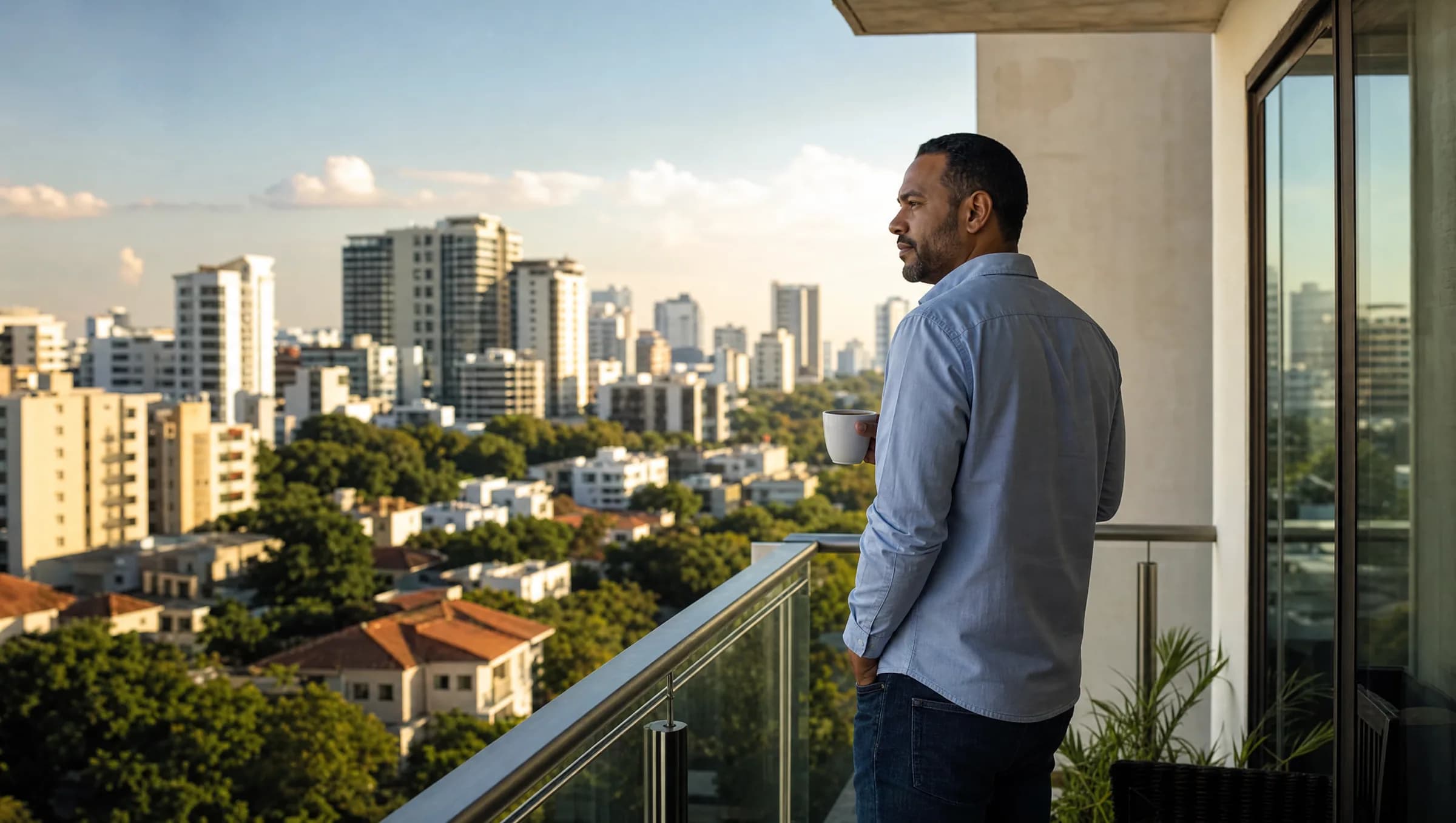
Questions to Ask Before Putting Down Money on Property: A Guide for Returning Dominicans
When a Dominican who has spent years living in Miami decides to return, putting down money on a property can become a rushed decision that creates long-term problems. The excitement of coming home, combined with pressure to close on a good deal quickly, often pushes returning buyers to sign purchase agreements without asking the questions before putting down money on property that could prevent financial or legal surprises.
The problem isn't a lack of good intentions from the buyer. The real challenge is that the Dominican real estate market operates differently than what a returning Dominican may be used to abroad, and crucial information often isn't presented clearly from the first conversation.
The misconception: "Putting down money is just a reservation"
A common belief among returning Dominicans is that putting down money on a property is simply making a reservation with minimal legal commitment. This perception can create costly confusion.
Toca Timbre
Real listings. Verified agents. You decide, fear-free.
Carlos had been in Miami for five years when he decided to return to Santo Domingo. He saw an apartment in a neighborhood he remembered well and, without asking many questions, handed over US$5,000 to "put down" on the property. Only afterward did he discover that the project had delays in construction permits, that the bank required specific documents for absent Dominicans that he hadn't prepared, and that additional costs (transfer taxes, legal fees, maintenance) represented nearly 8% extra of the total value. His final mortgage payment turned out to be 40% higher than he had initially calculated.
This situation illustrates why putting down money on a property requires a structured conversation before you hand over cash.
Essential questions before putting down money on property in the Dominican Republic

Location and surroundings
Before committing funds, it's essential to ask about the area's development. Are public services stable in the area (electricity, water, internet, transportation)? Are there schools, health centers, and shops within a reasonable distance?
You should also investigate municipal development plans. Are there approved road, commercial, or residential projects that could affect the peace or appreciation potential of the area? What is the current safety level and what access control measures does the project have?
A practical question many returning Dominicans forget to ask: how close is the property to your family and professional network in the country? Travel times in Santo Domingo may be different from what you remember before you emigrated.
Financing and real repayment capacity
Which banks work with the project and what mortgage products do they offer specifically for Dominicans living abroad? Entities like Banco de Reservas have lines for "absent Dominicans," but each one has particular requirements.
What is the minimum down payment percentage the bank or developer requires? With traditional loans, banks typically require between 25% and 40% of the value as an initial contribution. What exact documents do you need to prepare: ID card, passport, work letter, bank statements, tax returns, international credit report?
Ask about total costs beyond your mortgage payment: transfer tax (around 3%), legal fees, appraisal, insurance, condo maintenance, and property tax. On a US$150,000 apartment, these additional costs could add up to between US$12,000 and US$15,000.
What will your estimated monthly payment be under different scenarios of interest rates and terms? What happens if your income changes while you're still living abroad?
Legal aspects and documentation
Who is the current owner of the property and can you review the title certificate and approved plans? Is the seller current on property tax and other obligations?
What exactly does the due diligence process include and who carries it out? A specialized lawyer should verify liens, mortgages, seizures, and that the purchase agreement is properly structured.
What documents do you sign to put down money on the property and under what conditions can you recover the money if you don't obtain financing or if the project is delayed? What are the construction timelines, delivery dates, and penalties for non-compliance?
Managing from a distance
Can you handle part of the process from abroad and what digital tools are used for communication? What steps absolutely require your physical presence in the Dominican Republic?
Is the agent properly registered and verified? Does he or she belong to a recognized firm and can provide references from other returning clients?
The value of arriving prepared
These questions aren't meant to complicate the process, but rather to structure a clearer conversation with your real estate agent. An experienced professional should be able to answer each point with specific documents and concrete examples.
The difference between a successful purchase and a problematic one often comes down to the quality of information you get before signing any document. As a returning Dominican, you have the advantage of being able to research and prepare yourself before your visit to the country.
A planned return
For returning Dominicans, the property purchase process should integrate naturally with the overall logistics of your return: customs procedures for household goods, tax compliance, and reactivation of professional and family networks.
The key is to turn the excitement of returning into a structured plan where each decision is based on clear and verifiable information, not urgencies or external pressure.
If you're considering returning and buying property, Toca Timbre lets you explore the Dominican real estate market from abroad. The app connects buyers with verified agents through an interactive map where you can filter properties by location, price, and features, contacting them directly by WhatsApp to get detailed information before your visit to the country. You can download it at: Toca Timbre
Frequently asked questions
How much money do I need to put down on a property in the Dominican Republic?
The amount to put down varies depending on the developer and property value, but typically ranges from US$1,000 to US$5,000. This money usually applies as part of your down payment when you sign the final contract. It's important to verify the refund conditions if you don't obtain financing or if you decide not to proceed with the purchase.
Can I buy property in the DR without being physically present?
Yes, Dominican law allows you to complete the purchase through a legal representative or agent. However, many banks require your physical presence for certain financing steps. It's recommended that you coordinate with your agent to see which steps you can handle from abroad and which require your visit to the country.
What documents from abroad do I need to prepare for financing?
Generally required are: current passport and/or ID card, work letter or financial statements, bank statements for the last 3-6 months, tax returns for the last two years, and in some cases, an international credit report. Each bank may have specific requirements, so it's important to confirm the exact list before traveling.
Sources
- WorldRemit - How to buy a house in the Dominican Republic
- DR Lawyer - Real estate purchases in the Dominican Republic
- NAF Realtors - Loans for Dominicans abroad
- NAF Realtors - Financing for absent Dominicans
- El Correo - Buying a house in the Dominican Republic: real costs and requirements
- Wise - Buying a house in the Dominican Republic
- Wilky González - Can a Dominican buy an apartment while living abroad
- Toca Timbre - App Store