Why Putting a Deposit on a Property Without Seeing It Is So Dangerous in the DR
15 de junio de 2026 · 4 min min read
Discover the risks of sending deposits to hold properties in the Dominican Republic without verifying agents or documentation.
Why Putting a Deposit on a Property Without Seeing It Is So Dangerous in the Dominican Republic
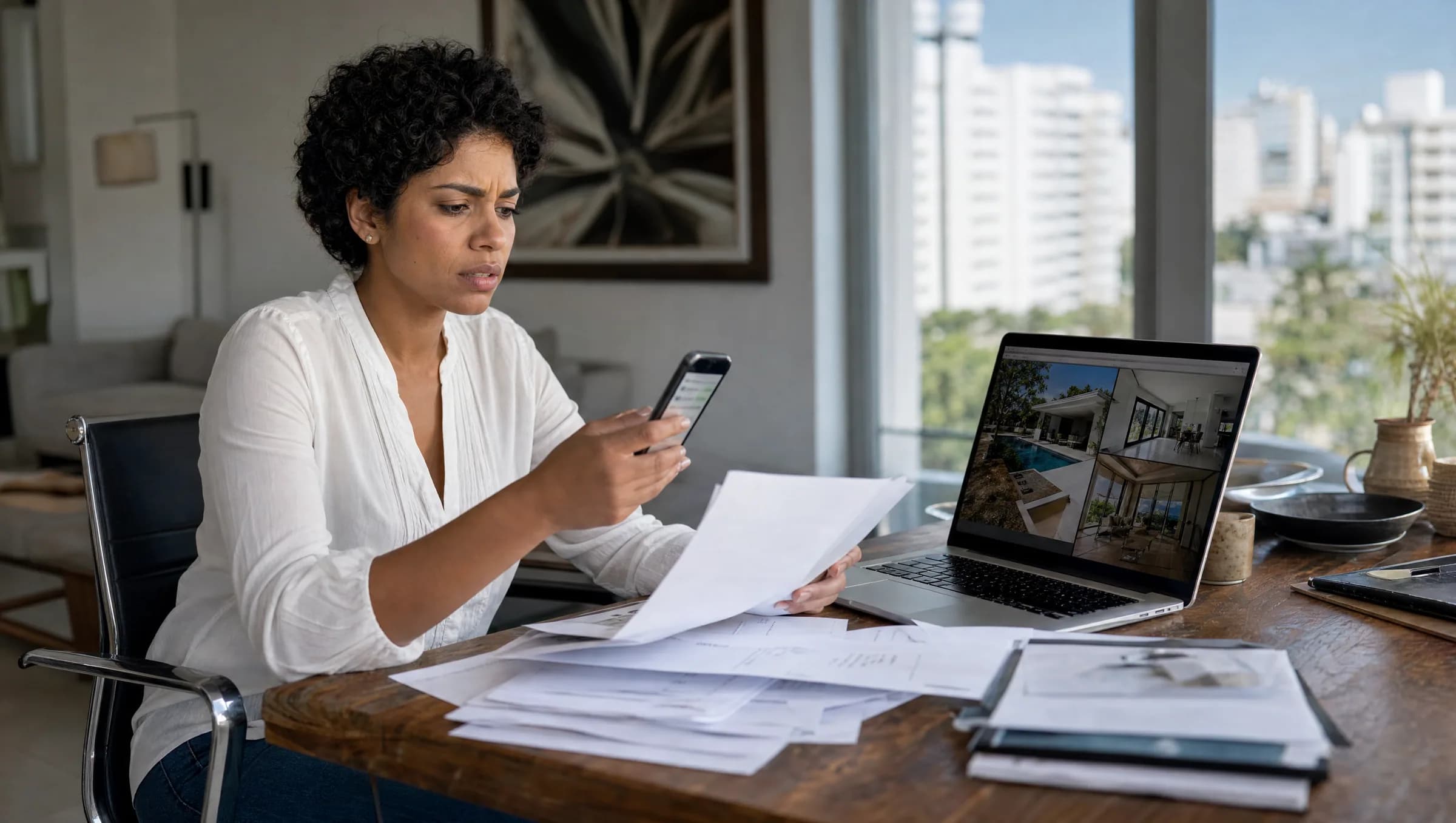
The excitement of finding the perfect property can cloud judgment. It's common for Dominican buyers, especially those living abroad, to feel urgency to "hold" a home or land by sending a deposit before seeing anything. While seeming a logical first step, this practice is one of the most vulnerable moments in the entire real estate process.
The Dominican real estate market has particularities amplifying these risks: unverified agents, incomplete documentation, and informal processes confusing buyers. Understanding why holding without seeing is dangerous doesn't mean paralyzing your search, but structuring it better.
The mirage of "safe holding"
Toca Timbre
Propiedades reales. Agentes verificados. Tú decides sin miedo.
Many people believe holding property with small deposit is less risky than final purchase. This belief is dangerous because it minimizes real consequences.
María, Dominican resident in New York, found an apartment in Santo Domingo via WhatsApp. The "agent" showed her project photos, promised her special pricing, and asked for US$5,000 to hold for 30 days. "It's just to secure the apartment," they said. María thought: "If I don't like it when I visit, I get my money back." Six months later, she discovered the project had no construction permits and the supposed agent had disappeared.
This scenario repeats because holding without verification creates false sense of control. The buyer feels they're "securing" an opportunity, when they might actually be funding fraud.
Hidden risks of blind holding
Ghost agents and fake documentation
The first danger is not knowing who you're really dealing with. So-called "ghost agents" exploit distance to create fake identities, copy real property photos, and pressure for quick payments. A legitimate agent never avoids clear video calls nor refuses to show verifiable credentials.
Fake or incomplete documentation is another red flag. Holding based on "sales letters" or blurry title copies might result in deposits for mortgaged properties, properties in lawsuit, or that simply don't belong to the supposed seller.
Undetected legal problems
Land can look perfect in photos but have title registry oppositions, surveying problems, or be located in construction-restricted zones. Without prior verification, the buyer might hold a property they can never legally develop.
Overselling and non-existent projects
In off-plan projects, overselling risk exists: the same apartment sold to multiple buyers. Without verifying project documentation and contractor strength, your deposit might join a list of other victims of the same scheme.
How to verify before holding
1. Validate agent identity
Before discussing money, confirm the agent is real and affiliated with verifiable company. Request:
- Copy of identity card
- Commercial registration of real estate company
- AEI or Acoprovi affiliation
- References from other clients
A serious professional provides this without issue.
2. Review property documentation
Never hold without seeing original Title Certificate and property legal status certification. These documents confirm:
- Property exists legally
- Current rightful owner
- Whether mortgages, oppositions or lawsuits exist
- Whether official survey matches physical location
3. Arrange technical inspection
If you can't travel, hire trusted person to visit: real estate lawyer, surveyor, or independent inspector. This person should:
- Confirm exact location with GPS
- Verify construction physical condition
- Document with detailed photos and videos
- Check surroundings and available services
4. Structure payment securely
If you decide to hold after verification, avoid transfers to unknown personal accounts. Safer options include:
- Escrow or trust accounts
- Direct payments to developer's company account
- Purchase promise contracts reviewed by your lawyer
Every payment must be backed by legal document specifying refund conditions and clear timelines.
The real cost of not verifying
Beyond losing deposit money, holding without verification can generate greater emotional and financial costs. Time invested in legal processes to recover fraudulent deposits, lost confidence in the market, and delay finding legitimate property might extend your search years.
In Dominican Republic, recovering fraudulent deposit money is complex and costly. Prevention remains best strategy.
A more organized search is safer search
Holding property without seeing it doesn't need to mean uncontrolled risk. With proper agent verification, document review, and technical inspection, you can reduce uncertainty and make more informed decisions. The Dominican real estate market can be complex, but doesn't need to be chaotic if you know what to verify and in what order.
Remember an organized search isn't slower; it's more efficient and saves time, money, and anxiety long-term.
For those seeking properties in Dominican Republic with more clarity from start, applications like Toca Timbre let you explore options published by agents and contact them directly by WhatsApp, facilitating first conversations before committing to any process. Learn more at Toca Timbre.
Frequently Asked Questions
Is it legal to hold property in Dominican Republic?
Yes, holding property through a purchase promise contract is legal and common in Dominican Republic. However, it must happen with proper documentation, verifying seller identity and property legal status. The problem isn't the practice itself, but doing it without due verification.
How much money is needed to hold property in RD?
Holding amount varies by property value and seller conditions, typically 5% to 15% of total price. However, before defining any amount, it's crucial to verify agent is legitimate and property has proper documentation. Never send money based solely on verbal promises.
What do I do if I already sent money to hold without verification?
If you already sent deposit without verification, act quickly: document all communications with the supposed agent, immediately request complete property and seller documentation, and consult with a real estate lawyer in Dominican Republic. Time is critical to maximize recovery chances.