Why WhatsApp Contracts Create Doubt in the Dominican Republic
2 de noviembre de 2026 · 4 min min read
Learn why a contract sent via WhatsApp can create more confusion than certainty when buying a home in the Dominican Republic and what to ask before signing.
Why WhatsApp Contracts Create More Questions Than Solutions
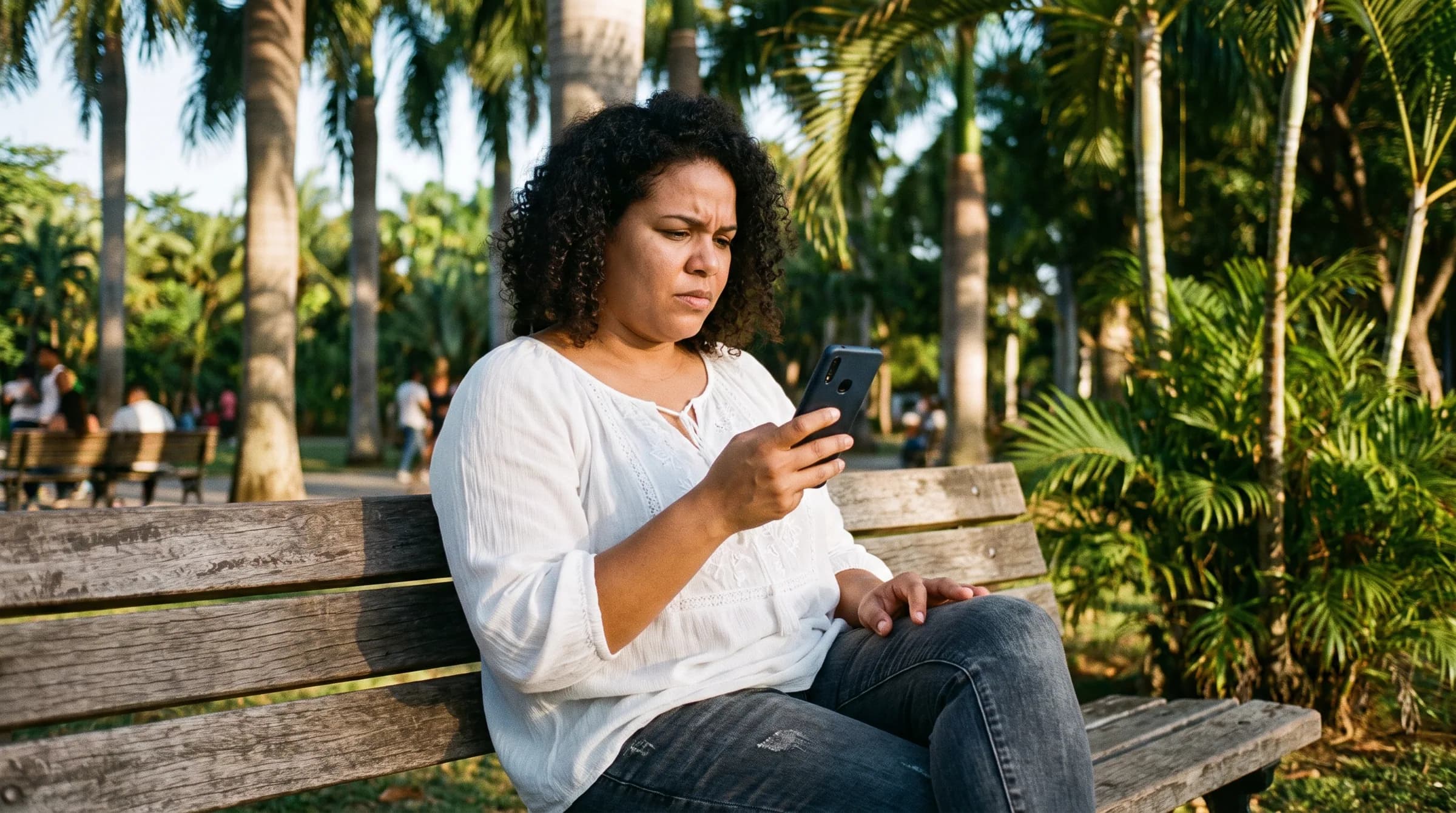
Carla receives three different "contracts" via WhatsApp for the same apartment. One arrives as a blurry photo, another as a PDF without signatures, and a third as a voice note explaining "the main terms." Each seller assures her that their document is "the official one," but none can explain what steps remain to get the property legally registered in her name.
This situation reflects a common belief in the Dominican market: that receiving a document through chat equals legal security. The reality is that a WhatsApp contract in the Dominican Republic may be just one piece of the full file needed to legally transfer a property.
The problem of confusing speed with validity
WhatsApp speeds up communication, but it doesn't replace the formal real estate process. A message can work for scheduling a viewing or requesting information, but a screenshot or file sent through chat doesn't prove that the person offering the property is its legal owner.
Toca Timbre
Verified properties, certified agents. You just decide.
The Real Estate Registry Law regulates how real property rights must be registered in Dominican territory. Requirements include a private or authentic deed, the title certificate, and current tax certifications. This explains why a document received via WhatsApp raises more questions than answers: it typically represents only part of the complete file.
What documents a WhatsApp contract in the Dominican Republic actually needs
 According to the Real Estate Registry, a sale transfer requires:
- A transfer deed that meets legal requirements
- A duplicate or transferable extract of the title certificate
- Current certification of Real Estate Asset Tax (IPI)
- Correct property identification
- Applicable notarial formalities
The Internal Revenue Authority establishes that the file must include the official form, the original notarized deed, and copies of both parties' identification. The transfer tax is generally 3% of the property's value.
Carla's experience: when more information creates more confusion
Carla opens multiple chats at once, compares prices, and replies to the most attractive listing. Each conversation gives her a momentary sense of progress but increases her uncertainty: is it the same property? Does the price include taxes? Who receives the deposit? Is there exclusivity?
Without a professional managing the information, Carla ends up comparing listings instead of comparing actual transactions. The person replying on WhatsApp could be an agent, owner, or middleman, but she has no way to verify it from the chat.
How a verified agent transforms WhatsApp into a useful tool
A verified agent can turn chat into an effective organizational tool:
- Sends uniform fact sheets with complete information
- Explains which documents are available for review
- Clearly separates price from closing costs
- Coordinates independent legal review
- Puts next steps in writing
Verification should include the agent's identity, verifiable references, authorization to market the property, and clarity about fees and representation.
The question every first-time buyer should ask
Before signing any document, Carla should ask: "Who will be responsible for coordinating the complete notarial process, what documents and costs does it include, and how can I verify each step before making the final payment?"
This question turns a general explanation into a concrete, verifiable conversation. It also distinguishes the role of the real estate agent from the lawyer or notary, who must formalize the transaction in accordance with applicable law.
Red flags in WhatsApp conversations
If the intermediary avoids delivering complete documents, pressures you to deposit quickly, or claims that chat substitutes for legal formalities, that behavior should be considered a warning sign.
Transparent conversation should identify the responsible notary, provide a written list of documents, explain the payment timeline, and confirm what receipts you'll receive as the buyer.
Reflection: organize before you decide
WhatsApp isn't the problem; the problem is using it as your only source of security. A sense of control doesn't come from receiving more messages—it comes from knowing what's being verified, who's responsible for each part, and what condition must be met before you hand over money.
Carla doesn't need to abandon chat, but she should complement it with document verification, independent legal review, and confirmation of the property's registry status.
If you're starting your home search and want to explore the market with greater clarity, Toca Timbre is an app where you can see properties listed by agents and contact them directly via WhatsApp from a more organized starting point. Toca Timbre.
Frequently Asked Questions
Is a contract sent via WhatsApp valid in the Dominican Republic?
A document sent via WhatsApp can be part of the process, but it doesn't replace the legal requirements for transferring property. Validity depends on meeting notarial formalities, including all documentation required by the Real Estate Registry, and being executed by authorized parties.
What should I verify before signing a contract received via WhatsApp?
You should confirm the identity and authorization of whoever sends the document, verify that the property is registered in the seller's name, check that there are no liens or encumbrances, and ensure the document includes all transaction terms. It's recommended that an independent lawyer review the contract.
How much does it cost to legalize a purchase-sale contract in the Dominican Republic?
Costs include the transfer tax (usually 3% of the property value), notary fees, registration expenses, certifications, and possible additional legal fees. The exact amount depends on the property's value and transaction complexity. Request a detailed breakdown before signing.
Sources
- Real Estate Registry — https://ri.gob.do/wp-content/uploads/Tramites/DNRT/TRANSFERENCIA_POR_VENTA.pdf
- Internal Revenue Authority — https://dgii.gov.do/publicacionesOficiales/bibliotecaVirtual/registrados/otros/Documents/Brochure%20Transferencia%20de%20Inmueble.pdf
- Real Estate Registry Law — https://docs.republica-dominicana.justia.com/nacionales/leyes/ley-108-05.pdf
- Registry Requirements — https://ri.gob.do/wp-content/uploads/2023/08/Resoluci%C3%B3n-DNRT-DT-2023-001-Requisitos-para-Actuaciones-Registrales.pdf