Why Many First-Time Buyers Regret Their Home Purchase in the Dominican Republic
16 de junio de 2026 · 5 min min read
Discover the real causes of regret when buying your first home in the Dominican Republic and how to avoid costly mistakes.
Why Many First-Time Buyers Regret Their Home Purchase in the Dominican Republic
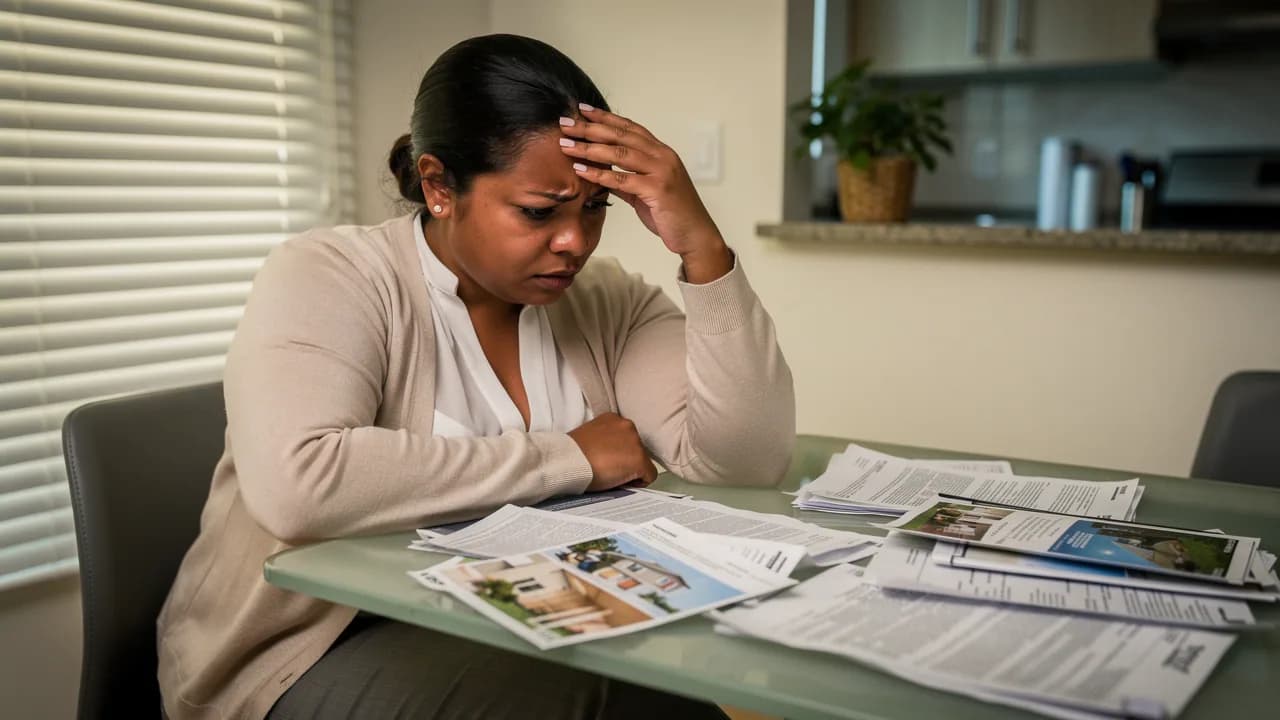
Carolina had been saving for two years for her first home. Every month she set aside RD$15,000 religiously, and when she saw that apartment on Instagram with "final units available" and "RD$50,000 bonus only this week", she felt it was her moment. Three months later, she discovered that the project had no construction license and that several buyers had lost their money.
This story repeats constantly in the Dominican real estate market. Many first-time buyers end up regretting not because of lack of resources or poor judgment, but because the system is designed to generate rushed decisions in a disorganized environment.
The Real Problem: Decisions Based on Marketing, Not Analysis
Toca Timbre
Propiedades reales. Agentes verificados. Tú decides sin miedo.
The common belief is that "you have to take advantage of offers before they're gone". This mentality, fueled by real estate marketing on social media, leads to making one of the most important financial decisions of your life without adequate preparation.
In the Dominican Republic, the home buying process is full of confusing signals. Developers promote projects with spectacular images, temporary bonuses, and urgency messages. "Price only today", "exclusive offer on Instagram", "final units" become the decision factors, when they should be secondary elements.
The result is predictable: buyers who make decisions based on passion or illusion, without verifying basic documents like construction permits, property titles, or developer history.
When Financial Reality Doesn't Match the Dream
Marta had a monthly income of RD$45,000 and thought she could handle an RD$18,000 payment. What she didn't calculate were maintenance expenses (RD$3,500), mandatory insurance (RD$1,200), repair emergencies, and initial furnishings. Within six months she felt financially suffocated.
This is the second major factor in regret: the disconnect between the desire to own your own home and the real ability to sustain it. Many people confuse the ability to pay the down payment with the ability to maintain all associated costs long-term.
Buying a home in the Dominican Republic requires complete financial analysis:
- Income vs. real expenses: Not just the mortgage payment, but maintenance, insurance, utilities, and repairs
- Emergency fund: At least 3-6 months of expenses set aside before committing
- Initial expenses: Furnishings, utility connections, moving, and legal costs
- Future flexibility: Ability to handle income changes or unexpected expenses
The Trap of Not Comparing with Continuing to Rent
A common rushed decision is not seriously evaluating the option of continuing to rent while saving for a more strategic purchase. In some areas of Santo Domingo or Santiago, a well-negotiated rental offers better location and less stress than a poorly chosen property on the outskirts.
For example, renting in Piantini for RD$25,000 monthly can be more convenient than buying an apartment in Villa Mella with a RD$20,000 payment, if transportation cost, commute time, and appreciation potential don't favor the purchase.
The Legal Risks Nobody Clearly Explains
The Dominican real estate market has specific risks that many first-time buyers don't know about:
- Title verification: Confirming the seller is truly the legal owner
- Construction licenses: Many projects are promoted without current permits
- Cadastral measurement: The property must match official records
- Pending lawsuits: Seizures or legal disputes over the property
- Developer history: Track record of delivery and construction quality
Ignoring these elements to keep up with a "limited offer" opens the door to scams, indefinite delays, or projects that never get completed.
A Clearer Process to Reduce Regret
The key is to reverse the traditional order. Instead of falling in love with a property and then seeing if it works financially, it's better to:
1. Clarify the Rent vs. Buy Decision
- Analyze real budget with all expenses included
- Define your objective: housing to live in, investment, or second residence?
- Compare scenarios of continuing to rent 2-3 more years while saving
2. Contact Only Verified Agents and Projects
- Work with verified real estate agents operating under formal companies
- Review track record and references of developers
- Demand contracts reviewed by independent lawyer
- Confirm that payments are made to business accounts, not personal ones
3. Verify Documentation Before Any Commitment
- Verify property titles at the Real Estate Registry
- Confirm current permits and licenses
- Visit the property or land in person
- Review cadastral measurement and absence of lawsuits
This process takes more time, but transforms home buying from an impulsive decision into a planned project.
Reflection: Where You Start Determines Everything That Follows
Regret in a first-time home purchase isn't inevitable. It arises when the process starts in the wrong place: with aggressive marketing, time pressure, and lack of organized information.
When a first-time buyer begins their search with financial clarity, contacts verified agents, and has access to organized market information, the chances of making a good decision increase considerably.
The Dominican real estate market will remain complex, but your experience as a buyer doesn't have to be chaotic. The difference is in how and where you decide to start your search process.
If you're considering buying your first home in the Dominican Republic, there are tools that let you explore the market with more clarity before contacting agents. Toca Timbre is an application where you can see properties published by verified agents and contact them directly via WhatsApp when you find options that fit your profile. Toca Timbre.
Frequently Asked Questions
How much should I save before buying my first home in the Dominican Republic?
Beyond the down payment (typically 10-20% of the property value), you need an emergency fund equal to 3-6 months of total expenses, plus budget for legal costs, initial furnishings, and utility connections. As a general rule, your housing expenses shouldn't exceed 30-35% of your monthly net income.
How do I verify that a real estate project is legitimate in the Dominican Republic?
Verify that the developer has a current construction license, confirm land ownership at the Real Estate Registry, check the track record of previous projects, and demand that all payments be made to business accounts linked to the project. Never make significant payments to personal accounts of the seller or agent.
Is it better to rent or buy a home in the current Dominican market?
It depends on your financial situation, long-term objectives, and the specific market in your area of interest. If you don't have solid financial stability, a robust emergency fund, and clarity about your ideal location long-term, renting can give you more flexibility while planning a more strategic purchase.
Sources
- How to Avoid Real Estate Scams in the Dominican Republic and Protect Your Investment — Dream Home DR
- Real Estate Scams in the Dominican Republic — Eliun Real Estate
- How to Avoid a Scam — InvierteRD
- Real Estate Scams Affect Hundreds of People in the Dominican Republic — El Transporte
- Dominican Real Estate Portal
- HabitatPro RD