Why Some Buildings Ban Airbnb in the Dominican Republic
20 de octubre de 2026 · 5 min min read
Discover why many condominiums limit or prohibit short-term rental and what you need to know before buying to avoid surprises.
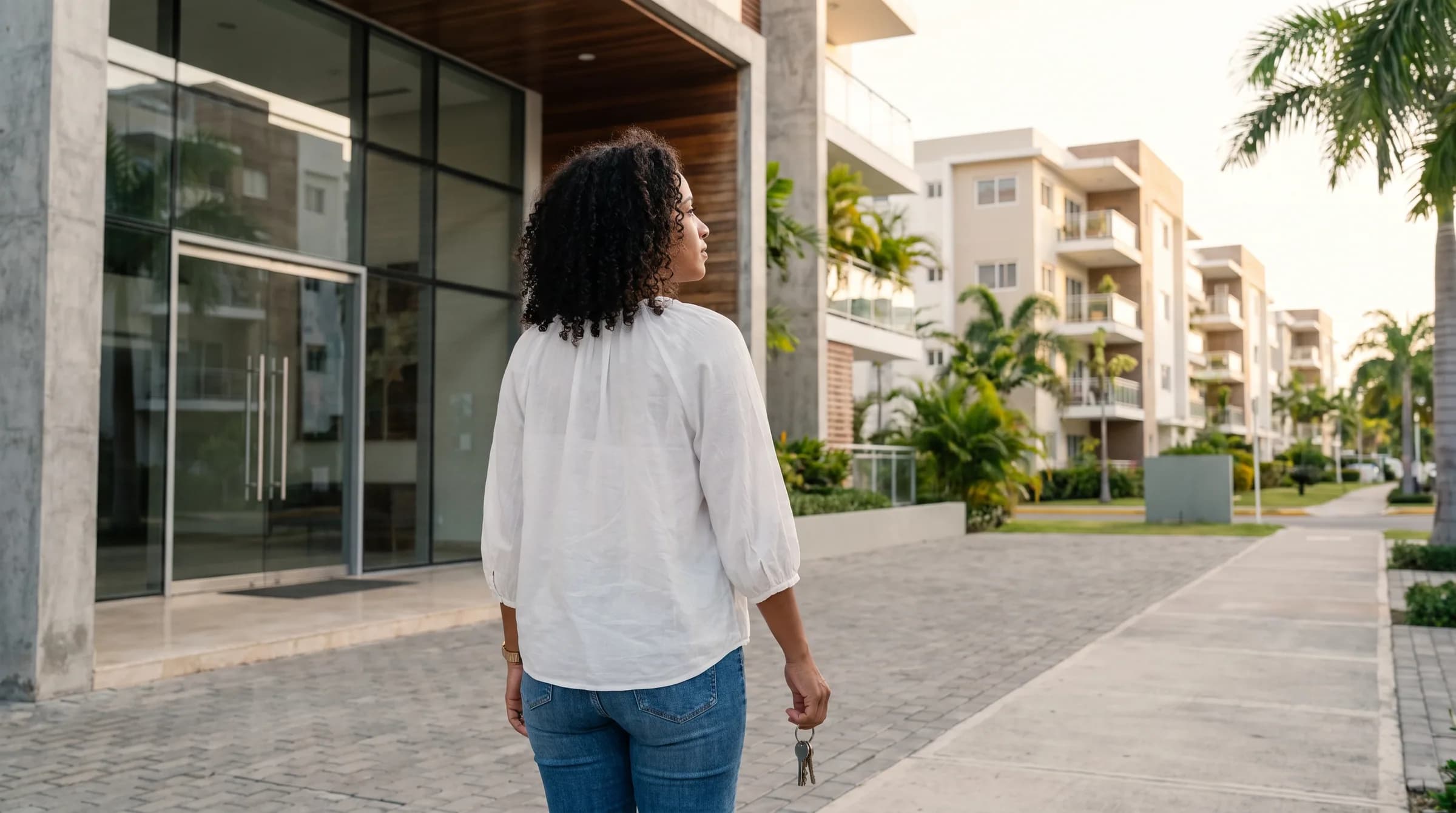
Why Some Buildings Ban Airbnb in the Dominican Republic
Marta had calculated everything perfectly. Her apartment in a new Santo Domingo project would generate $1,200 monthly in short-term rental income in the Dominican Republic according to the developer's projections. Six months after moving in, when she finally decided to activate her Airbnb account, the building's management informed her of something no one had mentioned: the condominium bylaws expressly prohibited stays shorter than 30 days.
This situation repeats weekly throughout the Dominican Republic. Buyers who purchase properties expecting to generate short-term rental income, without investigating the legal and regulatory restrictions that could limit or prevent them from operating as they expected.
The Legal Framework for Short-Term Rentals in Condominiums
The Dominican Republic has no single law banning Airbnb across the entire nation. Regulation is based on a combination of three levels: Law 5038 on Condominiums, the internal bylaws of each building, and regulations from the Ministry of Tourism (MITUR) currently under development.
Toca Timbre
Verified properties, certified agents. You just decide.
Law 5038 permits owners to use their units as long as they don't affect the safety, morality, or tranquility of other residents, and as long as the use complies with the condominium's bylaws. This means each building can decide through its owners' assembly whether to permit, regulate, or completely prohibit short-term rentals.
In practice, this has created a patchwork of situations: condominiums prohibiting stays shorter than 6 months, others only allowing guests registered with an ID, and buildings that still have no defined position on the matter.
Why Condominiums Are Restricting Airbnb
 Restrictive bylaws don't arise from whim. Owners' assemblies have identified concrete problems when short-term rentals aren't regulated:
Security and access control: The constant flow of unknown guests complicates the building's security management. Many condominiums lack systems designed to handle temporary access codes or key delivery to non-permanent residents.
Noise and cohabitation: Properties on short-term rental platforms tend to host groups celebrating or tourists with schedules different from permanent residents, creating conflicts over noise, especially in buildings not designed for mixed use.
Common area wear and tear: Increased use of elevators, pools, gyms, and lobbies by temporary guests accelerates deterioration and raises maintenance costs that all owners must cover.
Legal liability: Condominiums face uncertainty about their responsibility for incidents involving Airbnb guests, from accidents to property damage.
MITUR's New Regulation
In parallel, the Ministry of Tourism is pushing comprehensive regulation that would formalize short-term rental as a legitimate tourism activity. This proposal, currently in public consultation, includes:
- Mandatory registration with MITUR of all properties
- Tourism operation license
- Taxpayer Registry (RNC) and tax compliance with ITBIS
- Safety standards similar to hotels (fire extinguishers, evacuation routes)
- Random inspections
Additionally, when the property is under condominium regime, you'll need to submit the condominium bylaws to verify there are no restrictions on short-term rental.
The Cost of Not Researching Before Buying
Returning to Marta's case, her mistake wasn't buying the apartment—it was not verifying the correct information at the right time. She assumed "you can rent it" meant "you can do Airbnb," without distinguishing between long-term residential rental and short-stay tourism rental.
This misunderstanding cost her approximately RD$350,000 in projected first-year income, plus the stress of having to restructure her financial plan toward traditional 12-month rental, with 40% lower profitability than expected.
How to Verify Before Buying
To avoid Marta's situation, the verification process should include:
Review the complete condominium bylaws: Don't settle for verbal answers. Request the official document and specifically read clauses about unit use, guests, and commercial activities.
Ask about future changes: Check whether the owners' assembly is discussing bylaw modifications that could affect short-term rental.
Consult MITUR status: Confirm whether the project has or can obtain the necessary licenses for tourism operation under the new regulations.
Evaluate the building's profile: Buildings designed exclusively for permanent family residents tend to develop more restrictive bylaws than projects designed from the start for mixed use.
Two Types of Market Are Emerging
Current reality is creating a clear division in the Dominican real estate market:
"Pure residential" buildings: Condominiums that prohibit or severely restrict short-term rental, focused on offering tranquility and stability to permanent residents.
"Investment-friendly" buildings: Projects that permit and facilitate short-term rental, with tourism administration services, access systems prepared for temporary guests, and strategic locations near tourist attractions.
This differentiation doesn't mean one is better than the other, but rather that each responds to different buyer profiles.
An Informed Decision Reduces Anxiety
The Dominican real estate market isn't broken by having these restrictions. On the contrary, it's maturing toward greater clarity in the rules of the game. Buildings that ban Airbnb don't do so to harm owners, but to protect property value and cohabitation in their specific community.
For buyers, this means an opportunity to choose consciously: properties to live in with guaranteed tranquility, or properties to invest in tourism with higher income potential but also greater operational demands.
The key is asking the right questions at the right time, before falling in love with income projections or project photos.
When you have clarity about the rules from the start, you can make decisions aligned with your real objectives, instead of discovering limitations after you've made a financial commitment.
If you're exploring purchase options and want greater clarity about the Dominican real estate market, you can use Toca Timbre, an app where buyers can see properties posted by verified agents and contact them directly via WhatsApp to ask the specific questions you need before making any decision. You can explore available options at Toca Timbre.
Frequently Asked Questions
Is it legal for a condominium to ban Airbnb in the Dominican Republic?
Yes, it's completely legal. Law 5038 on Condominiums authorizes owners' assemblies to establish internal bylaws that regulate unit use, as long as they don't violate fundamental rights. Prohibiting short-term tourism rentals is considered a valid measure to preserve the building's residential character and cohabitation among owners.
Can I change my condominium's bylaws to allow Airbnb?
Theoretically yes, but it requires a favorable vote from the majority of owners in assembly. In practice, it's very difficult to reverse a prohibition once established, especially if permanent residents already value the building's tranquility. It's more feasible to influence the bylaws before restrictions are established.
What happens if I ignore the ban and rent on Airbnb anyway?
Ignoring the condominium bylaws can result in fines, access restrictions for your guests, and even legal action from management. Additionally, if MITUR implements mandatory registration, you won't be able to comply with official requirements if your condominium bans the activity, leaving you operating informally with all the risks that entails.
Sources
- Airbnb against the wall in DR: must comply with regulations
- Short-term rentals in condominium Santo Domingo
- Is Airbnb legal in condominium Dominican Republic
- Airbnb and short-term rentals in condominiums can be prohibited
- Airbnb not allowed: warning on properties
- Airbnb in condominiums: analysis in light of laws
- Legal aspects you should know about short-term rental
- Ministry of Tourism Resolution mandatory registration for short-term rentals
- Short-term rental regulation goes to public consultation