Why Some Dominicans Stop Paying Their Mortgage and How to Avoid It From Day One
25 de junio de 2026 · 5 min min read
Discover the 3 main reasons Dominican families stop paying their mortgages and how to prevent these risks from the start.
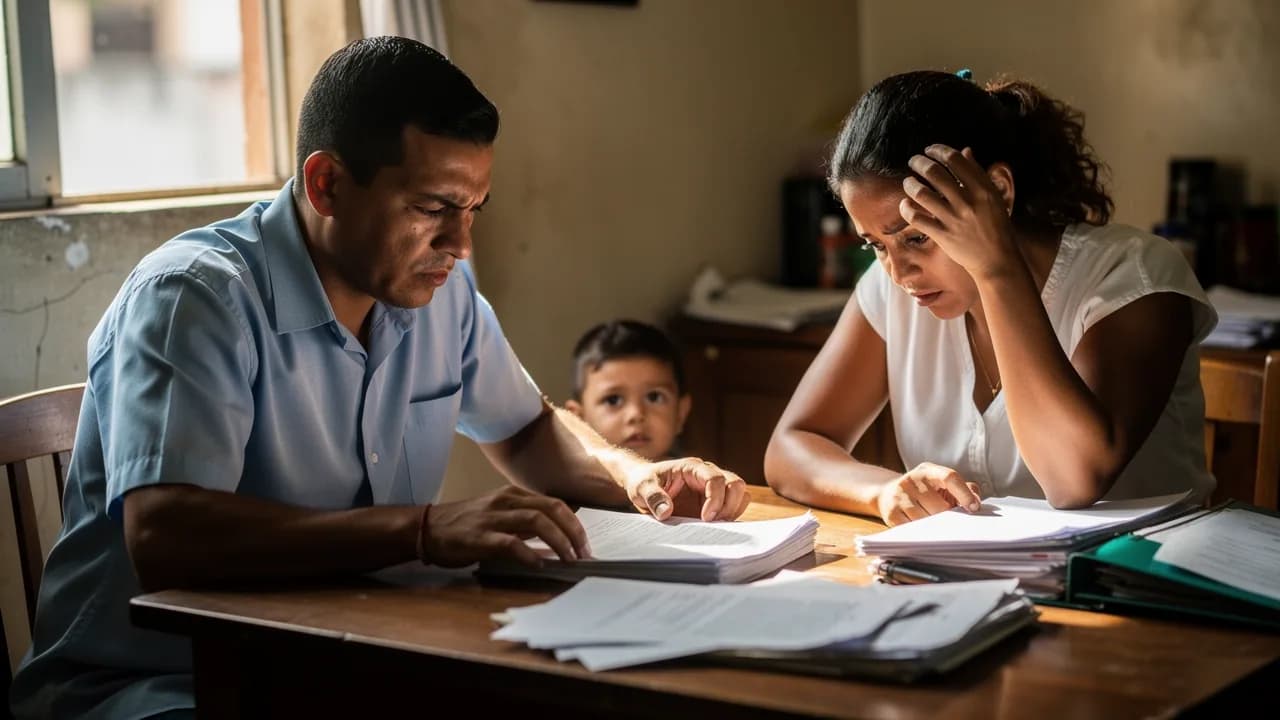
Why Some Dominicans Stop Paying Their Mortgage and How to Avoid It From Day One
Carlos thought he'd found the perfect house in a residential project in Santiago. The monthly payment seemed manageable: RD$28,000 for a RD$3.2 million home. Two years later, he stopped paying. It wasn't due to job loss or a medical emergency. Simply, the financial reality he hadn't calculated well from the start became unsustainable.
In the Dominican Republic, stories like Carlos's repeat more often than imagined. Families that start the home purchase process in the Dominican Republic with optimism end up facing difficulties meeting their mortgage obligations. The problem isn't always lack of income, but poorly structured decisions from the first market contact.
The False Belief: "If the Bank Approves Me, I Can Pay"
Many people believe bank approval equals real payment capacity. This mentality creates false security that can become the first step toward future financial problems.
Toca Timbre
Propiedades reales. Agentes verificados. Tú decides sin miedo.
The reality is banks evaluate risk from their institutional perspective, not from the comfort of the debtor's daily life. A family might qualify for a RD$25,000 monthly mortgage, but that doesn't mean paying that amount lets them maintain their lifestyle, save for emergencies, or cover unexpected expenses.
In the Dominican market, where many families have variable income or work informally, this difference between "being able to qualify" and "being able to pay comfortably" becomes even more critical.
The Three Main Reasons for Payment Default

1. Over-indebtedness From the Start
Over-indebtedness occurs when total financial burden exceeds the buyer's real payment capacity. In the Dominican Republic, this frequently happens because people underestimate their actual expenses or overestimate income stability.
María Elena, an accountant at a Santo Domingo company, calculated she could put RD$30,000 monthly toward her mortgage based on her fixed salary. She didn't consider she also had a personal loan of RD$8,000, transportation expenses of RD$12,000, and her husband worked on commission with variable income. When commissions dropped for six consecutive months, the mortgage payment became impossible.
The general rule suggests housing expenses shouldn't exceed 30-35% of net family income. However, in a market where it's common to have multiple financial commitments, this percentage should be adjusted considering all existing debts.
2. Properties Priced Above Real Market Value
When a property is purchased above its real market value, the buyer is in a vulnerable position. If they need to sell due to economic difficulties, they probably won't recover what they invested, complicating any exit strategy.
In some residential projects, especially in tourist areas like Punta Cana or Bávaro, it's common to find properties marketed 15-20% above actual market price. This seemingly small difference can represent hundreds of thousands of pesos in overpayment and unnecessarily high monthly payments.
The home purchase process must always include objective price comparison in the area, preferably with recently sold properties, not just those currently on offer.
3. Lack of Clear Information From the Beginning
Many people sign mortgage agreements without fully understanding how their monthly payment might vary, which insurance is mandatory, what actual closing costs are, or what options they have in case of future difficulties.
Luis bought an apartment thinking his payment would be fixed at RD$22,000. He didn't know it had a variable rate adjusted yearly, nor that he had to pay life insurance, property insurance, and municipal taxes separately. When his actual payment reached RD$28,500, it was too late to renegotiate.
This initial lack of clarity doesn't just affect budget; it generates constant anxiety. When people don't understand their financial commitment, each adjustment or additional charge feels like a threat.
How to Avoid These Risks From Your First Real Estate Agent Contact
Preventing mortgage problems doesn't start at the bank, but when you decide to search for property. This is where the quality of guidance makes the difference between a structured purchase and a rushed decision.
Evaluate Real Capacity Before Searching
Before visiting the first property, you need clarity on:
- Real net income: Not just base salary, but actual take-home after taxes and deductions
- Current fixed expenses: Including all debts, insurance, food, transportation, and family expenses
- Emergency fund: Keep at least 3-6 months of expenses available after down payment
- Payment capacity: What you can pay without compromising financial stability
Compare Prices Objectively
Every property must be evaluated in context. This means comparing prices per square meter in the area, researching similar recent sales, and considering factors like exact location, construction condition, and resale potential.
Verified real estate agents can provide this information transparently, helping the buyer understand whether the asking price aligns with the real market.
Fully Understand the Financial Commitment
Before signing anything, the buyer must have complete clarity on:
- Interest rate structure (fixed or variable)
- All insurance and additional costs
- Scenarios for payment changes
- Available options in case of economic difficulties
- Process and costs for early sale if necessary
The Decisive Moment: Where You Start Determines Everything
The difference between a successful mortgage experience and a problematic one is defined in the first decisions. When someone begins their property search in the DR with clear information, realistic budget, and professional support, they significantly reduce the risk of future problems.
The Dominican real estate market offers excellent opportunities for families who approach it with preparation and criteria. The challenge isn't finding financing, but structuring a purchase that's sustainable long-term and contributes to family wealth instead of becoming a source of financial stress.
The key is prioritizing clarity over speed, information over emotion, and sustainability over excessive aspirations.
If you're considering buying a home in the Dominican Republic, tools exist to help you explore the market with greater clarity from the start. Toca Timbre is an application where you can see properties published by verified agents and contact them directly via WhatsApp to ask the right questions before committing to any decision. You can explore available options at: Toca Timbre
Frequently Asked Questions
What percentage of my income should go to the mortgage?
The general recommendation is not to exceed 30-35% of net family income on housing expenses, including mortgage, insurance, and taxes. However, this percentage should adjust based on your other debts and income stability. In the Dominican Republic, where many people have variable income, it's prudent to be more conservative and consider scenarios of temporary income reduction.
How can I tell if a property's price is inflated?
Compare the price per square meter with similar properties recently sold in the same area. Ask your real estate agent for data on actual sales, not just properties on offer. Also consider factors like exact location, construction condition, amenities, and resale potential. A second professional opinion is always recommended for important purchases.
What do I do if I already signed but realize I can't pay?
It's most important to act quickly. Contact your bank immediately to explore options like loan modification, temporary grace period, or debt restructuring. You might also consider selling the property before falling into default. Avoid waiting until you're in arrears, as this significantly reduces your options and can damage your credit history.
Sources
- Mortgage Default — Rocket Mortgage
- How to Get Out of a Mortgage — Rocket Mortgage
- I Can't Pay My Mortgage — Debt Affected Association
- Help I Can't Pay My Mortgage — 60 and Much More
- Strategies to Protect Your Home in the Dominican Republic — Carmen German Real Estate
- Options if I Can't Pay My Mortgage — Consumer Finance
- Problems Paying Mortgage — FTC
- Why Did My Mortgage Payment Go Up — Consumer Finance
- Mortgage Debtor Guide — Bank of Spain
- How to Avoid Worries When Buying a House — Q'Pasa