Fear of Mortgage in the DR: How to Overcome It Step by Step
24 de junio de 2026 · 5 min min read
Fear of mortgages paralyzes many first-time female buyers in the DR. We explain how to transform that fear into informed decisions.
Fear of Mortgage in the DR: How to Overcome It Step by Step
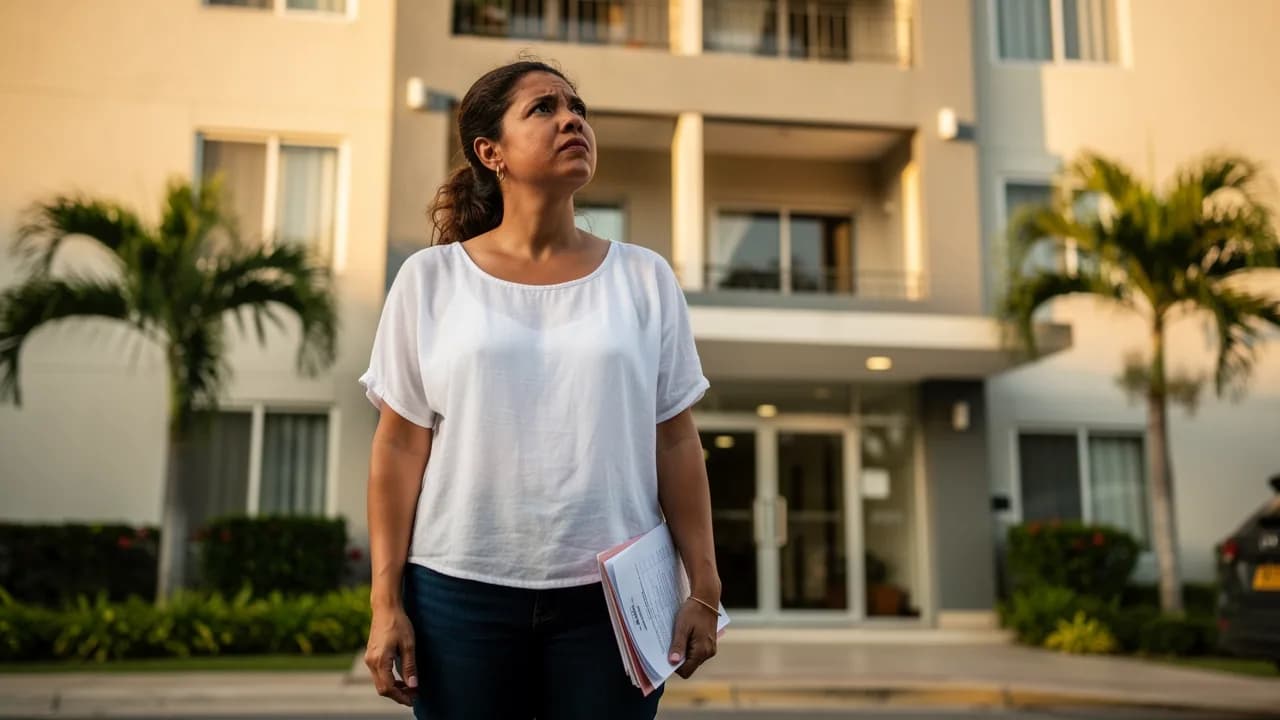
Carmen has been viewing apartments in Santiago for three months. Every time an agent mentions "mortgage," she feels a knot in her stomach. "What if I sign something wrong?", "What if I can't pay later?", "What if the bank scams me?". That fear paralyzes her, postponing a decision that could change her life.
Mortgage fear isn't unique to Carmen. In the Dominican Republic, many first-time female buyers associate bank financing with irreversible mistakes, incomprehensible contracts, and debt that will trap them for life. This fear, while understandable, is fed more by misinformation than real risks.
The False Belief That Paralyzes Buyers
The most damaging belief is that "if something goes wrong with the mortgage, I lose everything and stay indebted forever." This perception ignores that the Dominican banking system has regulations, contracts can be reviewed before signing, and professionals exist whose job is to protect the buyer.
Toca Timbre
Propiedades reales. Agentes verificados. Tú decides sin miedo.
In reality, mortgage in the Dominican Republic is a regulated tool overseen by the Central Bank, with standardized processes and multiple verification points before any final signature. Banks also have incentives for the loan to work, not to fail.
Why This Fear Arises in the Dominican Market
The Dominican financial system, like many aspects of the local real estate market, can seem disorganized to someone unfamiliar with it. Banks speak in technical jargon, costs are presented in fragmented ways, and there's often lack of clarity about the complete process.
Additionally, the investment amount is significant. With a 20% down payment, plus 3% Property Transfer Tax, legal fees, and closing costs, a buyer can feel like they're betting their life savings without completely understanding the rules.
Negative experiences nearby also fuel fear. Stories of relatives who "lost a house" or poorly explained mortgages create perception that the banking system always has the advantage over the buyer.
The Moment of Truth: When Fear Takes Control
Let's return to Carmen. She found a RD$4.2 million apartment in a reliable project. The agent explained she'd need RD$840,000 down payment plus approximately RD$200,000 in closing costs. With RD$1.1 million in savings, the numbers work.
But when the agent mentioned "loan application," "income evaluation," and "signing bank documents," Carmen felt panic. "What if I don't understand what I'm signing?", "What if my income isn't enough?", "What if we discover a legal problem with the apartment afterward?"
That emotional moment is common. The buyer's mind focuses on everything that can go wrong, instead of seeing the structured process that can be followed with proper support.
How to Transform Fear Into Structured Process
Step 1: Understand Basic Requirements
Before searching for properties, Carmen can clarify what she needs for a mortgage in the Dominican Republic:
- Verifiable income (employment letters, 3-6 months bank statements)
- Clean credit history or one in the process of improvement
- Savings for the down payment (usually 20% of value)
- Updated personal documents (ID, tax returns)
Step 2: Calculate Realistic Payment Capacity
The general rule is the mortgage payment shouldn't exceed 30-35% of monthly income. If Carmen earns RD$80,000 monthly, her maximum payment would be approximately RD$25,000-28,000. This helps her define a realistic property price range to seriously consider.
Step 3: Surround Yourself With Verified Professionals
Fear decreases when Carmen understands she's not alone in the process. A professional team includes:
- A real estate agent who understands the financing process
- A real estate attorney who reviews titles and contracts
- A credit officer at the bank who clearly explains terms and conditions
Every important document goes through professional review before any signature.
Step 4: Take Advantage of Bank Pre-qualification
Before reserving any property, Carmen can request pre-qualification. This clarifies how much they'd really lend her, at what rate, and under what conditions. With that information, she can search for properties within a confirmed budget.
Correct Questions About Mortgage Before Reserving
When Carmen is ready to reserve a property, these questions reduce uncertainty:
- "With my income profile, what percentage of the value do banks typically finance?"
- "What happens to my down payment money if the bank doesn't approve the loan?"
- "Can I include a clause making the purchase conditional on loan approval?"
- "How long does credit evaluation normally take and does it fit the reservation period?"
These questions not only provide practical information, but let her assess if the agent truly understands the financial process and speaks with transparency.
The Step-by-Step Process That Calms Anxiety
With a clear map, mortgage stops being a mystery:
- Initial evaluation: Income, debts, and credit record review
- Bank pre-qualification: Confirmation of amount and approximate conditions
- Property selection: Within your pre-qualified range, preferably under trust account
- Conditional reservation: With clauses protecting the buyer
- Formal loan application: With complete documentation
- Appraisal and approval: Standard bank process
- Legal review: Before any final signature
- Closing and delivery: With all documents verified
Each step has a clear purpose and verification points that protect the buyer.
The Transformation: From Fear to Tool
Three months later, Carmen no longer sees mortgage as a threat. She understands it as a tool that, properly used and with proper support, lets her access homeownership without compromising financial stability.
The shift wasn't eliminating fear, but replacing misinformation with a clear process. Carmen now knows what to ask, what documents she needs, what her real financial limits are, and which professionals can support her.
The Dominican real estate market can seem disorganized, but the mortgage process has structure when approached with proper information and support.
For buyers like Carmen seeking clarity before making important decisions, tools exist that can facilitate the first step. Toca Timbre is an app where you can explore properties published by real estate agents and contact them directly via WhatsApp, allowing you to ask the right questions from the beginning of the process. You can explore it at Toca Timbre.
Frequently Asked Questions
What happens if the bank doesn't approve my loan after I reserve a property?
This depends on clauses included in the reservation contract. It's recommended to include a clause making the purchase conditional on loan approval for a minimum amount. Without this protection, you could lose your down payment. An experienced agent should be able to explain these options before you make any payment.
How much money do I need to have saved besides the 20% down payment?
Besides the 20% down payment, you need approximately 3-5% additional for closing costs: Property Transfer Tax (3%), legal fees, bank appraisal, insurance, and other minor costs. For a RD$4 million property, besides the RD$800,000 down payment, you should have RD$120,000-200,000 additional for closing.
How can I know if my credit history will let me get a good mortgage?
You can request your credit report from DataCrédito or from the credit department of any bank. You can also do an informal pre-qualification where they'll tell you what conditions you might get. If your history has problems, many banks will guide you on how to improve it before formally applying.
Sources
- Common fears and concerns of first-time homebuyers
- A guide for first-time homebuyers
- Economist explains key steps for acquiring your first home
- What you should know before buying your first home
- Frequently asked questions about mortgages in the DR
- Central Bank of the Dominican Republic
- Are you afraid of a mortgage: Quick guide for first-time real estate parents
- How to get financing from Dominican banks