Remote Property Inspection: A Guide for Buyers in the Dominican Republic
14 de octubre de 2026 · 5 min min read
Learn how to inspect a property from a distance in a structured way. What to ask your agent and how to reduce risks when buying from abroad.
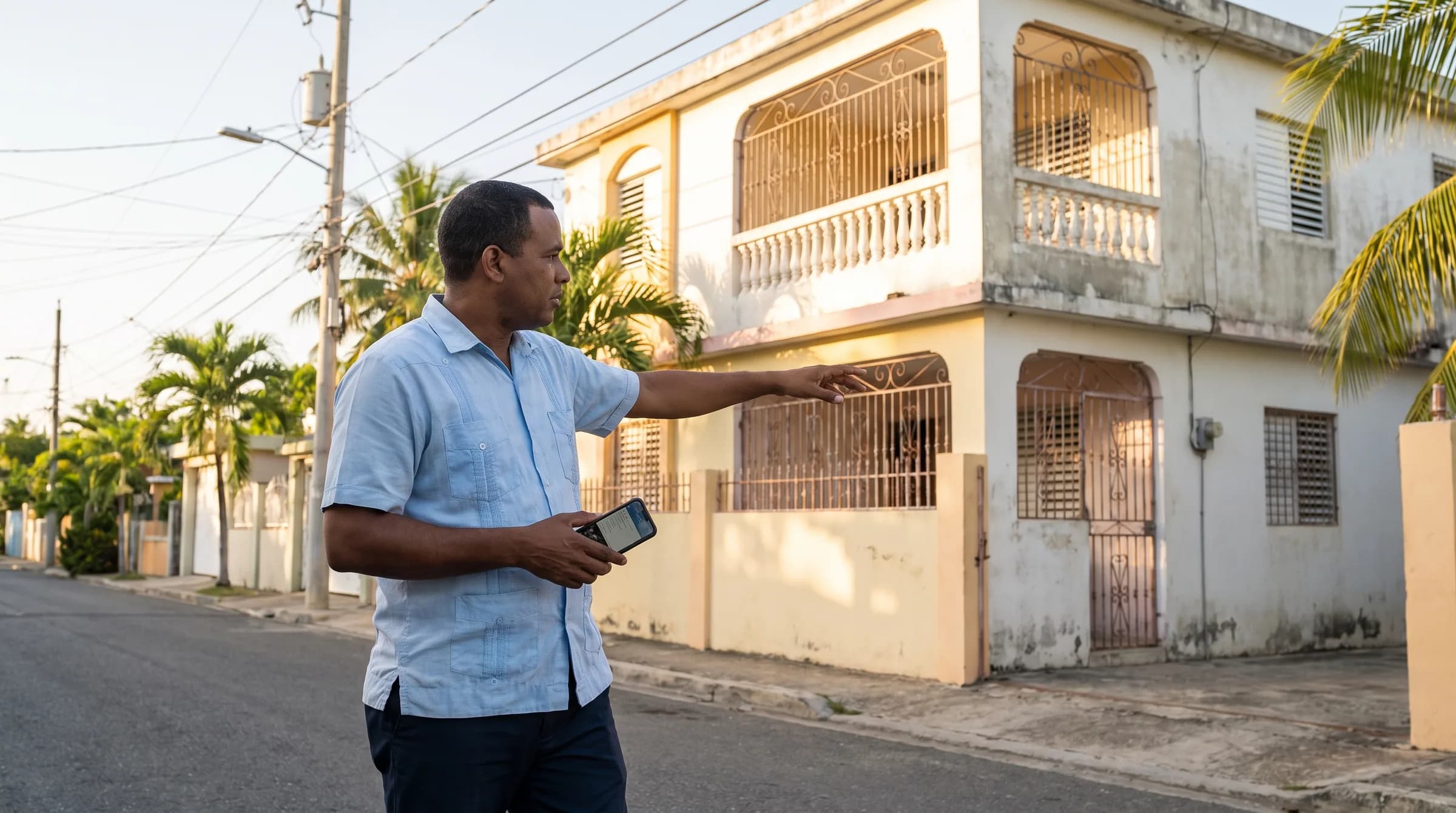
Remote Property Inspection: A Guide for Buyers in the Dominican Republic
When you live outside the Dominican Republic but want to buy a property in the country, an inevitable question comes up: how do I really evaluate the property without being there in person? Remote property inspection in the Dominican Republic has become a necessity for thousands of Dominicans in the diaspora, but many confuse a casual video call with a serious evaluation of the property.
This confusion has consequences. Buyers who thought they had "seen" the property discover afterward problems with humidity, faulty installations, or problematic surroundings that a structured inspection would have caught from the start.
The Common Mistake: Confusing Seeing with Inspecting
Most remote buyers make the same mistake: they ask the agent to "show me the house on video" and receive a quick tour focused on the most attractive spaces. The agent shows the living room, the balcony with a view, the new finishes, but avoids technical details like the electrical panel, corners where humidity accumulates, or the real noise from the surroundings.
Toca Timbre
Verified properties, certified agents. You just decide.
This dynamic creates a false sense of knowledge. The buyer walks away from the video feeling like they "already know" the property, when in reality they've only seen an editorialized version of it.
The Difference Between Seeing and Evaluating a Property
 Seeing the house is an emotional experience: you focus on how you imagine living there, whether the spaces appeal to you, the current décor. It's useful for deciding whether the property interests you, but it's not enough to make a purchase decision.
Inspecting the house is a technical and structured process. You evaluate the real physical condition of the property, its installations, the true surroundings, and any potential problems that might need repair or price negotiation.
What to Ask Your Agent for a Real Remote Inspection
Continuous Video with No Cuts
Request a live or recorded tour in a single take, without edits. This prevents problem areas from being hidden and gives you a real perspective of the layout and condition of the property.
Structured Tour Sequence
- Arrival from the main street: To evaluate access, traffic noise, condition of the roads, and real neighborhood context
- Full exterior: Including sides and back, not just the front view
- Common areas: Lobby, hallways, stairs, elevators, pool, gym
- Each interior space: Showing walls, ceiling, floor, and windows systematically
- Service spaces: Full kitchen, bathrooms, laundry area, storage
- Technical installations: Electrical panel, meters, air conditioning units, water heater, water pump
Functional Tests in Real Time
- Water: Turn on faucets, showers, verify pressure and drainage
- Electricity: Test switches, outlets, lighting
- Doors and windows: Open and close to verify operation and seals
- Air conditioning units: Run for several minutes to evaluate noise and cooling
Inspection of Critical Points
- Corners and ceilings (signs of humidity or leaks)
- Under sinks and washbasins
- Closets and enclosed spaces
- Visible plumbing connections
- Condition of windows and frames
Remote Property Inspection in the Dominican Republic: Unique Aspects of the Local Market
The Environmental Noise Factor
In cities like Santo Domingo or Santiago, noise can vary significantly depending on the time of day. Ask the agent to keep the microphone open for a full minute at different points during the tour, both indoors and outdoors, to capture the real sound of traffic, neighbors, engines, or generators.
Verification of the Immediate Surroundings
Request views from all windows and balconies to confirm what truly surrounds the unit. In the Dominican market, it's common for promotional photos to show only the best perspectives, hiding nearby construction, unpaved streets, or areas under development.
Infrastructure of Services
Ask for specific verification of:
- Stability of electrical supply
- Water pressure at different times
- Condition of the cistern and pump
- Functioning of the electrical backup system
- Available internet connectivity
Real Story: The Difference a Structured Process Makes
Carlos, a Dominican resident in Miami, was evaluating an apartment in Naco for RD$4,200,000. In the first video the agent sent him, he fell in love with the balcony and remodeled kitchen. He was ready to put down the deposit.
His sister, who lives in Santo Domingo, suggested he request a more detailed inspection. In the second structured tour they discovered: humidity on the main bathroom wall, excessive street noise (which the first video hadn't captured), and an air conditioning unit that wasn't cooling properly.
This information allowed him to negotiate a price reduction of RD$300,000 to cover necessary repairs. The difference between "seeing" and "inspecting" saved him from a costly surprise after purchase.
When to Request a Professional Technical Inspection
For properties over US$100,000 or buildings more than 10 years old, consider requesting that a professional inspector accompany the agent during the tour. Although in the Dominican Republic a technical inspection is not required by law, it can identify structural or installation problems that an untrained eye might overlook.
Beyond the Physical: Documentary Verification
A complete remote inspection should also include document review. Request digital evidence of:
- Updated title certificate
- Tax payment and maintenance fee status
- Construction permits when applicable
- Condo bylaws if applicable
- History of major repairs
Remember that a property can look perfect on video and still have legal or financial issues that affect your investment.
Final Reflection: Building Trust From a Distance
Buying a property from abroad doesn't have to be a leap of faith. A structured remote inspection process allows you to make informed decisions, reduce surprises, and negotiate from a position of real knowledge.
The key isn't in completely eliminating uncertainty—that's impossible with any real estate purchase—but in reducing it to a manageable level through systematic and verifiable information.
When you define a clear evaluation process before falling in love with the property, you transform the anxiety of buying "blind" into the confidence of deciding with solid criteria.
If you're starting your search for properties in the Dominican Republic, consider exploring options through platforms that connect you directly with verified agents. Toca Timbre is an app where you can see properties listed by agents and contact them directly via WhatsApp to request structured remote inspections like the ones we describe here. You can explore available options at Toca Timbre
Frequently Asked Questions
What's the difference between a casual video call and a remote inspection?
A casual video call is usually a quick tour focused on showing the most attractive spaces of the property. A remote inspection is a structured process that includes systematic evaluation of the physical condition, installations, surroundings, and critical points that could require additional expenses.
How long should a complete remote inspection take?
For a typical apartment, between 30 and 45 minutes. For a house with a yard, garage, and multiple levels, it can extend to an hour. The additional time invested in the remote inspection can save you thousands of pesos in unforeseen repairs.
Is it reliable to buy a property without visiting it physically?
A structured remote inspection significantly reduces the risks, but doesn't eliminate them completely. For high-value properties, many buyers choose to combine the remote inspection with a confirmation visit before signing the final contract, or ask a family member or local inspector to do an additional in-person verification.
Sources
- Virtual Remote Showing Guide
- 5 Critical Due Diligence Checks for Property Buyers in the Dominican Republic
- Remote Property Viewing Guide
- Legal Guide Dominican Republic Property
- Property Title Problems Dominican Republic Foreign Buyers
- How to Tour Property Remotely: A Practical Guide
- Casa Mapa Buyer Guides
- Dominican Republic Property Due Diligence
- Real Estate Due Diligence Dominican Republic
- Buying a Home Remotely Sight Unseen
- Inspección de Propiedades en República Dominicana
- Lista de Verificación para Visitar una Casa en España
- Inspección Profesional de Propiedades: Clave al Comprar o Vender
- Checklist Visitar Vivienda Antes de Comprar
- Dominican Republic Property Inspections