Real Estate Asset Tax 2026: What Actually Changes?
1 de noviembre de 2026 · 5 min min read
The IPI doesn't affect all properties the same way. Learn the real thresholds, who pays, and how to calculate the impact on your first home.
Real Estate Asset Tax 2026: What Actually Changes?
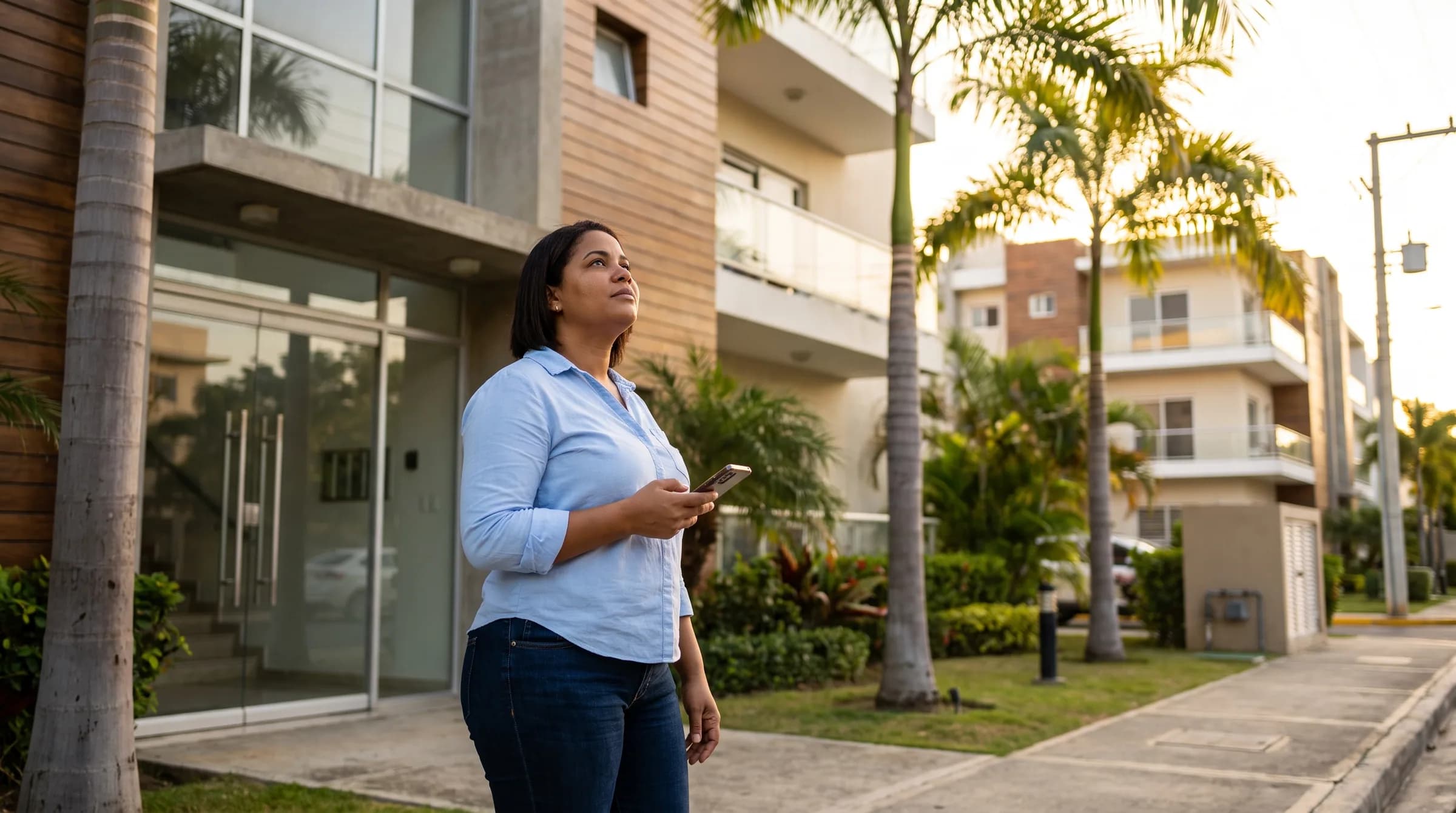
When Carla heard that "property taxes would go up in 2026," she felt that familiar mix of anxiety and confusion. She'd been saving for her first apartment and now wondered if she should rush the purchase or if she simply couldn't afford it anymore. Like many Dominican buyers, Carla had confused rumors with facts and didn't know how to distinguish between different types of real estate taxes.
This kind of uncertainty is common in a market where tax information mixes with speculation and few people clearly explain what each change means. The reality of the Real Estate Asset Tax in the Dominican Republic for 2026 is more specific than alarming headlines suggest.
The Myth of "Higher Tax = Fewer Properties"
The most widespread belief is that any tax increase automatically reduces the number of available properties or makes them more expensive for everyone. This oversimplification ignores how real estate taxes actually work and who they really affect.
Toca Timbre
Verified properties, certified agents. You just decide.
According to the Internal Revenue Service (DGII), the Real Estate Asset Tax for individuals in 2026 maintains a rate of 1% annually, but only on the portion of real estate assets that exceed RD$10,695,494. This threshold increased from RD$10,190,833 in 2025 due to regular inflation adjustment.
The crucial part is understanding that this isn't a tax on each individual property, but on the total value of a person's entire real estate portfolio. If Carla buys an apartment for RD$8 million and doesn't own any other properties, she wouldn't pay IPI because it's below the threshold. The tax only applies if the sum of all her properties exceeds RD$10.7 million.
Will Your First Apartment's Tax Go Up in 2026?
 For most first-time home buyers, the answer is no. Official information from the DGII doesn't indicate a general increase in IPI rates for 2026. Rather, the adjustment of the threshold upward means more property owners are exempt from the tax.
However, there's a common trap: confusing annual IPI with transfer tax. When you buy a property, you normally pay a 3% transfer tax on the value recognized by the tax authority. This is a one-time cost at purchase, not an annual tax on ownership.
For example, if Carla buys an apartment with a fiscal value of RD$6 million, she'd pay approximately RD$180,000 in transfer tax at the time of purchase, but wouldn't have annual IPI because it's well below the RD$10.7 million threshold.
Special Cases: Low-Cost Housing and Exemptions
The DGII established for 2026 a maximum value of RD$5,450,851.12 for the low-cost housing category. Properties in this category may access transfer tax exemptions when acquired with mortgage financing and meet other specific requirements.
There are also particular benefits, such as the exclusion of a single residence for people 65 years old or older, and special treatments for tourism projects with certifications like CONFOTUR. These exemptions shouldn't be assumed automatically without verifying the specific documentation of the project.
The Real Market Impact
What really changes isn't the number of available properties, but the total cost of maintaining large real estate portfolios. An investor with multiple properties whose combined value exceeds the threshold will indeed face 1% annually on the excess. This can influence their decisions to keep, sell, or rent certain units.
For buyers like Carla, the main impact is in closing costs, not future annual taxes. A property worth RD$6 million might require between RD$300,000 and RD$400,000 additional for taxes, legal fees, notarization, registration, and other costs associated with the transfer.
What to Verify Before You Commit
Before putting down a deposit, it's essential to confirm:
- Recognized fiscal value: May differ from the sale price
- Applicable transfer tax: 3% is the general rule, but exemptions exist
- Project classification: If it qualifies as low-cost housing or has a special regime
- Total closing costs: Including all legal and administrative fees
- Estimated future IPI: Based on projected total real estate assets
A responsible agent should provide this information in writing, not as verbal estimates. Documentation should include official certifications when exemptions or special treatments are claimed.
The Importance of Starting Right
Where you start looking for information determines the quality of answers you get. A verified agent with current knowledge of tax regulations can explain these concepts without creating artificial urgency or promising unconfirmed exemptions.
The difference between paying RD$180,000 or RD$50,000 in transfer tax may depend on specific details of the project and the buyer. This variation is only discovered through professional verification, not general estimates or social media information.
Reflection: Beyond the Headlines
The Dominican real estate market will have the same properties after the 2026 tax adjustments. What changes is who pays what, when, and under what conditions. For most first-time home buyers, the IPI impact will be minimal or nonexistent.
The real challenge isn't avoiding taxes that may not apply to you, but understanding the actual costs of each transaction and making decisions with verifiable information. In a market with so much misinformation, clarity before the decision is more valuable than speed in the purchase.
If you're exploring housing options and want to contact agents with current information about tax costs, Toca Timbre is an app where you can see properties posted by different agents and contact them directly via WhatsApp to ask these specific questions: Toca Timbre
Frequently Asked Questions
Does the 2026 IPI affect my first home if it's worth less than RD$10 million?
No, if it's your only property and it's below the RD$10,695,494 threshold. IPI is only calculated on the excess of your total real estate assets that exceed this amount. A first home with a lower value generates no annual IPI obligation.
What's the difference between IPI and transfer tax?
Transfer tax (generally 3%) is paid once when you buy the property, while IPI is an annual tax on real estate assets that exceed the established threshold. They're completely different concepts that are often confused.
Do low-cost homes have special exemptions in 2026?
Yes, properties up to RD$5,450,851.12 classified as low-cost housing can access transfer tax exemptions under certain conditions, especially when acquired with mortgage financing. However, each project must verify its specific certification.
Sources
- DGII - Real Estate Asset Tax — https://dgii.gov.do/cicloContribuyente/obligacionesTributarias/principalesImpuestos/Paginas/impuestoPatrimonioInmobiliario.aspx
- DGII - Real Estate Asset Tax Guide — https://dgii.gov.do/publicacionesOficiales/bibliotecaVirtual/registrados/impuestos/Documents/1-Guia%2017%20-%20Impuesto%20al%20Patrimonio%20Inmobiliario%20(IPI).pdf
- Diario Libre - New low-cost housing amount — https://www.diariolibre.com/economia/finanzas/2026/01/16/nuevo-monto-de-vivienda-de-bajo-costo-y-bono-primera-vivienda/3406432
- Infobae - Inflation adjustment of tax limits RD 2026 — https://www.infobae.com/republica-dominicana/2026/01/26/el-ajuste-inflacionario-modifica-los-limites-fiscales-en-republica-dominicana-para-2026/?outputType=amp-type
- Clic Inmobiliaria - Real estate taxes RD 2026 — https://clicinmobiliaria.com/en/articles/guia-inmobiliaria/real-estate-taxes-dominican-republic-2026-ipi-transfer-guide