First Apartment Down Payment in the Dominican Republic 2026
29 de agosto de 2026 · 5 min min read
Discover how much you really need for a down payment on your first apartment in the Dominican Republic. Real costs, available bonuses, and how to plan your purchase.
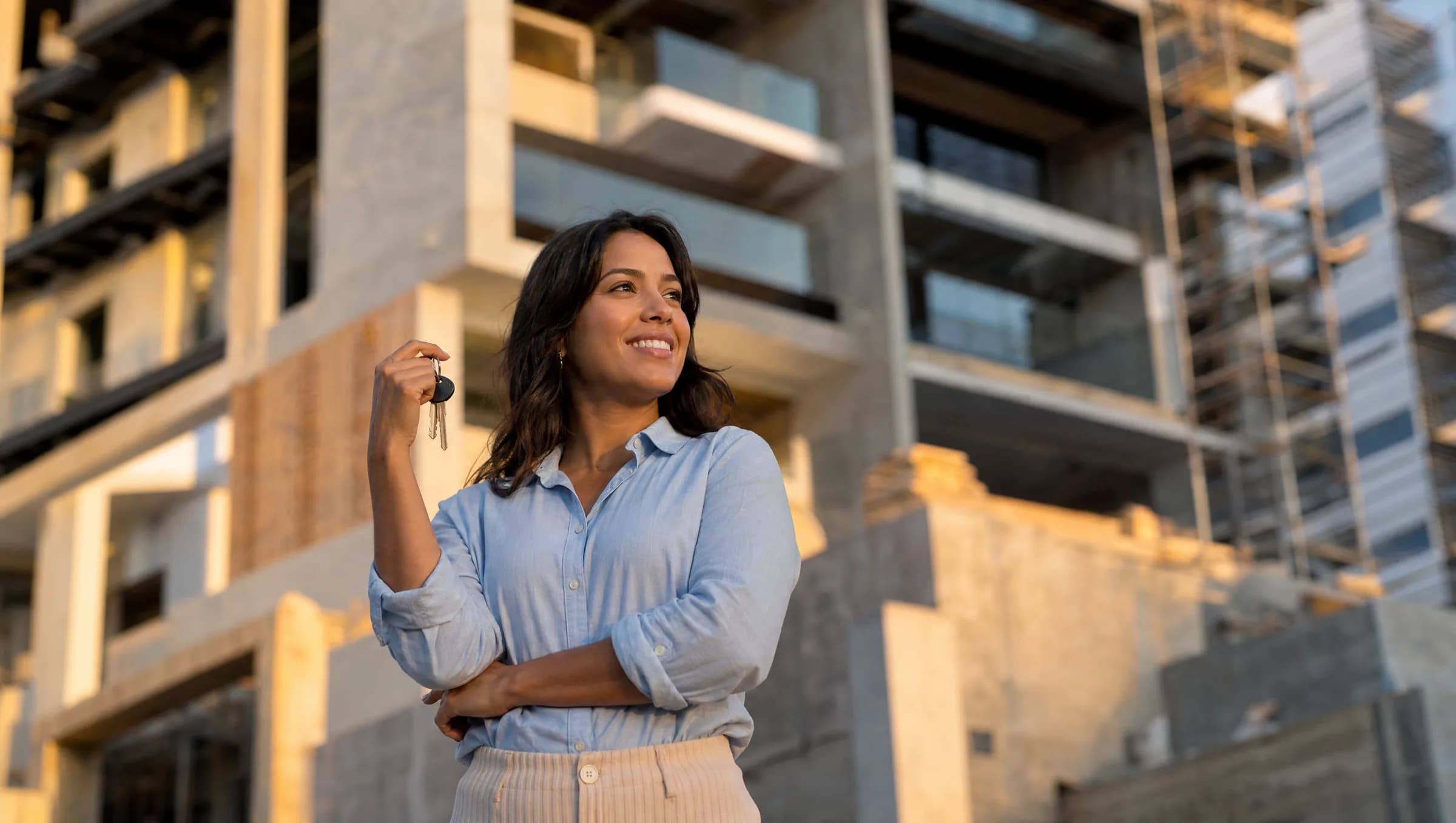
First Apartment: How Much Down Payment You Really Need in the Dominican Republic 2026
Carla has been postponing her search for months. Every time she steels herself to take the step, the same question paralyzes her: "How much money do I really need to have saved?". She's heard contradictory figures: some say she needs 5%, others insist she needs 30%. The confusion keeps her trapped in an endless research cycle without moving forward.
This uncertainty about first apartment down payment in the Dominican Republic has become one of the most poorly explained concepts in the local real estate market. Projects in presale advertise "from 5% down", but don't mention progressive payments during construction. Banks talk about "up to 80% financing", but don't clarify additional closing costs. The result: buyers starting the process with wrong expectations.
The Wrong Belief About Down Payment
The most common confusion is thinking that the "down payment" is a single payment. In reality, what you need for your first apartment consists of three separate elements: the contractual initial, closing costs, and a contingency reserve.
Toca Timbre
Verified properties, certified agents. You just decide.
The contractual initial is the percentage the seller or bank requires to formalize the purchase. Closing costs include transfer taxes, notary fees, registration, and mandatory insurance. The contingency reserve covers appraisal differences, additional certifications, or last-minute adjustments.
This separation isn't an irrelevant technical detail. It's the difference between arriving prepared at closing or discovering RD$200,000 is missing a week before signing.
How Down Payment Really Works in 2026
 For a finished apartment, most Dominican banks require between 20% and 25% initial. If Carla buys a property for RD$4,000,000, she needs to prepare between RD$800,000 and RD$1,000,000 just for the bank initial.
But here comes the first relief: if the apartment qualifies as low-cost housing (up to RD$5.45 million in 2026), she can access the First Home Bonus. This bonus covers approximately 7% to 8% of property value and exempts the 3% transfer tax. In Carla's example, this would mean between RD$280,000 and RD$320,000 in savings, plus RD$120,000 in transfer tax exemption.
For under-construction apartments, the dynamics change. Many projects allow reservation with 5% to 10% initial and completing the rest during construction. This doesn't reduce total down payment, but distributes the financial effort over time.
First Apartment Down Payment in the Dominican Republic: Real Example
Let's look at the concrete case of a RD$4,200,000 apartment in a project certified as low-cost housing:
Required Bank Initial (20%): RD$840,000 Minus First Home Bonus (8%): -RD$336,000 Actual Initial to Finance: RD$504,000
Estimated Closing Costs:
- Transfer Tax: RD$0 (exempted)
- Notary and Registration: RD$45,000
- Insurance and Appraisal: RD$25,000
- Total Costs: RD$70,000
Recommended Contingency Reserve: RD$80,000
Total Needed at Closing: RD$654,000
This calculation shows that Carla would need approximately 15.6% of apartment value in cash, not the 20% she initially thought.
The Costs Nobody Mentions
Even with the bonus, some costs don't disappear. Bank valuations cost between RD$15,000 and RD$25,000. Mandatory insurance represents another 0.5% annually of loan value. Property certifications can add RD$10,000 more.
These "small expenses" accumulate quickly. Not planning for them is one of the main reasons financially-prepared buyers face last-minute stress.
Differences Between Presale and Finished Apartment
Presale offers payment flexibility, but requires different financial discipline. A project might ask 10% to reserve, 15% additional at six months, another 15% when construction advances, and complete the remaining 20% before bank disbursement.
This structure benefits buyers with stable income who prefer distributing the effort, but complicates planning for those managing seasonal bonuses or variable income.
Finished apartments require full down payment at closing, but eliminate uncertainty from construction timelines and possible price adjustments during construction.
How to Plan Your Down Payment Without Surprises
The first step is confirming whether the project qualifies for low-cost housing. Not all apartments within the price range are certified. The developer must have current DGII certification.
Second, request a detailed bank simulation including all financial costs: initial, monthly payment, insurance, and commissions. This simulation should reflect your actual credit profile, not generic optimistic scenarios.
Third, add 2% to 3% additional from apartment value as reserve for unforeseen expenses. This conservative approach avoids emergency borrowing during the process.
The Emotional Reality of the First Down Payment
For most Dominicans, the down payment represents the largest savings they've ever handled. It's normal to feel vertigo seeing those figures. The key is seeing it as investment in stability, not as expense.
Carla finally understood that her fear wasn't of the down payment itself, but of the unknown. Once she calculated real figures for her specific situation, the process stopped being an impossible mountain and became a clear, achievable goal.
In the 2026 Dominican real estate market, buying your first apartment remains possible with orderly planning. The real down payment is between 15% and 25% of property value, depending on whether you qualify for government bonuses. What matters is understanding all components from the start, not discovering them during the process.
If you're considering taking this step, consider using tools that connect you with verified agents who can explain specific details of each project. Toca Timbre is an app where you can explore properties published by real estate agents and contact them directly via WhatsApp to clarify questions about down payment, financing, and specific requirements of each development.
Frequently Asked Questions
Can I buy an apartment with less than 20% down payment?
Yes, especially if the project qualifies as low-cost housing and you access the First Home Bonus. This bonus can reduce your effective contribution to between 12% and 15% of apartment value. Some presale projects also allow smaller down payments distributed during construction.
Does the First Home Bonus cover all closing costs?
No. The bonus primarily covers ITBIS equivalent and exempts the 3% transfer tax, but doesn't cover costs like notary fees, registrations, mandatory insurance, and bank appraisals. These additional costs typically represent between 1.5% and 2.5% of apartment value.
What happens if I don't have enough down payment after reserving an apartment?
If you reserved an under-construction apartment and don't complete the down payment according to the agreed schedule, you can lose the initial paid and the apartment. This is why it's crucial to calculate your actual financial capacity before signing, not just for the first payment but for the entire disbursement plan until closing.
Sources
- BHD Mortgage Loans
- Financing for BHD from IFC
- BHD My Flexible Mobile Services
- IDB Loans to BHD Bank
- BHD Business Financing
- Low-Cost Housing Guide Dominican Republic
- Mortgage Loan Calculator
- First Home Bonus Dominican Republic
- How Much to Pay as Initial to Buy Housing
- First Home Bonus Guide 2026
- New Low-Cost Housing Amount 2026