Documents for Buying a Home From Abroad: Real Guide for the DR
15 de junio de 2026 · 4 min min read
What documents you really need to buy property in the DR as a resident abroad. Clear list without confusion or unnecessary paperwork.

Document confusion when buying from abroad
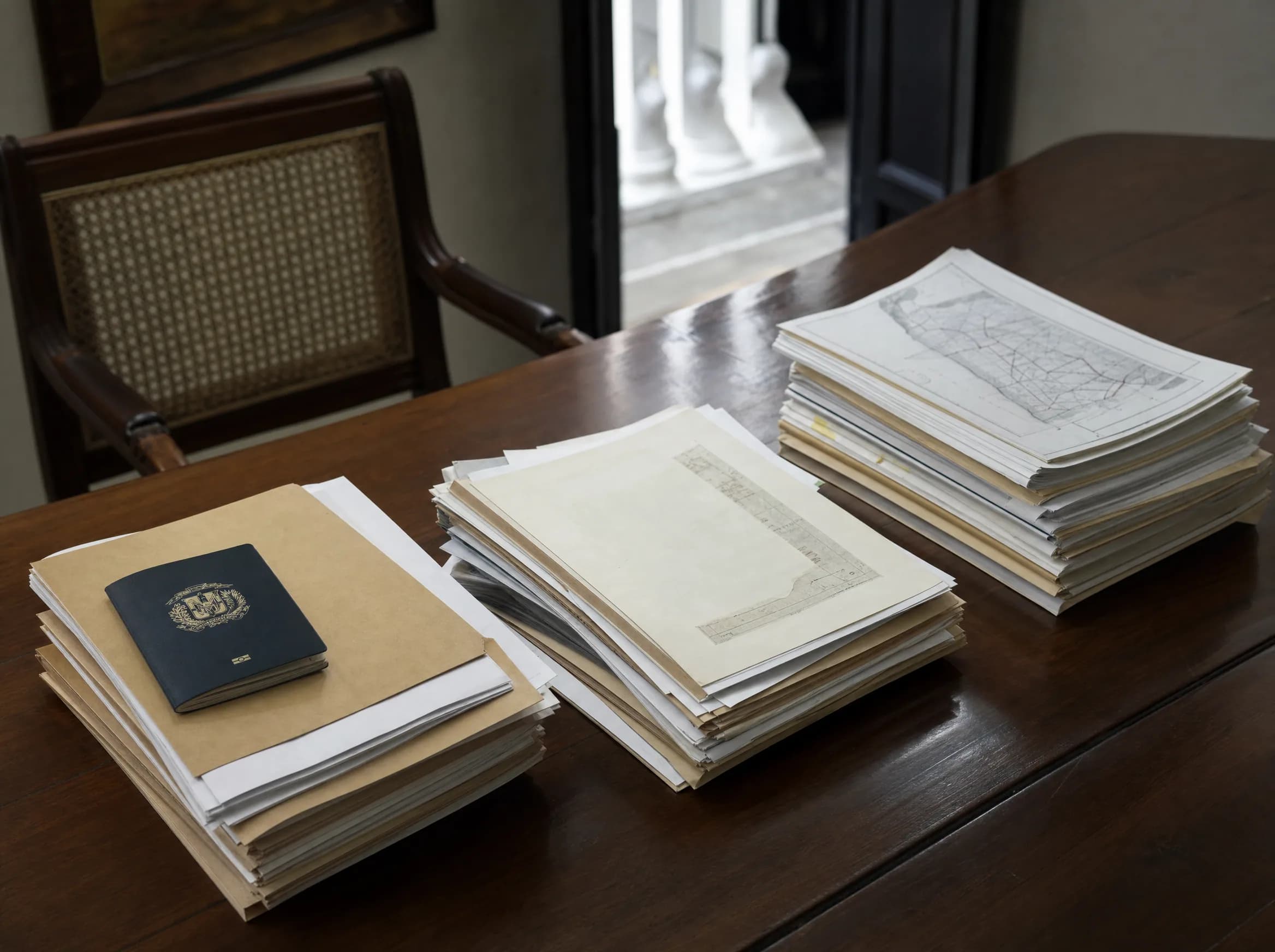
If you live outside Dominican Republic and want to buy property, you've probably read document lists that seem endless. One week they say you need 15 papers, the next week it's 8, and finally you don't know if you're missing something critical or preparing documents that don't belong.
This confusion isn't accidental. In a market where each agent, lawyer, or bank has their own list, the overseas buyer ends up lost between real requirements and papers belonging to other process parts.
Toca Timbre
Propiedades reales. Agentes verificados. Tú decides sin miedo.
The mistaken belief: "I need all documents from day one"
Many overseas buyers think they should arrive with complete folder of apostilled, translated, organized documents before even contacting an agent. This belief generates unnecessary anxiety and delays.
The reality is different: documents are requested in phases, according to purchase type and payment method. Not everything is always required, and much appearing in long lists belongs to specific legal steps your lawyer handles.
The anxiety moment: not knowing what's really mandatory
Carlos, Dominican resident in Miami, shares his experience: "I spent three weeks gathering papers. I had tax returns, bank letters, six-month account statements, everything apostilled. When I finally contacted the real estate agent, they said I only needed passport and a form to start. I'd stressed for nothing."
This situation reflects what happens when the buyer doesn't understand that documentation is requested gradually, not all at once.
The three real document groups
To organize the situation, it helps dividing documents into three clear blocks:
1. Basic personal documents (almost always required)
These are papers you as overseas buyer should almost always have:
- Current passport (original and copy)
- Additional ID if applicable (Dominican ID, license, etc.)
- KYC Form ("Know Your Customer") with personal data, marital status, profession and existing properties
- Spouse documents if married (ID and KYC form)
With these documents, in most cash transactions you already pass the first identity verification filter.
2. Economic documents (depending on funds source and financing)
Here lists get longer, but not everything is always required. The goal is proving money comes from legal sources:
If you pay cash:
- Basic income proof (last 2-3 months)
- Bank statements (3-6 months)
- Proof of funds origin for transfer
If you apply for mortgage with Dominican bank:
- All above, plus:
- Tax returns (1-2 years)
- Bank reference letter from your home country
- Local bank application form
- Authorization for international credit history check
3. Property documents (your lawyer handles these)
These documents you don't provide. Your lawyer requests and reviews them as part of due diligence:
- Property title
- Title Registry certification
- Real Estate Property Tax (IPI) certificate
- Official cadastral map
- Purchase promise and final sale contracts
Knowing these documents exist saves you confusion, but isn't your responsibility to obtain them.
Concrete scenario: US$180,000 cash purchase
For a US$180,000 cash purchase from abroad, the documentation you really need to prepare initially is:
- Current passport
- Completed KYC form
- Last 3 months account statements showing US$180,000 origin
- Recent income proof
- Bank letter confirming international transfer
The rest of documents (titles, certifications, contracts) your legal team handles during closing.
The real sequence: when they ask for each document
First contact: Only passport and basic KYC form
Property hold: Proof of funds and economic capacity
Purchase promise: Complete funds origin documentation
Legal closing: Your lawyer manages property documents
Understanding this sequence reduces the stress of "having everything ready" from day one.
The difference between bank and legal requirements
A common confusion is mixing bank requirements (if you request mortgage) with legal purchase requirements. They're parallel processes with different documentation.
If you pay cash, you avoid all additional banking documentation. If you need financing, the bank has its own requirements beyond basic transaction documents.
Reflection: gradual preparation reduces errors
Dominican real estate market doesn't require arriving with 20 apostilled documents day one. It requires understanding which documents belong to each phase and working with professionals clearly explaining what you need and when.
Document anxiety reduces when you understand it's a gradual process, not avalanche of papers from start.
If you're considering buying property in Dominican Republic from abroad, you can explore available options through Toca Timbre, an app where buyers can see properties published by verified agents and contact directly by WhatsApp for specific information about documentation and processes.
Frequently Asked Questions
Do I need to apostille all documents from abroad?
Not all documents require apostille from day one. Basic documents like passport generally suffice for starting. Documents requiring apostille (like tax returns or bank letters) are requested in specific phases, especially if financing is involved.
How long does it take to gather complete documentation?
For cash purchase, gathering basic documents typically takes 1-2 weeks. If you need bank financing, the process might extend 3-4 weeks additional due to bank-specific requirements, international references, and apostilles. The key is not trying to get everything simultaneously.
I'm Dominican but don't have updated ID. Can I still buy?
As Dominican resident abroad, you can complete the purchase using your Dominican passport as main document. ID is useful but not always mandatory. However, some local banks might prefer ID for certain procedures, so it's worth checking specifically with your bank if planning to finance.
Sources
- Buy home in Dominican Republic — Wise
- What foreigner should consider when buying property — Suma
- Legal requirements for foreigners — GC Real Estate
- Property Registry — Dominican Government
- How to buy house in Dominican Republic — WorldRemit
- Purchase process for foreigners — Dominican Firm
- Buying property in RD — Eliun Real Estate
- Purchase process — Dominican Real Estate