Down Payment in the Dominican Republic: The Mistake You're Making When Saving
11 de octubre de 2026 · 5 min min read
Discover why saving without a plan for your down payment creates anxiety and what you actually need to buy a home in the DR with clarity.
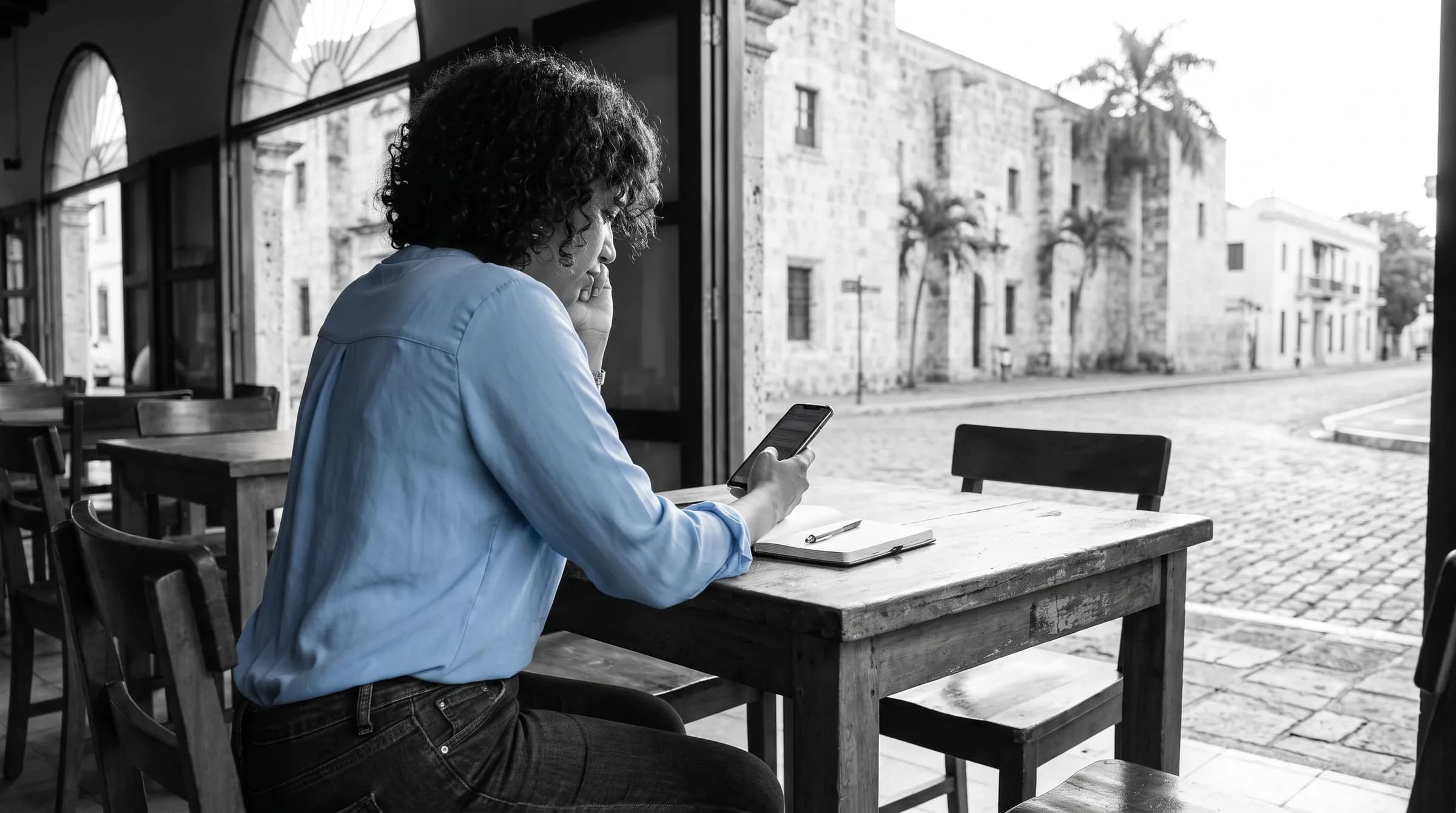
From saving aimlessly to buying with structure: Why you need more than good intentions
The story repeats itself in thousands of Dominican homes: someone decides it's "time to buy" and starts saving money in their regular savings account, mixed in with everyday expenses, with no idea exactly how much they need or when they can really make the move. Three years later, that person is still saving "whatever they can" each month, feeling frustrated because it never seems to be enough, without realizing the problem isn't their savings capacity but the complete lack of structure in their plan.
This intuitive approach—"I'll keep saving and we'll see"—is the most common mistake when preparing to buy a home in the Dominican Republic. Without a well-calculated down payment in the Dominican Republic as a concrete goal, savings becomes an exercise in anxiety that can drag on for years without getting anywhere.
The trap of saving without clear numbers
Carla has been "saving for her apartment" for two years. Every month she sets aside between RD$15,000 and RD$25,000 when she can, but she has no idea how much she actually needs. She sees apartments on Instagram priced at RD$4 million and thinks: "someday I'll be able to pay that," but she doesn't realize that for a property that costs that much she'll need between RD$800,000 and RD$1,200,000 just for the down payment, plus another RD$200,000 to RD$400,000 in closing costs like transfer tax, legal fees, and appraisal.
Toca Timbre
Verified properties, certified agents. You just decide.
This lack of numerical clarity creates two emotional problems: first, the constant feeling that "there's so much more to go" without knowing how much "much" really is; second, the temptation to use that money for other things because it doesn't feel like a sacred fund with a specific purpose.
How much you actually need: The numbers in the Dominican market
 In the Dominican Republic, banks typically finance between 70% and 80% of the property value, which means you need to prepare:
- Down payment: 20% to 30% of the home price
- ITBI (transfer tax): 3% of the cadastral value
- Legal and notarial fees: 1% to 2% of the sale price
- Bank appraisal: RD$15,000 to RD$25,000
- Post-purchase security fund: 2% to 3% additional
For an apartment priced at RD$5,000,000, this breaks down to:
- Down payment: RD$1,000,000 to RD$1,500,000
- Total closing costs: RD$200,000 to RD$350,000
- Total to gather: RD$1,200,000 to RD$1,850,000
With these clear numbers, Carla can transform her "aspirational savings" into a project with a deadline: if she manages to set aside RD$25,000 monthly, she'll reach her goal in 4 to 6 years, not "someday."
The transition moment: From saving to structuring your purchase
When you reach 70% of your target down payment, something changes emotionally. You're no longer "dreaming about buying"; you're "preparing to buy." This is the moment when many people discover that saving was just the first step in a much more complex process.
New questions emerge: What projects are trustworthy? How do you avoid informal agents who promise the impossible? Who can you talk to without feeling pressured to decide at the first meeting?
The structure you need to buy with confidence
The transition from "solo saver" to "structured buyer" requires three fundamental changes:
1. Change your money mindset
Physically separate your home fund from your everyday spending money. Open a dedicated account where money only goes in if it's earmarked for the purchase.
2. Connect with the market in an organized way
Instead of navigating Facebook groups full of unverified offers, use tools that filter properties by real price range and connect you with agents who handle verified information.
3. Understand that reaching 20-30% down is the entry point
Not the end of the road. With that amount ready, you can talk to agents from a solid position, request bank pre-approvals, and negotiate payment schemes on pre-construction projects.
Why your starting point determines everything that follows
The difference between "browsing apartments online" and "buying with structure" isn't just about having the money—it's about how you connect with the market. If you start exploring properties without verified agents, you'll end up navigating unfiltered offers, wasting time on properties outside your real budget, or worse, putting yourself at risk with informal intermediaries.
When you have your down payment structured and connect with verified agents from the start, the process changes: you get accurate information about financing, realistic delivery timelines, and specific banking requirements for your profile. Buying stops being a leap in the dark and becomes a series of informed decisions.
The emotional breakthrough: From anxiety to clarity
The deepest shift isn't financial—it's emotional. Moving from "setting aside money and hoping someday it's enough" to "executing a plan with specific dates, amounts, and verified contacts" transforms the entire experience. The anxiety of not knowing if you're on track gets replaced by the peace of mind of having a clear path.
This structure doesn't guarantee you'll find the perfect apartment immediately, but it does guarantee that when you find it, you'll have the financial preparation and the right contacts to move forward with confidence.
If you already have your savings on track and want to take the next step toward a more structured search, Toca Timbre is an app where you can explore properties filtered by price and neighborhood, and contact agents directly through WhatsApp without middlemen. The platform focuses on connecting buyers with verified agents, which can help you organize your search process better. You can explore it at: Toca Timbre
Frequently asked questions
How much exactly should I save for the down payment in the Dominican Republic?
The typical down payment ranges from 20% to 30% of the property value, plus closing costs that add up to approximately 3% to 5% more. For a RD$5 million home, you'd need between RD$1.2 and RD$1.8 million in total.
Can I buy with less than 20% down?
Some banks and government programs offer financing with smaller down payments, especially for low-cost housing or first-time buyers. However, this typically means higher interest rates or additional income requirements.
How long will it take me to save for my down payment?
It depends on your monthly savings capacity and your price target. If you can set aside RD$20,000 monthly for a goal of RD$1,200,000, you'd need approximately 5 years. The key is to define your target amount first, then calculate a realistic timeline.
Sources
- Toca Timbre - App Store
- Mortgage Calculator Dominican Republic - Apex Grup
- What's the first step to buying an apartment in the Dominican Republic - Alveare
- Buy a home in the DR: requirements and costs - Bolsillo Práctico
- How much you really need to save for your first apartment in the DR - Toca Timbre
- How to plan to buy a home - Popular en Línea