How Much You Really Need to Save for Your First Apartment in the DR
27 de junio de 2026 · 5 min min read
You don't need all the money upfront. Discover how much you really need to save for your first apartment in the Dominican Republic.
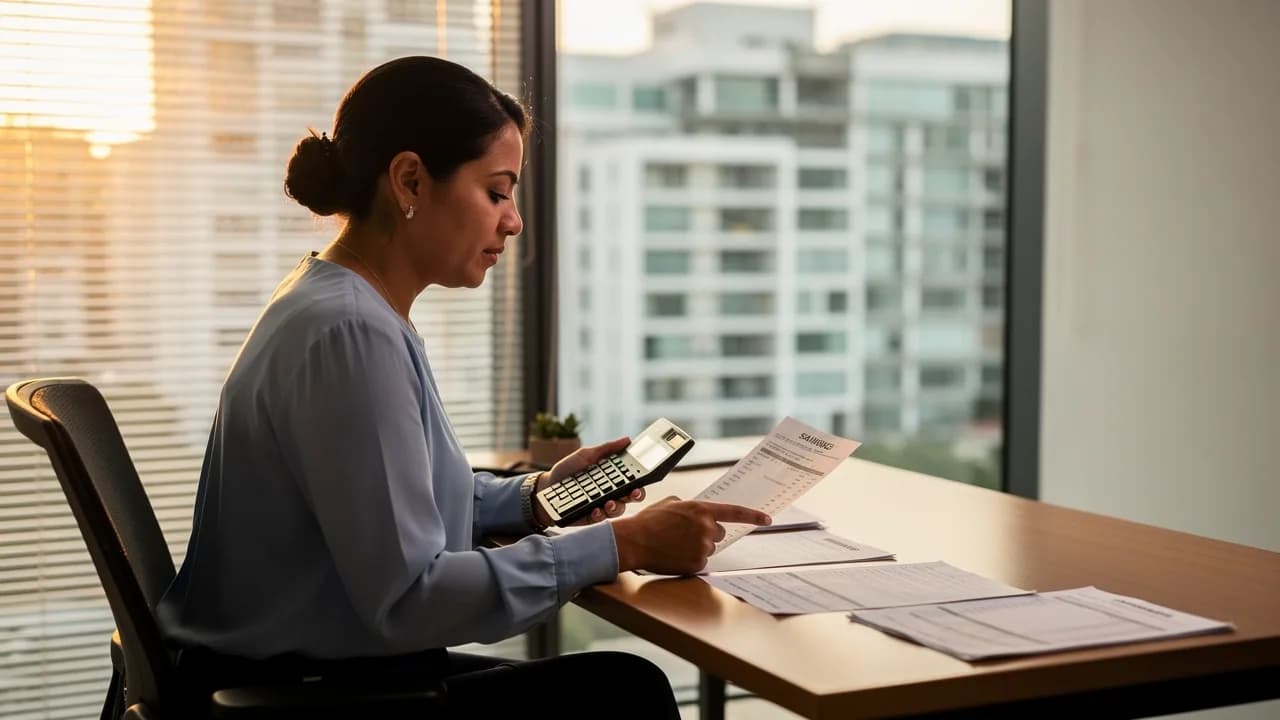
How Much You Really Need to Save for Your First Apartment in the Dominican Republic
Carolina has been saving for her first apartment for two years. Each month she sets aside RD$15,000 and already has almost RD$400,000. But when she asks acquaintances how much she really needs, she hears figures that confuse her: "you need 30% down," "better save the entire apartment," "with RD$500,000 you can't buy anything."
This confusion is common in the Dominican real estate market. The belief that you need "all the money" or impossibly high amounts to start creates unnecessary anxiety. The reality is more manageable than many believe.
The Real Figure Isn't Just One
In the Dominican Republic, the initial down payment for home purchase generally ranges between 10% and 20% of the property value. This variation isn't arbitrary; it depends on property type, construction stage, and financing structure.
Toca Timbre
Propiedades reales. Agentes verificados. Tú decides sin miedo.
For pre-construction apartments under trust, many developers accept starting with 10% to 15% at contract signing. The rest of the down payment is completed during construction, reaching 20% before delivery. For ready properties, the common standard is 20% of total price.
If we consider an apartment for RD$4.5 million—a realistic figure in the affordable housing market—a 10% down payment represents RD$450,000, while 20% equals RD$900,000. This RD$450,000 difference might mean years of additional saving or the possibility to start sooner.
Beyond the Down Payment: Costs You Don't See
 Closing and formalization costs typically represent an additional 5% to 10% of the property value. These include legal fees, notary costs, title registration, bank appraisal, and other mandatory procedures.
For the same RD$4.5 million apartment, this means setting aside between RD$225,000 and RD$450,000 additionally. Without this provision, many buyers are surprised when close to signing and discover they need more money than planned.
A verified real estate agent knows these costs ahead of time and can guide you on necessary documentation for bank financing processes. Their experience with financial institutions allows anticipating specific requirements and avoiding delays from incomplete files.
The "Complete Money" Myth
Many Dominicans believe they must save the property's full value before starting to look. This thought comes from distrust of financing or lack of knowledge about how mortgages work in the country.
The Law 189-11 on the Mortgage Market and Trust establishes a regulatory framework protecting both buyers and lenders. Dominican banks offer financing up to 80% of property value for qualifying buyers, with terms that can extend up to 30 years.
This means that with appropriate savings for the down payment and associated costs, it's possible to access financing for the rest. The main requirement is demonstrating repayment capacity and presenting correct documentation.
A Staged Savings Strategy
Instead of thinking about one intimidating figure, it's better to structure savings in three layers:
First layer: The down payment Between 10% and 20% of your target apartment's value. For homes between RD$4 and RD$6 million, this represents between RD$400,000 and RD$1.2 million.
Second layer: Formalization costs An additional 5% to 10% for legal, notary, and other fees. Approximately RD$200,000 to RD$600,000 for the same price range.
Third layer: Safety fund Three to six months of mortgage payments as a cushion for unexpected expenses. If the monthly payment is RD$25,000, this fund would be between RD$75,000 and RD$150,000.
This structure lets you set progressive goals instead of one unreachable figure. It also helps identify what stage of the savings process you're in.
When to Start Looking
You don't need to complete all savings before starting to explore the market. Actually, knowing real options helps refine your savings goal and make more precise calculations.
A buyer with RD$600,000 saved can already explore apartments up to RD$4 million if willing to finance with 15% down. With RD$900,000, the range expands to properties up to RD$4.5 million with 20% down.
The key is understanding that saving and searching can happen simultaneously. While continuing to save, you can learn about projects, compare options, and educate yourself about the process.
The Importance of First Contact
When you decide to explore the market, where you start determines everything that follows. A verified real estate agent won't just show you properties; they'll guide you on real costs, documentation needed for financing, and payment timelines.
These professionals are certified, formally registered with the DGII, and have verifiable background. They know bank requirements, work with properly documented properties, and can explain each step of the purchase process.
Without this proper guidance, it's easy to underestimate costs, omit crucial documents, or consider properties with legal issues that will complicate financing.
A More Peaceful Perspective
Buying your first apartment in the Dominican Republic doesn't require having "all the money" saved. It requires understanding real costs, planning in stages, and getting proper guidance from the start.
The difference between feeling overwhelmed and feeling prepared often comes down to clarity about the process. When you know exactly how much you need and what it's for, saving becomes an executable plan rather than an impossible goal.
If you already have some savings, you're probably closer than you think. If you're just starting, now you know where to direct your efforts with greater precision.
For those wanting to explore the market with greater clarity, Toca Timbre is an app where you can see properties posted by agents and contact them directly via WhatsApp. It's an organized way to start your search and know real options while continuing to prepare financially. Toca Timbre.
Frequently Asked Questions
Can I buy an apartment with less than 20% down?
Yes, many projects in the Dominican Republic accept down payments starting from 10%, especially in pre-construction. The final percentage depends on the developer, financing type, and your credit profile. Some banks also offer special programs for first-time buyers.
How long does it take to save for an apartment's down payment?
It depends on your income and savings capacity. If you can save 20% of your monthly income earning RD$50,000, you'd need approximately 4-5 years to gather RD$500,000. The key is automating savings and maintaining a specific goal.
What if I don't qualify for bank financing?
Alternatives exist such as developers offering direct financing, savings and credit cooperatives, or government housing programs. You can also work on improving your credit profile before applying by paying pending debts and formalizing your income.
Sources
- How to save for down payment and financing for your first home — El Dinero
- Essential guide to real estate investment in Dominican Republic — Constructora Jprez
- Requirements for buying your first home in DR — NAF Realtors
- Low-cost apartment — San Mar Real Estate
- Law No. 189-11 Mortgage Market and Trust — Banking Superintendent
- How to save in DR — Finanzas RD
- Can a person with minimum income buy a home in DR? — El Día