How Much Does an Apartment Cost in the Dominican Republic in 2026?
29 de agosto de 2026 · 7 min min read
Apartment prices in the Dominican Republic in 2026, by location: from Cap Cana to Santo Domingo Norte, based on data from 65,160 active listings.
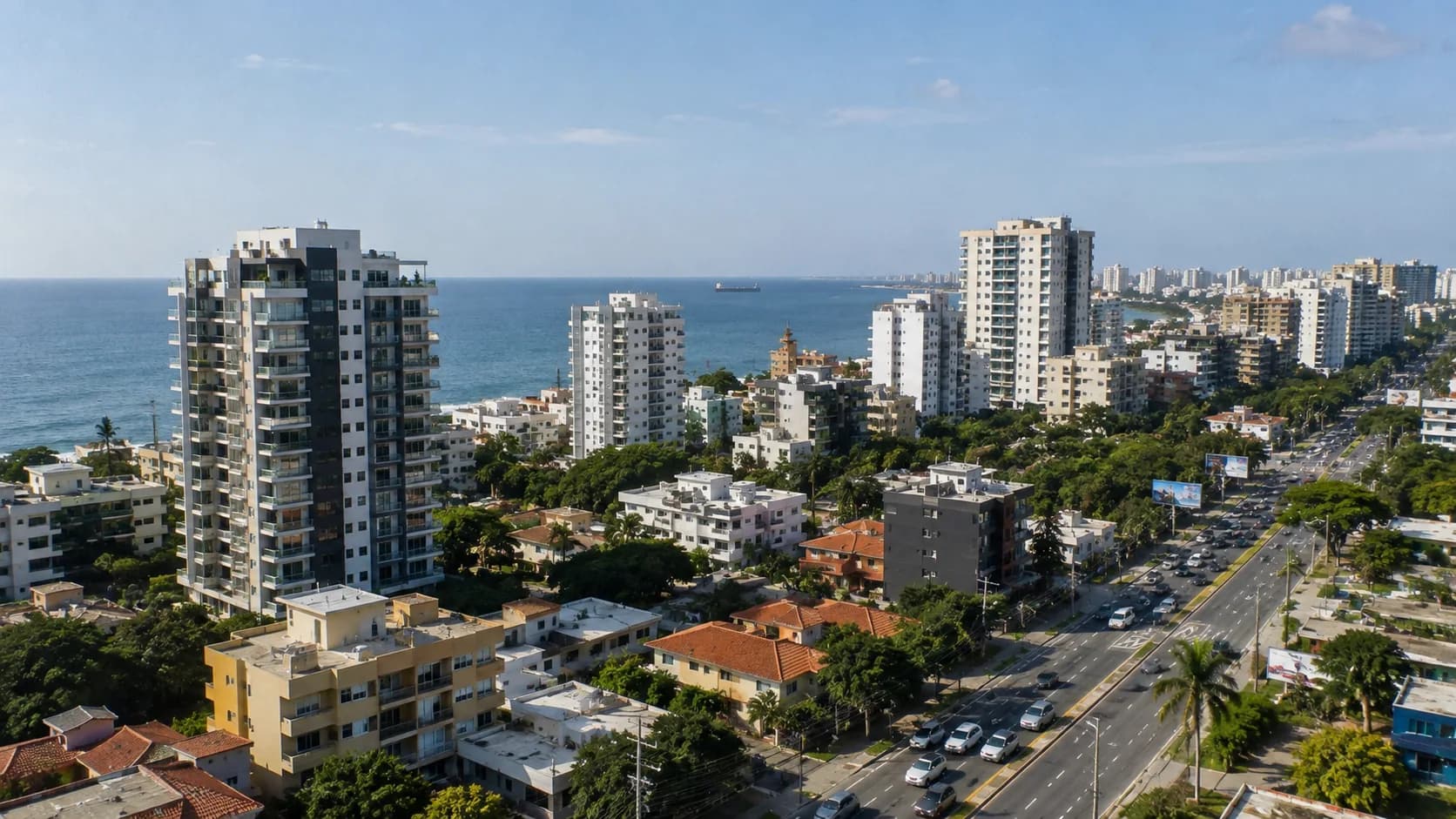
An analysis by DominicanScope of 65,160 actively advertised apartments found a national median asking price of approximately US$2,000 per square meter, while the median apartment price was around US$210,000. However, these figures should be interpreted as advertised asking prices rather than completed transaction prices.
The Dominican Republic's apartment market presents much wider price differences in 2026 than a single national figure might suggest. While some tourist destinations and upscale areas of Santo Domingo command prices well above US$2,000 per square meter, other municipalities and cities offer properties at considerably lower entry prices.
Location Matters More Than the National Average
For buyers analyzing the Dominican Republic's property market, relying on a single national benchmark can be misleading. Price differences between locations are large enough to fundamentally change the type of property available for the same budget.
Toca Timbre
Verified properties, certified agents. You just decide.
Among the markets analyzed, Cap Cana recorded one of the highest median asking prices, at approximately US$3,465 per square meter. Cabarete, at around US$2,641 per square meter, and Las Terrenas, at approximately US$2,375, were also well above the national median.
At the other end of the market were several municipalities in the Greater Santo Domingo area. Santo Domingo Norte recorded a median of approximately US$1,029 per square meter, while Santo Domingo Oeste reached about US$1,058 and Santo Domingo Este approximately US$1,120.
The difference between Cap Cana and Santo Domingo Norte illustrates why referring simply to "apartment prices in the Dominican Republic" without specifying the location can provide an incomplete picture.
Tourist Destinations Continue to Command Higher Prices
 Tourism-oriented property markets are particularly interesting because residential demand can come from several different sources.
An apartment in Punta Cana, Cap Cana, Bayahíbe, Las Terrenas or Cabarete may appeal to a buyer looking for a vacation home, an investor interested in short-term rentals, or someone seeking a second residence.
This combination of uses helps explain why some tourism destinations have higher asking prices per square meter than other residential markets in the country.
Punta Cana–Bávaro is particularly important because of its volume of available inventory. The analysis counted 12,854 active apartment listings in the area, making it one of the country's most significant markets for understanding residential tourism demand.
However, a higher purchase price does not automatically mean that a property represents a better investment. In tourism markets, returns also depend on occupancy, rental rates, management costs, maintenance and seasonality.
Santo Domingo Has a Highly Fragmented Residential Market
The capital provides another clear example of the Dominican Republic's highly localized property market. Price differences can be substantial even within the same metropolitan area.
The Distrito Nacional recorded a median asking price of approximately US$2,119 per square meter, significantly above Santo Domingo Este, Santo Domingo Oeste and Santo Domingo Norte.
The differences become even more pronounced when individual neighborhoods within the Distrito Nacional are considered. Piantini recorded approximately US$2,721 per square meter, followed by the Avenida Anacaona corridor at about US$2,611 and Ensanche Paraíso at approximately US$2,486.
Naco, another major residential area of the capital, recorded a median of around US$2,378 per square meter across 3,299 active listings.
These figures demonstrate why buyers interested in Santo Domingo should compare properties within specific neighborhoods rather than relying solely on a city-wide or national average.
Total Price and Price per Square Meter Tell Different Stories
One of the most common mistakes when comparing properties is to focus exclusively on either the asking price per square meter or the total price of the apartment.
Differences in apartment size can significantly change how the figures should be interpreted. Bayahíbe provides a useful example. The destination recorded a median asking price of approximately US$2,350 per square meter, while the median total apartment price was around US$165,000.
This is possible because a relatively small apartment can command a high price per square meter while requiring less total capital than a much larger property in an area with a lower price per square meter.
For buyers, the most useful comparison is therefore often between similar properties in terms of size, location, quality, age, amenities and intended use. Comparing only two median prices can conceal significant differences in the type of housing available.
Santiago Offers a Lower Entry Point
The residential market in Santiago de los Caballeros presents a different profile from the country's major tourist destinations and higher-value areas of Santo Domingo.
The country's second-largest city recorded a median asking price of approximately US$1,472 per square meter, based on 5,031 active apartment listings.
This places Santiago below the Distrito Nacional and the leading tourism markets. It also highlights the range of options available to buyers who are not necessarily looking for a coastal property or an apartment in one of Santo Domingo's most expensive neighborhoods.
The difference is also visible in total apartment prices. Santo Domingo Norte recorded a median apartment price of approximately US$90,000, compared with around US$374,500 in Cap Cana.
These differences do not mean that one market is automatically better than another. A homebuyer may prioritize services, transportation, schools and infrastructure, while an investor may focus on rental demand, tourism, operating costs and potential appreciation.
Price Growth Has Moderated
Recent price trends also provide important context for current asking prices.
Available 2026 market data indicate that residential asking prices in the Dominican Republic continued to rise, although at a slower pace than in the previous two years. An analysis based on Properstar data placed year-over-year residential price growth at 7.74% in the first quarter of 2026, compared with 10.25% in 2025 and 12.48% in 2024.
After adjusting for inflation, the increase was considerably smaller, at approximately 2.97%.
This moderation is relevant for investors. A market with high property prices is not necessarily a market that will continue to experience the same rate of appreciation seen in previous years.
Rental Yields Add Another Dimension
For buyers purchasing an apartment as an investment, the acquisition price is only one part of the equation.
Available 2026 data put average gross rental yields in Santo Domingo at approximately 9.09%, while Punta Cana and Bávaro were estimated at around 7.98%. In Santo Domingo, two-bedroom apartments recorded an estimated average gross yield of approximately 9.87%.
These figures should be treated with caution because gross rental yield is not the same as the net return received by the owner. Vacancies, maintenance, insurance, taxes, property management and other expenses can significantly reduce the final return.
For that reason, a lower-priced apartment is not automatically a better investment. Purchase price needs to be considered alongside rental demand, potential income and operating costs.
Apartment Construction Remains an Important Part of the Market
Future supply is another factor that helps explain the current market.
According to the Dominican Republic's National Statistics Office (ONE), multifamily apartments represented 39.1% of active construction projects recorded in the Metropolitan Region during the second half of 2025.
The register counted 2,355 active multifamily apartment projects out of a total of 6,016 active projects. Measured by construction area, apartments represented approximately 4.18 million square meters, or 71% of the total area represented by the projects in the registry.
The importance of residential construction indicates that buyers continue to have access to a broad and increasingly diverse supply of apartments, particularly in Santo Domingo and the country's main tourism markets.
What Should Buyers Consider?
The 2026 data point to a straightforward conclusion: there is no single apartment market in the Dominican Republic.
There are tourism markets with high prices per square meter, upscale neighborhoods in Santo Domingo with even higher values, and other metropolitan areas and cities where the entry price is considerably lower.
For buyers, the analysis should begin by defining the purpose of the purchase. Someone looking for a primary residence will have different priorities from an investor interested in short-term rentals. Likewise, a second-home purchase may require a different assessment from an apartment acquired purely to generate rental income.
Location, apartment size, property condition, maintenance fees, building characteristics, available services and local demand can all be as important as the advertised purchase price.
A Market That Requires Local-Level Analysis
The national median of approximately US$2,000 per square meter provides a useful starting point, but it should not be treated as an automatic valuation for an individual property.
An apartment in Cap Cana, a high-end property in Piantini, a home in Santiago or an apartment in Santo Domingo Norte may all form part of the same national real estate market while serving very different buyers and investment strategies.
For buyers and investors, the most useful benchmark is therefore a comparison between similar properties within the same local market. Asking-price data can help establish market levels and understand available supply, but they do not replace an independent valuation or transaction-level data.
Once you know what area and budget fit you, you can explore options in a more organized way on Toca Timbre.