Buying Property from the US: The Preliminary Step That Brings Clarity
15 de noviembre de 2026 · 8 min min read
If you want to buy property from the US, the order matters. Learn the preliminary step before looking at listings and why Facebook isn't enough to verify.
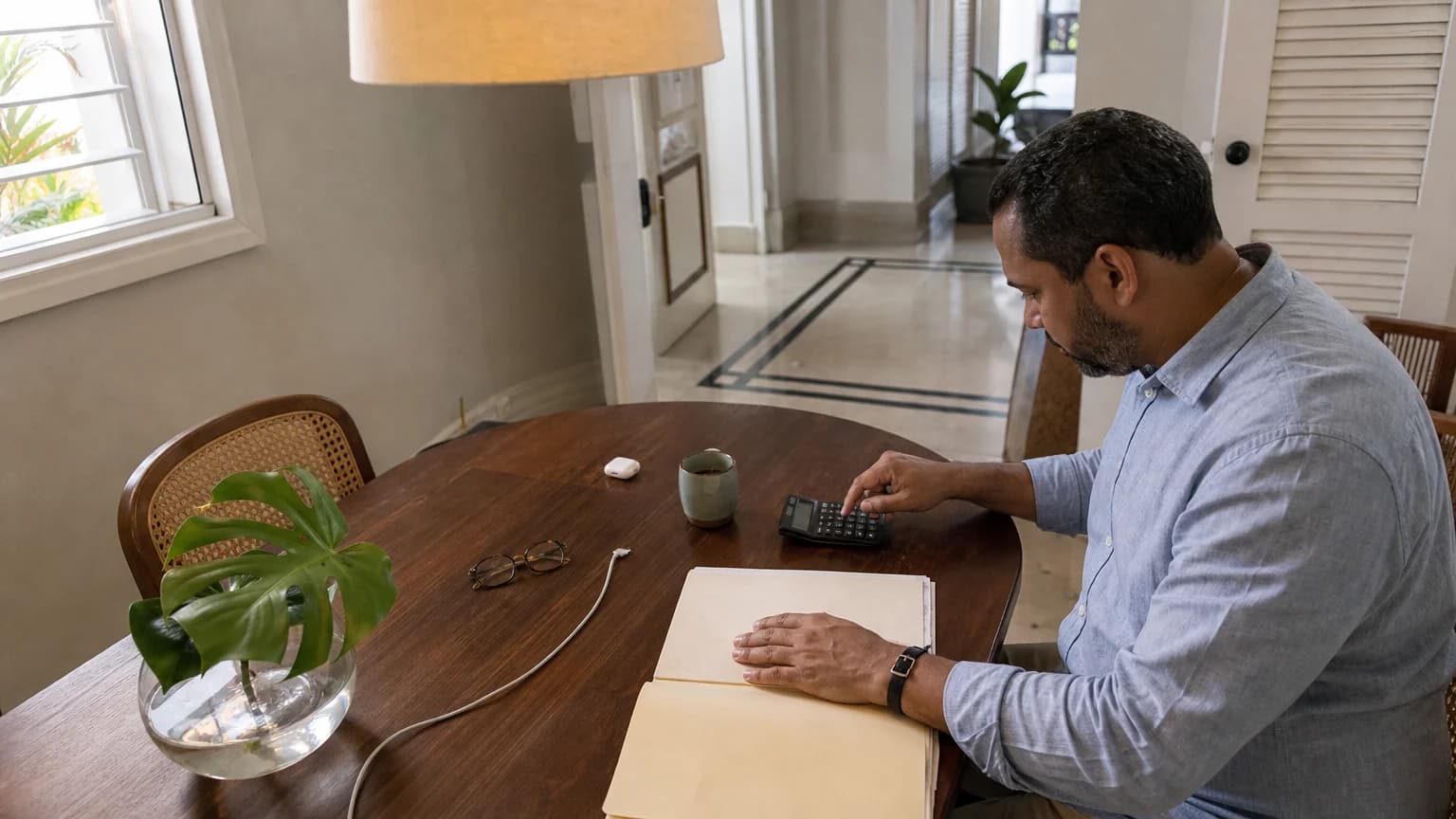
If you want to buy property from the US, you usually start with what's most accessible: open your phone, join a Facebook group, and scroll through photos. It's understandable. But in a market where information is scattered across listings, referrals, and loose messages, where you start searching shapes everything that comes next.
This article doesn't want you to rush or buy anything. It's here to organize the process: what's worth defining before your first listing, why Facebook groups are good for asking questions but not for verifying, and how a remote purchase file comes together. This also applies if you live in Santo Domingo, Santiago, or Punta Cana and are coordinating a purchase with family members who live abroad.
The common belief: "many positive comments mean it's safe"
A lot of people think that an active profile, dozens of favorable comments, and a well-presented listing are enough to trust a project. They're not. A post doesn't prove the project exists, that it has permits, that whoever's collecting payment can actually sell it, or that the property hasn't been offered to multiple people.
Toca Timbre
Verified properties, certified agents. You just decide.
The problem isn't the buyer for trusting. The problem is that the market doesn't offer an organized starting point, and social networks fill that gap with anonymity, informal recommendations, and targeted advertising.
Buying property from the US: where the real risk begins
 Distance changes the conditions. Someone living abroad depends on photos, video calls, and third-party references. They can't easily visit the property or the office. On top of that, they might feel like an opportunity will disappear that same day. There's also the weight of community trust: familiar language, mentions of churches or associations, testimonials in groups.
There are documented cases. In 2024, the New York Attorney General warned about an alleged scam targeting Dominicans living in the United States, involving nonexistent properties or ones sold to multiple buyers in Santo Domingo. In the Dominican Republic, Pro Consumidor referred about fifty files from the Guepardo case to the Attorney General's office—a case in which companies posted projects on social networks and received transfers from the DR, the United States, Puerto Rico, and Europe.
This isn't about creating fear. It's about understanding that risk grows when verification depends on what the seller decides to show.
A moment many recognize
Imagine someone in New Jersey who wants a US$135,000 apartment in Santo Domingo for their mom. In a group they see a project with a good price. Someone comments: "Two units left, lock it down today with US$5,000." And there's the knot you always hit: if they wait, maybe they lose it; if they send money, they don't really know who they're sending it to.
That knot isn't a lack of judgment. It's what happens when you start searching without rules in place. And there's a detail that usually gets left out of the conversation: the transfer tax set by the DGII is generally 3% of the property's value. In this example it would be US$4,050, before legal fees, notary costs, registration, and possible bank charges. The US$5,000 deposit is just part of a budget that hasn't even been defined yet.
The preliminary step: a remote purchase file
Before you pick or reserve any property, it's worth building a kind of safety filter. It helps you compare all properties under the same rules. A basic file includes:
- Budget and purpose: how much you can really spend and what you're buying for, including taxes, fees, notary costs, registration, and maintenance.
- Independent real estate attorney: chosen by you, not recommended exclusively by the seller, developer, or broker who originated the contact.
- Property criteria: location, type of property, and risk tolerance.
- Required documents: title certificate, liens and encumbrances, identity of the owner, DGII certification showing the property is current on IPI or exempt, and permits if it's a project.
- Payment protocol: account that belongs to the contracting entity, signed contract and receipts. Each payment should correspond to a defined stage. The DGII has reminded us that transactions above certain thresholds must indicate the payment method used.
- Representation: if someone signs or deposits documents on your behalf, check the power of attorney, their authority, and the representative's identity.
- Verification timeline: what gets checked, who checks it, and when.
The Land Registry asks, for sales transfers, for the title certificate and identity documents of both parties. If a foreigner is involved, it asks for a passport and a second official document. In other words, registry and tax verification isn't a task for after the deposit—it's part of the beginning.
This doesn't eliminate all risks. But it changes the question. It's no longer just "how much does it cost?", but "who is the owner, what liens exist, is it current on taxes, who can sell it, what am I signing, and what happens if the deal doesn't go through?".
How to use Facebook groups without letting them decide for you
Groups can be useful for discovering projects, names, and other buyers' experiences. The limit is this: they're good for generating questions, not closing a deal.
- Make a short list of identifiable agents or developers and verify their business name, address, phone, history, and tax registration.
- Search the address and photos online. The FTC recommends confirming the property appears on the company's official site, because groups can contain made-up listings. Duplicate ads or different owners are red flags.
- Ask for documents through formal channels and compare them with official records.
- Request a visit by an independent representative.
- Keep screenshots, contracts, receipts, and messages.
If you spot something suspicious, you can document the case and reach out to Pro Consumidor, the Attorney General, and, if you live in the United States, consumer protection authorities in your state.
Final reflection
Housing searches are usually presented as a race, but they almost never are. What does matter is order: who represents you, what documents exist, how money moves, and what conditions must be met before signing. An informal recommendation can start the investigation; only verifiable documents, independent advice, and controlled payments should allow you to move forward.
If you feel anxious scrolling through listings from a distance, that's not a flaw in you. It's the normal reaction to a disorganized market. Building structure before you search is a calm way to take back control.
Toca Timbre is an app where buyers can explore properties posted by agents and contact them directly via WhatsApp. It exists at the beginning of the process, before the first contact, so you can explore the market with more clarity and at your own pace. If you'd like to check it out, it's here: Toca Timbre.
Frequently asked questions
How do I avoid a scam when buying a house in the DR while living overseas?
There's no method that eliminates all risk, but there is one that cuts it down: don't depend on verbal promises. Define your budget, hire an independent real estate attorney, and ask for verifiable documents before you send any money.
It's also smart to pay only to accounts belonging to the contracting entity, with a contract and receipts, and be wary of any pressure to transfer funds right away.
Is a Facebook group a reliable place to look for apartments in the Dominican Republic?
It can help you discover projects, agents, and other buyers' experiences. It's not a verification source, because profiles can be anonymous and positive comments don't prove the seller is legitimate or that the property exists.
The smart move is to use it to generate questions and names, then verify everything else through formal channels and with independent advice.
What should I review before sending a deposit?
At minimum: title certificate, liens and encumbrances, identity of the seller, DGII certification regarding IPI, project permits, contract and return conditions. Also make sure the payment account belongs to the entity you're signing with.
The exact list depends on each transaction, which is why it's better to have a real estate attorney you choose review it. This is general information, not personalized legal or financial advice.
Sources
- Land Registry — Transfer Requirements (sale, payment in kind, exchange, donations) — https://ri.gob.do/wp-content/uploads/Tramites/RT/TRANSFERENCIA_(VENTA_DACION_EN_PAGO_PERMUTA_DONACIONES).pdf
- DGII — Informational Notice 07-25 — https://dgii.gov.do/publicacionesOficiales/avisosInformativos/Documents/2025/07-25.pdf
- DGII — Help: conversation on property transfer — https://ayuda.dgii.gov.do/conversations/discusiones/hola/628b1c48739ada3146f30529
- DGII — General Rule 08-14 — https://dgii.gov.do/legislacion/normasGenerales/Documents/Otras%20Normas%20de%20Inter%C3%A9s/Norma08-14.pdf
- Land Registry — Resolution DNRT-DT-2021-0001, Requirements for Registry Actions — https://ri.gob.do/wp-content/uploads/2021/03/Resoluci%C3%B3n-DNRT-DT-2021-0001-Requisitos-para-Actuaciones-Registrales.pdf
- Land Registry — Technical Provision DNRT-DT-2025-003 on Requirements for Registry Actions — https://ri.gob.do/wp-content/uploads/2025/12/Disposicio%CC%81n-T%C3%A9cnica-sobre-Requisitos-para-Actuaciones-Registrales-_-DNRT-DT-2025-003.pdf
- DGII — Help: property transfer with deed of delivery and receipt of property — https://ayuda.dgii.gov.do/conversations/discusiones/se-puede-realizar-una-transferencia-inmobiliaria-con-un-acto-de-entrega-y-recepcin-de-inmueble/67d1f2dcc10b2770b7315bf2
- New York Attorney General — Alert to New Yorkers about real estate scam (2024) — https://ag.ny.gov/press-release/2024/attorney-general-james-and-congressman-adriano-espaillat-warn-new-yorkers-about
- Inmobiliario.do — ACOPROVI and plan to protect real estate investment by Dominican diaspora — https://inmobiliario.do/acoprovi-viaja-a-ee-uu-a-poner-en-marcha-plan-para-proteger-inversion-inmobiliaria-de-la-diaspora-dominicana/
- Pro Consumidor — Files referred to the Attorney General's office on the Guepardo case — https://proconsumidor.gob.do/pro-consumidor-remite-a-la-procuraduria-expedientes-relacionados-con-estafa-inmobiliaria-del-caso-guepardo/
- FTC — Consumer Alert: Avoiding rental listing scams (2024) — https://consumer.ftc.gov/consumer-alerts/2024/07/avoiding-rental-listing-scams
- Law 108-05 on Land Registry — https://dgii.gov.do/legislacion/leyesTributarias/Documents/Otras%20Leyes%20de%20Inter%C3%A9s/108-05.pdf
- Diario Libre — Dismantled networks and cases in court for massive scams — https://www.diariolibre.com/actualidad/justicia/2025/09/23/redes-desmanteladas-y-casos-en-juicio-por-estafas-millonarias/3254853
- DGII — General Rule 03-18 — https://www.dgii.gov.do/legislacion/normasGenerales/Documents/Normas%20Sectoriales/Norma03-18.pdf