Buying in Bávaro from Abroad: What You Really Need to Know
19 de julio de 2026 · 5 min min read
Everything you need to know to buy properties in Bávaro, Vista Cana, and Punta Cana from the United States or Europe safely.
Buying in Bávaro from Abroad: What You Really Need to Know
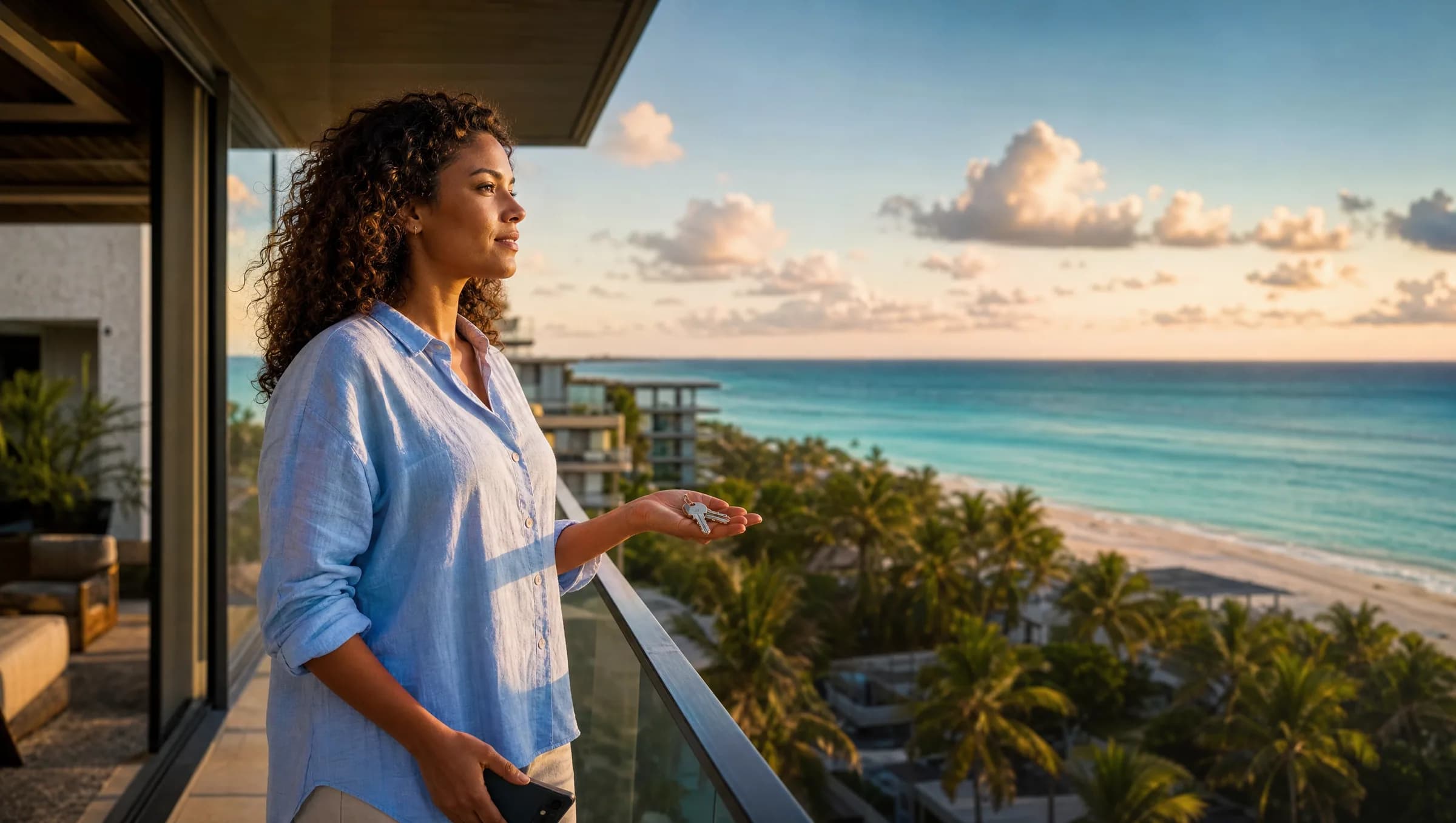
María lives in Miami and has been seeing properties in Bávaro on Instagram for months. The beachfront condos seem perfect, the prices attractive, and the agents respond quickly via WhatsApp. But when she sits down to consider sending US$50,000 in deposit to someone she's never met in person, she feels a knot in her stomach.
That feeling isn't paranoia. It's common sense working in a market where distance can turn real opportunities into financial nightmares.
The common belief that creates problems
Many foreign buyers believe that buying in Bávaro, Vista Cana, or Punta Cana from the United States or Europe is "the same as buying locally, but with more paperwork." This mentality leads them to trust too quickly in photos, videos, and verbal promises.
Toca Timbre
Propiedades reales. Agentes verificados. Tú decides sin miedo.
The reality is different. Buying from a distance isn't more complicated, but it does require stricter protocol. In the Dominican Republic, foreigners can acquire properties with the same ease as local buyers, but transaction security depends entirely on verifying each step before sending money.
The real buying process from abroad

When you buy from abroad, your process begins before first contact. The difference between a successful purchase and a million-dollar scam is decided by how you choose and verify the people who will represent you in the Dominican Republic.
Real estate agent verification
The real estate agent becomes your eyes and ears locally. They can't be someone you found by chance on social media. You need to confirm:
- Verifiable transaction history: References from other foreign buyers
- Established company: Not freelancers working from WhatsApp
- Legal documentation: Professional certification and business registration
- Traceable communication: Corporate emails, not just instant messages
Independent legal validation
The second pillar is hiring a Dominican real estate lawyer working for you, not the seller. This professional should:
- Verify property title in the appropriate Registry
- Confirm the property is free of liens, attachments, or litigation
- Review all contracts before you sign anything
- Validate that whoever is selling has legal authority to do so
In projects like Vista Cana or new developments in Bávaro, this includes verifying the master title of the project and confirming the developer has valid construction permits.
A concrete example: US$180,000 apartment
Imagine you found a two-bedroom apartment in Bávaro for US$180,000. The agent asks for US$18,000 in down payment (10%) to "reserve" the unit. This is where many buyers make mistakes:
Common mistake: Sending the down payment based on apartment photos and videos.
Correct protocol:
- Request updated title certification (not older than 30 days)
- Confirm your lawyer reviewed the purchase promise
- Establish down payment in escrow or supervised account
- Get written confirmation that funds are released only when specific conditions are met
Documentation you need to prepare
As a foreign buyer, you'll need certain documents ready before starting the formal process:
- Valid passport and other identification
- Bank statements from the last 3-6 months
- Tax returns or income proofs
- Documentation of funds origin (especially for large transfers)
- Notarized powers of attorney if someone else will sign for you
This documentation not only meets legal requirements but demonstrates seriousness and helps banking institutions process international transfers without delays.
Red flags in remote purchases
Some indicators that should make you pause:
- Pressure to decide quickly: "This offer expires tomorrow"
- Prices far below market: Without logical explanation
- Refusal for formal video meetings: Only WhatsApp or phone calls
- Avoiding documentation: "We'll see the papers later"
- Payments to individuals: Instead of established companies
The advantage of starting correctly
Buying in Bávaro from the United States or Europe is completely viable when you structure the process correctly. The key is understanding that distance shouldn't be compensated with blind trust, but with exhaustive verification.
Thousands of foreigners have successfully acquired properties in this zone. The difference between those who had positive experiences and those who faced problems wasn't luck, but methodology.
The time factor in remote purchases
A well-structured remote purchase process takes between 60 and 90 days from property identification to final signing. This time allows:
- Complete documentation verification
- International transfer coordination
- Thorough legal review
- Resolution of any issues that arise
Trying to speed up this timeline usually creates costly errors.
Final reflection
Bávaro, Vista Cana, and Punta Cana remain excellent options for foreign buyers seeking vacation or investment properties. The Dominican real estate market offers real opportunities in one of the Caribbean's most dynamic tourist zones.
But taking advantage of those opportunities requires more than enthusiasm. It requires structure, patience, and the discipline to verify each step before making financial commitments. Your dream property in paradise can become reality, as long as the process is grounded in verifiable facts, not promises.
If you're considering exploring properties in these zones, Toca Timbre is an app where you can see properties posted by verified agents and contact them directly via WhatsApp to start initial conversations. The platform lets you approach the market with greater clarity about who's on the other end of the conversation: Toca Timbre
Frequently asked questions
Do I need to be a Dominican resident to buy in Bávaro?
No. Foreigners can acquire properties in the Dominican Republic with the same ease as local buyers. No residency or Dominican citizenship is required. You only need to present valid identity documentation and proof of funds origin.
How much money do I need available besides the property price?
Calculate approximately 8-12% additional to the purchase price for legal expenses, title transfer, taxes, lawyer fees, and international banking costs. On a US$200,000 property, this would represent between US$16,000 and US$24,000 additional.
Can I get bank financing in the Dominican Republic as a foreigner?
Yes, several Dominican banks offer financing to foreigners, although requirements are usually stricter than for residents. Generally they require larger down payments (30-40%), proof of income from country of origin, and interest rates may be higher. Some institutions also request a Dominican co-borrower or additional guarantees.