Buy Cash or with a Mortgage in the DR: How to Decide
20 de noviembre de 2026 · 7 min min read
Cash or mortgage in the Dominican Republic: clear questions to decide calmly, understand real costs, and avoid signing without understanding.
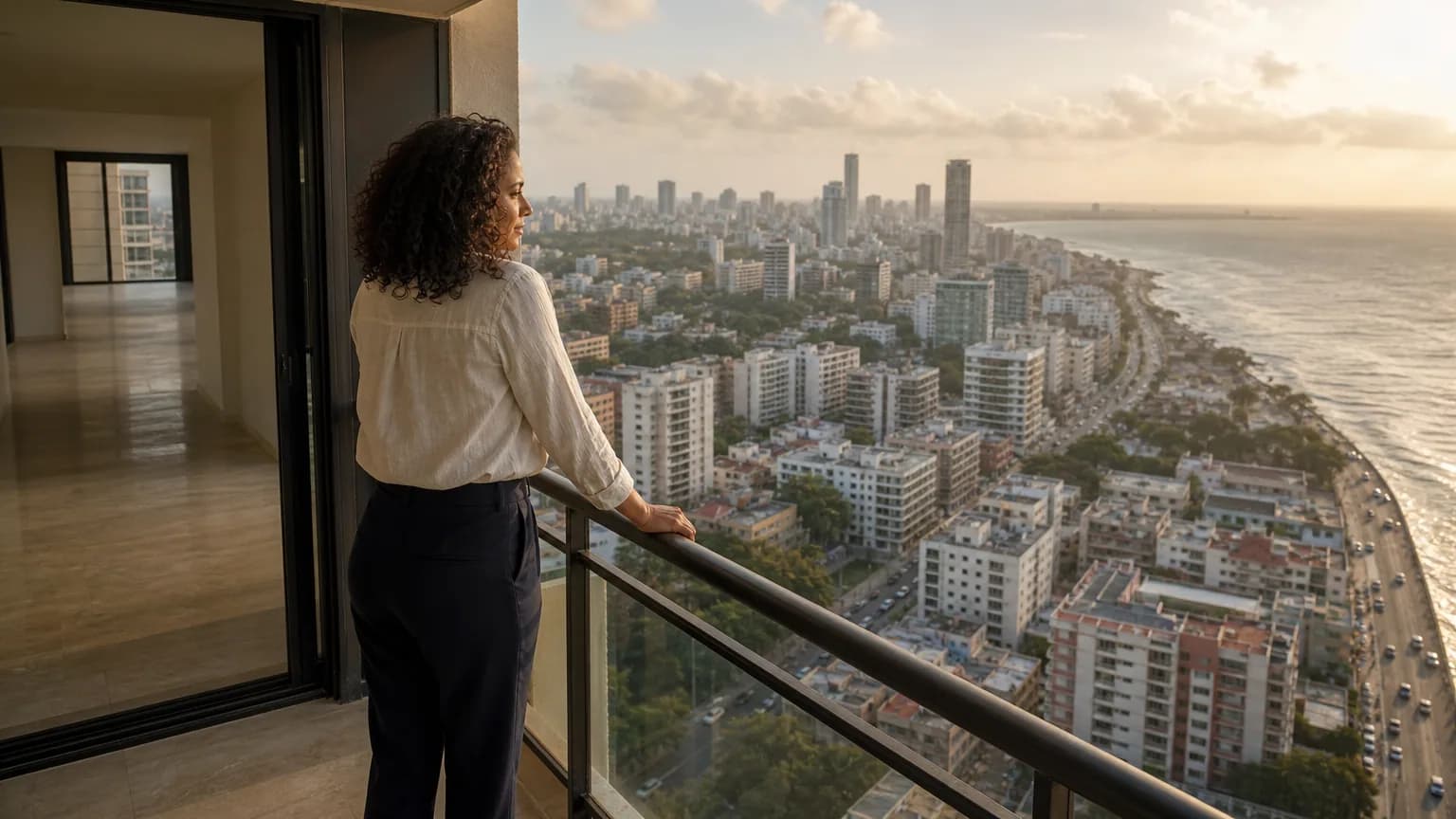
Before you see a single property, many people ask themselves the same question: Do I pay everything in cash or take out a loan? When buying a home in the Dominican Republic, that decision matters more than the wall color or commute time. And almost nobody explains it calmly.
This article isn't here to tell you which option is better. It's here to organize the question. We'll look at what paying cash means, what a mortgage in the Dominican Republic means, and how to figure out which one leaves you more at ease—which is different from which sounds smarter.
The common belief: "the best option is the one that costs less"
You hear a lot that paying cash is always better because "you don't pay interest." You also hear the opposite: that going into debt is normal and your cash should "work for you." Both statements oversimplify.
Toca Timbre
Verified properties, certified agents. You just decide.
The useful comparison isn't just interest charges versus zero interest. It's financial cost versus the security of keeping cash on hand. A person can pay less in total by buying cash and still end up with no cushion for an emergency. Another person can pay interest and sleep better because they've kept a reserve. The problem isn't that the buyer doesn't know how to choose. The problem is that the market usually presents the decision without organizing the facts.
What buying cash actually means
 Paying cash eliminates the monthly payment and the risk that financing conditions change. It can also simplify the deal.
But it doesn't mean "no costs." Transferring a property in the DR is subject, as a rule, to a 3% tax on value, plus notary fees, registration costs, and depending on the case, appraisals or legal advice. The DGII requires documents like a notarized transfer deed and a copy of the title.
Here's another point people forget: the money locked into the property loses liquidity. If you need it tomorrow, selling isn't immediate and it has costs.
Mortgage in the Dominican Republic: what it really means
A mortgage lets you buy without tying up all your savings. In exchange, you take on a payment for several years, insurance, closing costs, and possible interest rate changes.
As a reference, a report based on data from the Superintendency of Banks put the average mortgage rate at 11.47% in May 2026. Actual conditions depend on the lender, the product, your credit profile, and the property.
Banks usually check your identity, income, credit history, payment capacity, and the property that will serve as collateral. Some lenders finance roughly between 70% and 90% of the appraised value, so you need to put down a down payment. The exact percentage isn't universal.
A realistic scenario: Carla and the numbers
Imagine Carla, 34, who works in Santo Domingo and found an apartment for RD$5,000,000. She has saved RD$5,600,000. Technically, she could pay everything in cash.
One night she opens the calculator. Just the 3% transfer would be RD$150,000. Adding notary, registration, and moving, she'd have less than RD$300,000 left. She stares at the screen: the purchase is possible, but she feels like she has no breathing room.
Now she compares. With a 20% down payment (RD$1,000,000), she'd finance RD$4,000,000. At a rate of 11.47% over 20 years, the monthly payment would be around RD$42,500, not counting insurance or fees. This calculation is illustrative only; your actual number will depend on the offer you get.
Neither option is "correct" in the abstract. Carla's real question is different: Does she prefer a monthly payment with a reserve in the bank, or no payment with almost no reserve?
Five questions to decide clearly
Before you choose, it's worth answering honestly:
- How much money would you keep after paying the down payment or full price?
- Could you cover six to twelve months of expenses without selling the property?
- Would the payment still be manageable if your income dropped?
- How much would you pay in total between interest, insurance, and fees?
- Do you plan to stay in the property long enough to justify the purchase costs?
A practical rule: avoid letting the purchase leave you financially "gasping for air." If paying cash uses up almost all your liquid assets, partial financing might give you more peace of mind. If the payment takes too much of your income or your job is uncertain, paying cash while keeping a reasonable reserve might be calmer.
The most common fear with a mortgage, and how to organize it
The biggest fear is usually signing without fully understanding. It's reasonable: a mortgage transaction combines a purchase, a loan, and a lien on the property. That lien can cover principal, interest, and other charges.
You handle this fear with order, not courage:
- Ask for a full copy of the documents before signing: offer, promise, loan contract, mortgage deed, and amortization table.
- Request in writing the financed amount, the rate (fixed or variable), the term, the payment, commissions, insurance, and what happens if you fall behind.
- Compare the advertised payment to the contract payment and confirm whether there's a promotional rate that changes later.
- Check if it allows early payments and what penalties apply.
- Request an updated registry certification of the property and have a lawyer of your choice review the title, contract, and liens.
- Only hand over reserves against a receipt identifying the property, amount, and refund conditions.
If a verbal promise isn't written down, treat it as not guaranteed. And if someone pushes you to sign right away or discourages you from consulting a lawyer, that's a signal to stop.
How to organize the process
A sensible order would be: get a prequalification and written cost estimate; receive the complete property file; order the legal review; compare several financing offers; resolve questions in writing; and only then sign. No option should be chosen because of pressure from a fair, a limited-time promotion, or fear that prices will go up tomorrow.
A decision that can take time
Choosing between cash and a mortgage isn't a test of financial smarts. It's a decision about how much cushion you need to live calmly. Taking time to compare conservative scenarios isn't missing an opportunity; it's how a purchase stops being a shock and becomes an understood step.
If after organizing your numbers you still have doubts, that's a good sign: it means you're asking the right questions.
If you're at that stage of exploring calmly, Toca Timbre is an app where buyers can see properties posted by agents and contact them directly on WhatsApp. You can learn about it here: Toca Timbre. It's just a place to look at the market more clearly, at your own pace.
Frequently asked questions
Is it better to buy a house in cash or with a mortgage in the DR?
There's no universal answer. It depends on your liquid assets, income stability, your plans, and your comfort with debt. Paying cash avoids payments and interest, but can leave you without a cushion; financing keeps money available, but means a monthly obligation.
A helpful guide is to ask yourself which option would let you keep an emergency fund of six to twelve months of expenses.
What costs are there beyond the price when buying a home in the Dominican Republic?
As a rule, property transfer pays a 3% tax on the property value. There may also be notary fees, registration costs, appraisals, and legal advice.
If you use a mortgage, add the down payment, insurance, closing costs, and possible commissions. Ask for everything in writing before you hand over any money.
What should I review before signing a mortgage contract?
Review the rate (fixed or variable), the term, the actual payment, insurance, commissions, penalties for early payments, and what happens if you fall behind. Also confirm that the price, currency, and names are correct and that there are no blank spaces.
Ideally, a lawyer you choose should review the contract, title, and any liens registered on the property. Get the documents with enough time; no one should pressure you to sign right away.
Sources
- DGII — Guide 18: Real Estate Refund — https://dgii.gov.do/publicacionesOficiales/bibliotecaVirtual/registrados/otros/Documents/4-Guia%2018%20-%20Descargo%20Inmobiliario.pdf
- Central Bank of the Dominican Republic — https://bancentral.gov.do/
- DGII — Property Transfer — https://dgii.gov.do/servicios/Documents/Fideicomiso%20e%20Inmuebles/TRA-FyI-Transferencia-Inmobiliaria.pdf
- Real Estate Registry — Procedure Information — https://ri.gob.do/?page_id=1701
- Inmobiliario.do — How to Get a Loan to Buy a Home in the Dominican Republic — https://inmobiliario.do/en/how-to-get-a-loan-to-buy-a-home-in-the-dominican-republic-a-practical-guide/
- En Segundos — Buying a Home in 2026: The Down Payment, Mortgage Rate, and Weight of the Family Payment — https://ensegundos.do/2026/10/23/comprar-una-vivienda-en-2026-el-inicial-la-tasa-hipotecaria-y-el-peso-de-la-cuota-familiar/
- Real Estate Registry — Conventional Mortgage — https://ri.gob.do/wp-content/uploads/Tramites/DNRT/HIPOTECA_CONVENCIONAL.pdf
- Senate of the Dominican Republic — Regulations (Masterlex) — http://www.senado.gov.do/masterlex/MLX/docs/1C/2/11/18/19EA.htm
- APAP — Loan and Purchase and Mortgage Contract — https://apap.com.do/wp-content/uploads/2019/03/CONTRATO-DE-PRESTAMO-Y-COMPRAVENTA-E-HIPOTECA.pdf
- APAP — Loan and Purchase Contract for Property with Mortgage Guarantee (Framework Agreement) — https://apap.com.do/wp-content/uploads/2019/03/39.-Contrato-de-Prestamo-y-Compraventa-de-InmuebleS-con-Garantia-Hipotecaria-Acuerdo-Marco.pdf