Buying Property as an Unmarried Couple in the Dominican Republic
17 de noviembre de 2026 · 7 min min read
If you're buying together without being married, your first conversation with a real estate agent matters. Here's how property purchase works for unmarried couples in the Dominican Republic and what to ask from the start.
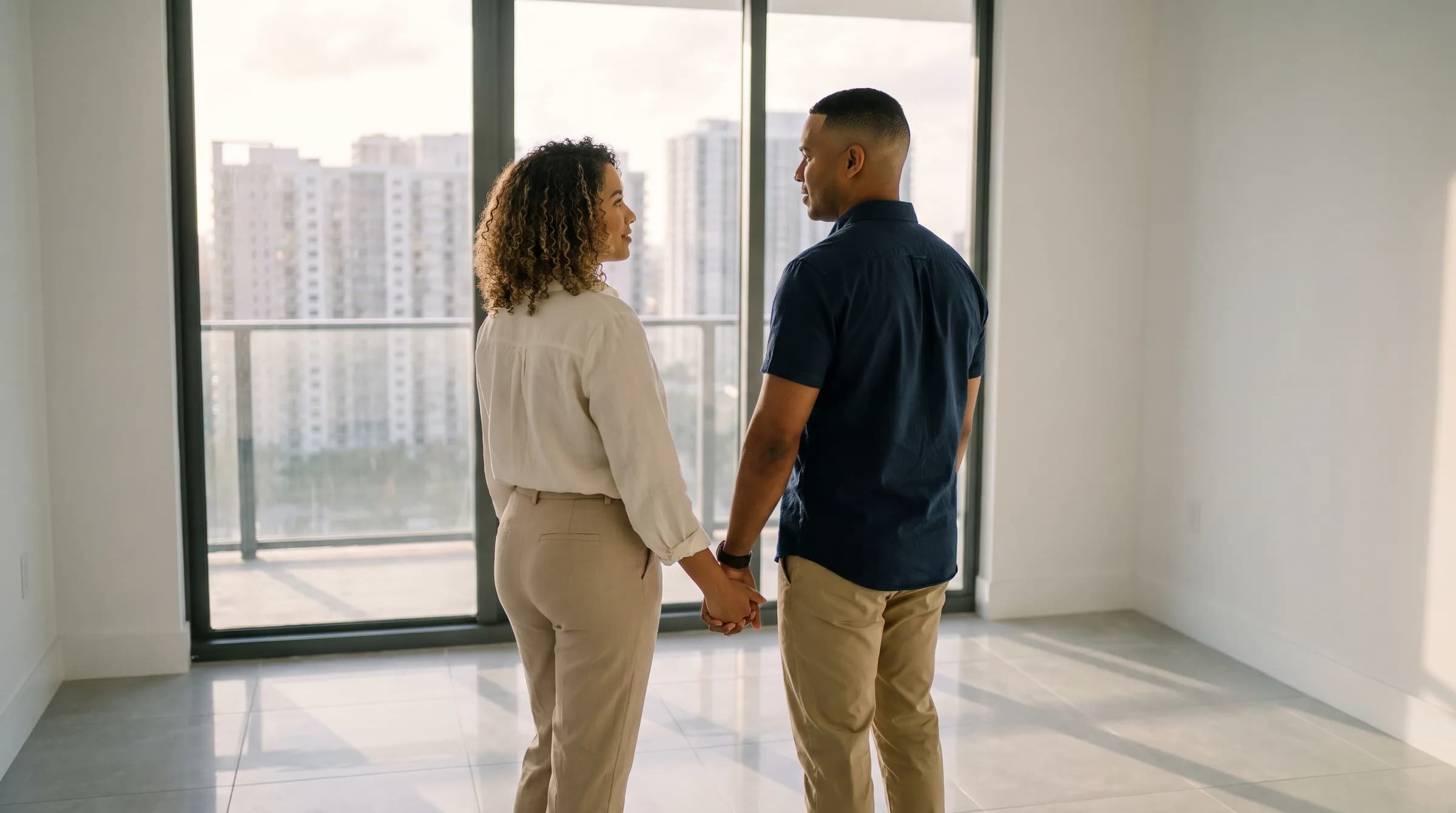
There's a conversation many couples put off: whose name will the apartment be in? Buying property as an unmarried couple in the Dominican Republic is possible, but each person's legal protection depends on how the transaction is documented and registered. That conversation needs to happen long before you sign anything.
This article isn't here to tell you what to do. It's meant to walk you through how the process works, why your first contact with a real estate agent sets the tone for everything that follows, and what questions you should ask from day one. The issue isn't you—the Dominican real estate market rarely explains these steps in order.
The common assumption: "if we both pay, we both own it"
Many couples assume that living together, contributing money, or promising to share the property automatically makes you both owners. That's not how it works. In the Dominican system, what matters is the ownership title registered in the Title Registry, not what you and your partner understand or agree to verbally.
Toca Timbre
Verified properties, certified agents. You just decide.
The law and Constitution recognize certain property rights that come from a stable, singular union, as long as certain legal conditions are met—like no marriage impediments. But whether those rights exist, how far they extend, and how to prove them depends on each case: how the contributions were made, how you live together, and how the property is registered. This is territory worth reviewing with a lawyer, not guessing about.
Buying as an unmarried couple in the Dominican Republic: what the registry says
 Law 108-05 on Real Estate Registry regulates the registration of real property rights. Rights registered under that law are protected by the State, and the system gives central weight to whoever appears on the title certificate.
In practical terms, that means three things:
- A sales promise, a private receipt, or a verbal agreement don't replace registered property ownership.
- If the sales deed and title are only in one person's name, the other would have to sue and prove their payments and agreements if the relationship ends.
- Each buyer's participation must show up in the sales deed and the registry, not just in a private document.
A real example: Andrea and Luis
Imagine, as a hypothetical scenario, Andrea and Luis. They live together in Santo Domingo and find an apartment for RD$5,500,000. The 20% down payment is RD$1,100,000. Luis has a loan preapproved, and Andrea covers most of the down payment with her savings.
One afternoon they visit the unit. They like it, the seller mentions other interested buyers, and Luis says: "Let's put it in my name for now, that'll make the bank process easier. We'll sort it out later." Andrea feels a knot in her stomach, but doesn't want to seem distrustful of the person she shares her life with. That discomfort is normal, and it's exactly the signal that you need an ordered conversation.
The DGII (Dominican tax authority) indicates that the transfer tax is, as a general rule, 3% of whichever is greater: the appraised value or the price stated in the deed. In this example that's around RD$165,000, plus other closing costs. Those are numbers both of you should see in writing, and you should also know whose name the title will be in.
Why your first contact determines your protection
Where you start looking shapes what comes next. A first contact with a verified, transparent agent brings more than property listings. It brings someone who asks the right questions from the beginning:
- Who's buying and who's contributing money?
- Will there be financing, and in whose name?
- Whose name do you want the property registered under?
- What's the goal: family home, investment, rental income, or building assets?
These questions don't replace a lawyer. They help you catch early on whether you need to look at a co-ownership agreement, a will, insurance, or documents proving each person's contributions. If this conversation doesn't happen at the start, it usually shows up late—when money's already changed hands and emotions are invested.
It's also worth knowing that legal due diligence is the buyer's responsibility, along with their lawyer, not just the seller's or the developer's. The agent can help with documents and coordination, but no reservation or private contract guarantees ownership by itself.
The process, in order
Here's one way to walk through buying as an unmarried couple without losing track:
- Clarify the structure. Who's buying, how much each person contributes, and what percentage each will be registered for (for example, 50/50 or 60/40).
- Verify the agent. Ask for ID, experience, references, and clarity on the property, seller, and commissions.
- Consult an independent lawyer before you sign a sales promise or hand over money.
- Review the documents: title certificate, legal status, liens, mortgages, seizures, easements, taxes, and the seller's authority.
- Sign the sales deed with both of you as buyers, with your IDs and your participation percentages.
- Process the transfer with the DGII and Title Registry. You'll typically need a notarized deed, a copy of the title, ID documents, and payment of the tax.
- Document your agreement with each other: how you'll use the home, payment of bills, what happens if one of you stops paying, and how you'll handle separation.
Without marriage, don't assume automatic inheritance either. Property transfer depends on succession rules, whether there are children or other heirs, and whether a valid will exists. That's another conversation to have with a lawyer or notary.
Red flags in communication
An informed couple gets the total price, taxes, closing costs, commissions, dates, penalties, and reservation refund terms in writing. Both of you should receive the same information. Stop and think if someone pushes you to sign, avoids answering questions, downplays registering both of you, or discourages you from consulting an independent lawyer.
A closing thought
Buying together is an act of trust, and trust is better kept through clarity than through good intentions. Talking about titles, percentages, and break-up scenarios doesn't diminish the love in your relationship. It just prepares the ground before you build on it.
None of this requires rushing. Every couple and every property is different, and the most useful thing you can do as you start is begin with the right place and the right questions.
Frequently asked questions
Can an unmarried couple buy property in the Dominican Republic?
Yes. Two people can be listed as buyers without being married. What matters is that both appear in the sales deed and on the title certificate, with their ID and their participation percentage.
The exact structure, especially if there's a loan, unequal contributions, or foreign buyers involved, should be reviewed by a Dominican real estate lawyer.
What happens if only one person is on the title but you both paid?
Whoever is registered in the Title Registry is the registered owner. The other person would have to prove their contributions, agreements, and circumstances, and that could mean a lawsuit with an uncertain outcome.
That's why consulting a lawyer before you pay matters. A promissory note or private contract might offer less protection than registered co-ownership.
What taxes do you pay when transferring property?
According to the DGII, the real estate transfer tax is, as a general rule, 3% of whichever is greater: the appraised value or the price stated in the deed. On top of the tax there are other closing costs, like fees and charges.
The property must be registered and current on its tax obligations, because outstanding debts can delay the transfer. Check the current amounts with the DGII or your lawyer.
If you're just starting to look at options, Toca Timbre is an app where buyers can explore properties listed by agents and contact them directly through WhatsApp. It's a place to start learning the market with more order, at your own pace, before any decisions. You can check it out here: Toca Timbre
Sources
- Law 108-05 on Real Estate Registry (Real Estate Jurisdiction) — https://ri.gob.do/wp-content/uploads/2023/10/Libro-Ley-108-05-de-registro-inmobiliario.pdf
- Law 108-05 on Real Estate Registry (INVI) — https://invi.gob.do/documents/Ley%20No.%20108-05%20de%20Registro%20Inmobiliario.pdf
- Senate of the Dominican Republic, Masterlex — http://www.senado.gov.do/masterlex/MLX/docs/1C/2/11/18/814.htm
- Unmarried couples: their rights (Listín Diario) — https://listindiario.com/puntos-de-vista/2019/08/03/576695/parejas-no-casadas-sus-derechos.html
- Real estate purchases in the Dominican Republic: summary (DrLawyer) — https://drlawyer.com/espanol/las-compras-inmobiliarias-en-la-republica-dominicana-resumen/
- Legal guide: real estate property in the Dominican Republic (Dominican Law) — https://dominicanlaw.com/es/guia-legal-republica-dominicana/propiedad-inmobiliaria/
- Guide to taxes when buying, building, or renting property in DR (Inmobiliario.do) — https://inmobiliario.do/guia-cuanto-paga-en-impuestos-quien-compra-construye-o-alquila-un-inmueble-en-republica-dominicana/
- Property transfer (DGII Help) — https://ayuda.dgii.gov.do/conversations/discusiones/transferencia-de-inmueble/6532bfce97b5a116694d8d48
- Real estate transfer: process and 3% payment (DGII Help) — https://ayuda.dgii.gov.do/conversations/discusiones/transferencia-inmobiliaria-proceso-a-pagar-el-3/60492b376c0f1412824f0f98
- General Rule 08-14 (DGII) — https://dgii.gov.do/legislacion/normasGenerales/Documents/Otras%20Normas%20de%20Inter%C3%A9s/Norma08-14.pdf