What to Verify Before Sending Money to a Real Estate Agent
10 de junio de 2026 · 5 min min read
Essential checklist for Dominicans who want to buy properties. What documents to ask for and how to protect your money before the first payment.
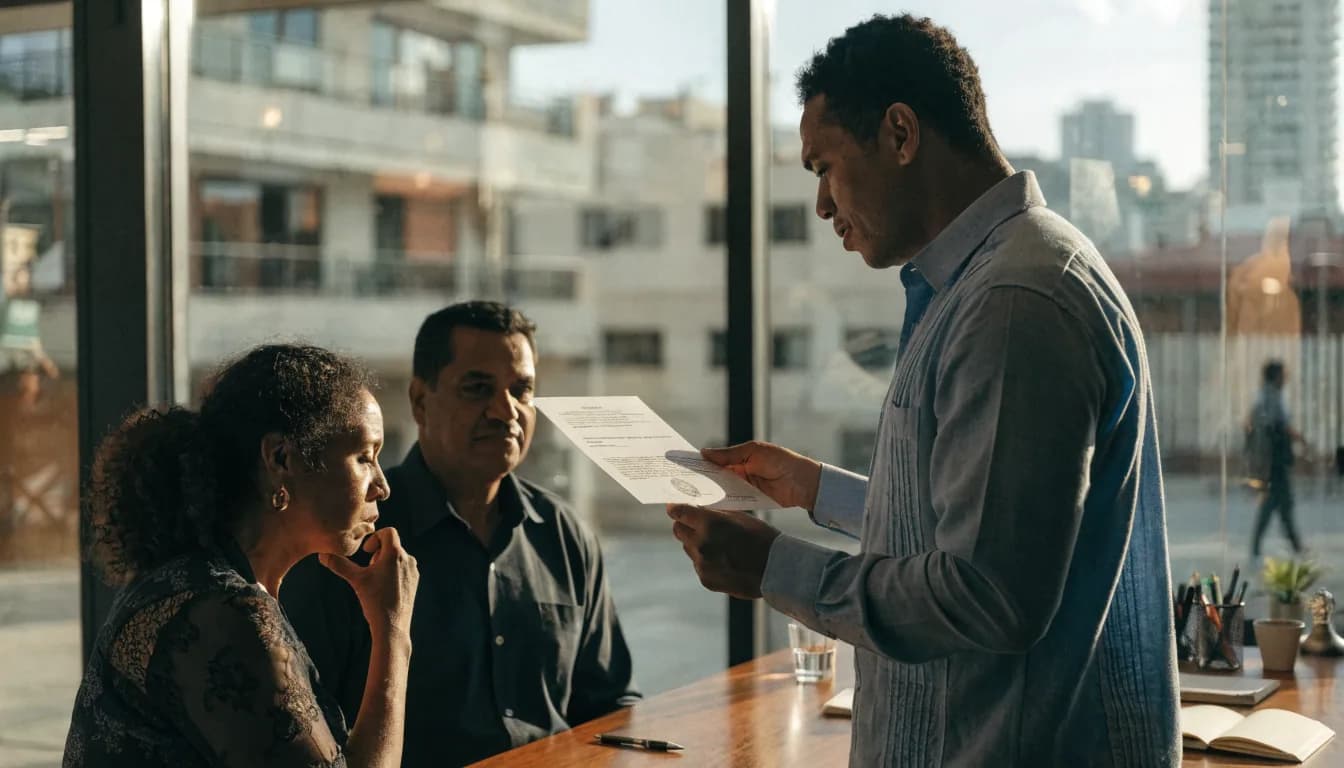
What to Verify Before Sending Money to a Real Estate Agent in Dominican Republic
Carlos got a call from his sister in Santiago. "I found the perfect house, but we need to hold it with RD$200,000 today because there are other interested buyers". From New York, Carlos felt that familiar mix of excitement and panic. He'd been searching for months for a property for his family and this seemed ideal: three bedrooms, near the kids' school, fair price. But something in his mind said "wait".
This scenario repeats weekly in thousands of Dominican families. The pressure to "hold it now" becomes the most dangerous moment of the entire home buying process in Dominican Republic. Not because the property is bad, but because it's exactly when most financial mistakes are made.
The Dangerous Belief: "If I Don't Hold It Today, I Lose the Opportunity"

Toca Timbre
Propiedades reales. Agentes verificados. Tú decides sin miedo.
Artificial urgency is the most effective tool in the hands of those who shouldn't be handling your money. A verified real estate agent never pressures you to send money without giving you time to review basic documents. On the contrary, a serious professional prefers you review everything calmly because they know rushed transactions end in legal problems that affect their reputation.
In today's Dominican real estate market there exists a professionalized ecosystem of certified agents. The problem is that informal intermediaries also proliferate, taking advantage of the physical and emotional distance of buyers abroad.
The Verification Checklist Before Sending a Single Peso
1. Professional Certification of the Agent
Before any conversation about money, confirm the agent is certified by the Association of Real Estate Companies (AEI) or another recognized entity in the sector. This certification indicates they've passed through review of ethics, market knowledge and track record. Ask for the current certificate and verify directly on the AEI website.
If the agent dodges this question or says it's "in process", that's an immediate alarm signal.
2. Tax and Legal Formality
Every legitimate real estate agent must have their Taxpayer Registry Number (RNC) current, proving they operate as a formal business with DGII. Request a copy of the RNC and verify its status. Also, they should have a verifiable physical office, not just a WhatsApp number.
Physical office is a strong indicator of stability and commitment. An agent who only operates from a cell phone has little to lose if something goes wrong.
3. Transparent Digital Reputation
Check reviews on Google, Facebook and Instagram. A serious agent has professional digital presence: website with their name or brand, updated portfolio, clear contact information. They should be able to show history of successful transactions and references from recent clients, especially cases of Dominicans abroad.
Demand video calls, not just text messages. A legitimate professional is willing to explain commissions face to face and share model contracts.
4. Complete Property Documentation
This is the critical point: no money is sent without verifying the property has surveyed title, updated liens and encumbrances certification, and land use in order. A professional agent only handles properties with clear documentation because they know legal problems affect their long-term business.
If you're told that "papers get fixed afterward", walk away.
The Moment of Family Decision
When Carlos explained to his sister that he needed a week to verify the agent and review documents, the response was predictable: "But they're going to sell the house to someone else". This is where many families make the costliest financial mistake.
The conversation changed when Carlos told her: "I understand your excitement about that house and I appreciate you thinking of us. But my responsibility is to care for the family's money. I need to verify the agent's credentials and have a lawyer review the title before sending anything".
This structure works: acknowledge the other person's emotion, affirm the family bond and explain the boundary without attacking. It's not distrust toward family, it's protection of family assets.
Signals That Should Stop Any Transfer
- Pressure to send money "today" without time to verify
- Refusal to provide RNC or professional certification
- Only WhatsApp communication, no video calls
- Properties without surveyed title or with "pending" documentation
- Unclear commissions or that change during conversation
- References that can't be verified independently
Each of these signals has cost thousands of dollars to Dominican families. A professional agent understands these verifications are a normal part of the process.
The Difference Between Rush and Real Opportunity
A real home buying opportunity in Dominican Republic includes enough time for basic due diligence. Properties with clean documentation and professional agents don't disappear in 24 hours. If it disappears, it wasn't an opportunity you wanted to take.
The Dominican real estate market has enough inventory of legitimate properties that you don't have to risk your assets for a "unique offer".
Reflection: The Real Cost of Rushing
The irony is that fear of "losing an opportunity" leads to losing real opportunities. When you send money without verifying, you don't just risk those specific funds. You risk your future buying capacity, your family relationships and your confidence in the Dominican real estate market.
An organized buying process, with clear verifications and professional agents, takes more initial time but generates safer results and stronger relationships.
If you're beginning your property search and want to explore the market with more clarity, there's a tool that connects buyers with verified agents. Toca Timbre is an app where you can see properties published by agents and contact them directly via WhatsApp, all from the same place. It doesn't replace the verifications we mentioned, but it can be a more organized starting point for your search process: Toca Timbre
Frequently Asked Questions
How do I verify if a real estate agent is certified in Dominican Republic?
You can verify the agent's certification by contacting the Association of Real Estate Companies (AEI) directly or checking their official website. A certified agent should be able to provide their registration number and current certificate. You can also ask for references from recent clients and verify their RNC on the DGII website.
How much money should I send to hold a property?
There's no standard amount, but never send down payment money without first verifying the property documentation and agent credentials. Many legitimate transactions allow you to hold with smaller amounts while legal verification is completed. A professional agent will understand you need time for due diligence before committing significant amounts.
What documents should a property have before I send money?
The property must have surveyed and registered title, updated liens and encumbrances certification (no more than 30 days old), approved land use for the type of construction, and be free of litigation or undeclared mortgages. These documents should be reviewed by an independent lawyer before any down payment.