5 Red Flags Carla No Longer Ignores on Real Estate Instagram
22 de junio de 2026 · 5 min min read
Learn to identify warning signs in social media real estate posts to avoid scams and reduce anxiety when searching for housing.
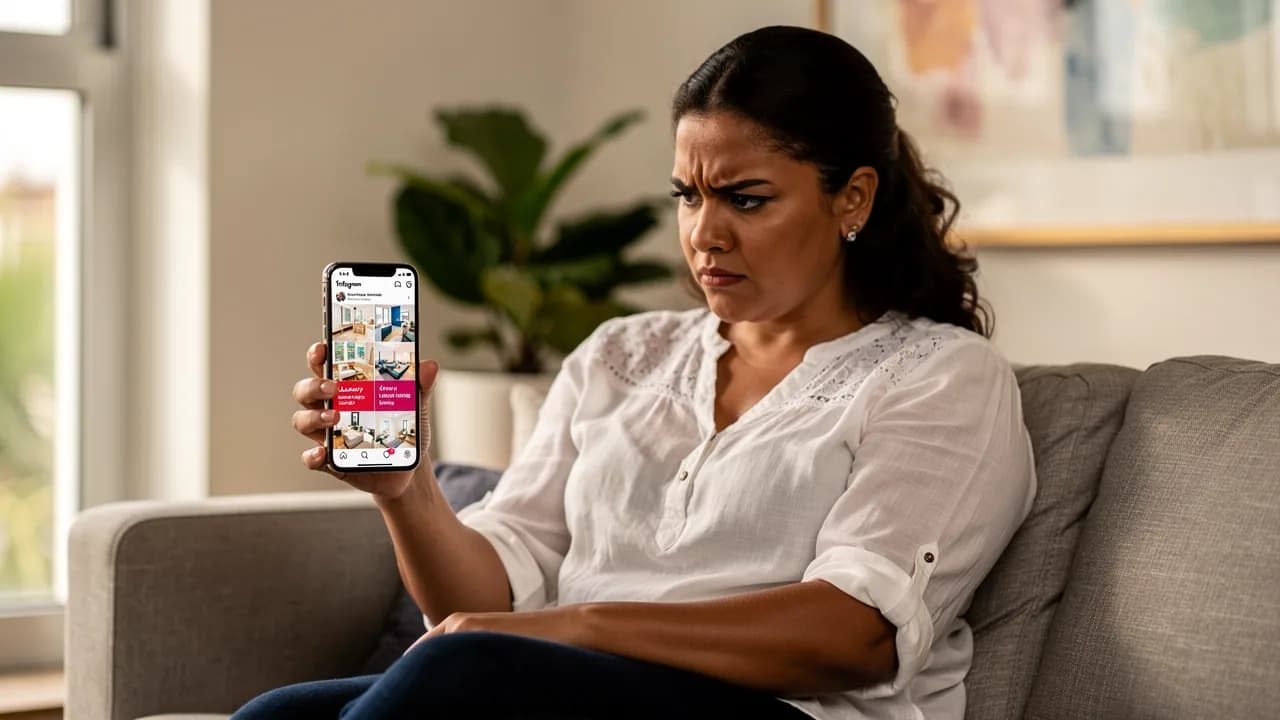
5 Red Flags Carla No Longer Ignores on Real Estate Instagram
Carla used to spend hours browsing Instagram and WhatsApp groups searching for her future home. Every brilliant post excited her, every "last opportunity" pressured her. That's until she almost transferred RD$150,000 to a fake account.
Today, after months of studying the Dominican real estate market, Carla looks at social media with different eyes. She no longer lets "missing opportunities" drive her. Instead, she identifies patterns she previously ignored completely.
The Reality of Real Estate Marketing on Social Media
Social media has become the first point of contact between buyers and real estate agents in the Dominican Republic. However, this same channel that facilitates searching also harbors questionable practices that generate anxiety and, in the worst cases, financial losses.
Toca Timbre
Propiedades reales. Agentes verificados. Tú decides sin miedo.
The mix of artificial urgency, incomplete information, and emotional pressure characteristic of social media can cloud any buyer's judgment. What Carla learned is that recognizing these warning signs early not only protects your money, but significantly reduces stress during your property search in the DR.
Red Flag #1: Offers Too Good to Be True

"Penthouse in Piantini for RD$4.5 million - Bargain price!"
Carla now knows that when a price is 30-40% below market without clear explanation, it's time to stop. Scammers use unrealistically low prices to generate urgency and capture victims quickly.
What to look for:
- Prices significantly lower than similar properties in the area
- Phrases like "urgent liquidation" or "panic price" without context
- Resistance to explaining why the price is so low
- Pressure to "act now before the price goes up"
A legitimate low price always has verifiable explanation: seller's urgent need, special property condition, or specific negotiation that can be documented.
Red Flag #2: Unclear Agent Identity
Instagram Profile: @inmobiliariaexito_rd Contact Information: "Message me on WhatsApp for more info" Agent Name: "Carmen - Your trusted advisor"
This information used to be enough for Carla. Today, she demands complete data: agent's full name, company RNC, verifiable physical address, and registration with recognized real estate associations.
Scammers avoid giving precise personal information because they know it will be used to verify their legitimacy. A professional agent always provides complete details without hesitation.
Red Flag #3: Little Property Information
Posts full of filters and emotional captions ("Your dream home awaits you") but empty of concrete data like:
- Exact construction and land measurements
- Specific location (neighborhood, street, or project)
- Legal status of the property and documentation
- Real vs. planned amenities
- Delivery schedule on new projects
The ambiguity isn't casual. It often hides legal problems, project changes, or simply that the property doesn't exist as presented.
Red Flag #4: Pressure to "Reserve" via WhatsApp
"There are 3 other interested people. If you want to secure the apartment, I need you to transfer RD$100,000 today. I'll send you my bank details privately."
This message would trigger Carla's anxiety before. Artificial urgency combined with the ease of transferring money through banking apps creates the perfect scam scenario.
No legitimate home purchase process requires immediate transfers without:
- Visiting the property physically
- Reviewing legal documentation
- Signing written agreements
- Involving a specialized attorney
Red Flag #5: Promises of Guaranteed Returns
"Invest RD$2 million today and get 15% annual guaranteed return. No risk, with backed contract."
In the Dominican real estate market, realistic rental investment returns range between 6-10% annually, depending on location and property type. Promises significantly higher without detailed business model explanation are red flags.
Legitimate real estate investments always involve risk, require market analysis, and never guarantee specific results.
How Carla Verifies Now Before Contacting
Before writing any message, Carla does a quick verification:
- Googles the agent's name to verify their track record and consistent digital presence
- Compares prices with similar properties on established portals
- Verifies the company in public records and real estate associations
- Reviews comments and ratings on different platforms
- Analyzes consistency between posts from the same account
This process takes her 10-15 minutes and has prevented multiple problematic situations.
The Difference Between Caution and Paranoia
Recognizing red flags doesn't mean distrusting everything. The Dominican real estate market has serious professionals who use social media transparently and effectively.
The key is distinguishing between normal sales pressure (which all sellers exercise) and manipulative tactics designed to avoid verification and artificially rush decisions.
A first contact with a professional real estate agent always includes willingness to provide complete information, time to verify data, and respect for the buyer's due diligence process.
Today, when Carla sees a real estate post on Instagram, she no longer feels the immediate urge to "not miss the opportunity." Instead, she uses that first impression as a starting point for informed investigation. Her anxiety transformed into a protection tool that helps her navigate the market with greater security and confidence.
The home purchase in the Dominican Republic is still exciting for Carla, but now that excitement is grounded in verified information, not empty social media promises.
If you're in a situation similar to Carla's, seeking clarity in a market full of noise, Toca Timbre can help you explore properties published by verified agents. The app lets you contact agents directly via WhatsApp and begin your search from a more organized place. You can explore the available options at Toca Timbre.
Frequently Asked Questions
How can I verify if a real estate agent is legitimate in the Dominican Republic?
Verify that the agent has an active RNC, is registered with associations like ADAIR or similar, and can provide verifiable references from previous clients. A legitimate agent will never refuse to provide this information. You can also search their name on Google to review their digital presence and professional track record.
Is it normal for someone to ask for money before I see a property in person?
No. No legitimate home purchase process requires payments before visiting the property in person, reviewing legal documentation, and signing written agreements with legal advice. If they pressure you to transfer money based only on social media photos, that's an important red flag.
What documents should I request before reserving a property?
Always request the property title, condominium resolution (if applicable), approved plans, building permits, and the purchase agreement template. A legitimate developer or owner will have these documents organized and available for review with your attorney before any payment.
Sources
- How social media is helping to combat real estate scams in the Dominican Republic
- How to identify a fake real estate listing
- RE/MAX warns about unauthorized use of its brand
- Protect Yourself from Real Estate Rental Scams
- Recommendations to avoid real estate scams
- Warning signs in real estate investments
- Real estate fraud in the Dominican Republic: warning signs and protection tips
- Alert over increasing rental scams on social media