Home Insurance in the Dominican Republic: 3 Key Questions
27 de septiembre de 2026 · 8 min min read
Learn the essential questions about home insurance in the Dominican Republic before signing your property purchase. Avoid costly mistakes.
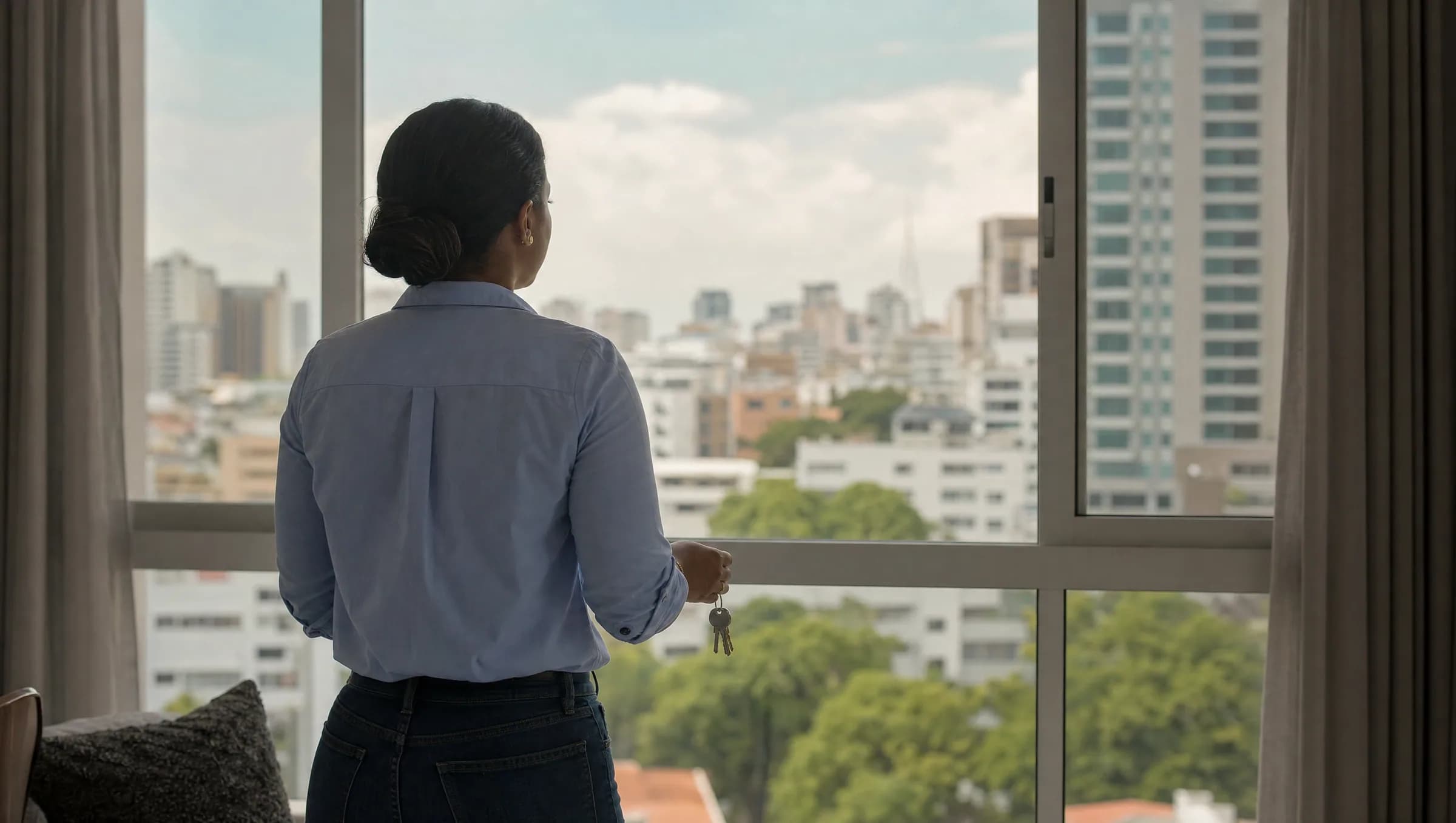
Home Insurance in the Dominican Republic: 3 Key Questions Before Closing
Carla has been searching for an apartment in Santo Domingo for weeks. She finally found one she likes, the price fits her budget, and she's ready to move forward. But when the agent mentions "the necessary insurance," she feels that familiar knot in her stomach. Which ones are mandatory? How much will they actually cost? Are they protecting her or the bank?
In the Dominican real estate market, home insurance in the Dominican Republic creates more anxiety than it should because many buyers arrive at this moment without the right questions. The problem isn't the complexity of insurance itself, but that every agent explains it differently and the information reaches you fragmented just when you need clarity most.
The common confusion: "all insurance is the same"
Many people believe insurance is one single thing: you pay a monthly fee and you already have "protection." In reality, when you buy a home in the Dominican Republic, up to three different types of insurance can come into play, each protecting different risks and benefiting different people.
Toca Timbre
Propiedades reales. Agentes verificados. Tú decides sin miedo.
This confusion gets worse because some banks offer "packages" where they mix life insurance, property insurance, and mortgage insurance into one single payment. The buyer signs without understanding what part of that payment protects them directly as the homeowner and what part protects mainly the bank as the mortgage creditor.
The result: Carla could end up paying for protections she doesn't need, or worse, believing she's fully covered when in reality she has important gaps in her actual coverage.
Why asking the right questions from the start matters
 According to Law 146-02, any insurance on a property in the Dominican Republic must be contracted with an insurance company authorized by the Insurance Superintendency. This means that not all policies that can be offered to you are valid, and your first line of defense is knowing what to ask.
When Carla structures her doubts into three specific areas, she moves from feeling uncertain to having a clear map of what she really needs. These questions not only give her control over the process, but allow her to compare offers and avoid surprises after closing.
The 3 Key Questions About Home Insurance
1. What types of insurance apply and who does each one protect?
The first question organizes the full picture. In a typical purchase, several types can appear:
- Property insurance: Covers material damage to the building (fire, hurricanes, theft). This protects Carla directly as the owner.
- Mortgage insurance: Protects mainly the bank against the risk that Carla can't pay the mortgage. It's mandatory if there's a loan.
- Associated life insurance: Covers the mortgage balance if Carla dies. It protects her family and the bank.
- Title insurance: Optional, covers problems with the legal history of the property.
Asking "which ones are mandatory by law, which ones does the bank require, and which ones are optional?" gives Carla clarity about where she can choose and where she can't.
2. What exactly does it cover and how much will it cost in case of a claim?
Here Carla needs concrete details:
- Specific coverages: Does it include hurricanes, floods, earthquakes? Does it cover contents or just the structure?
- Insured amount: Is it calculated by reconstruction value or market value?
- Deductible: If there's damage of RD$500,000, how much does Carla have to pay out of pocket?
- Exclusions: What situations aren't covered?
For example, if Carla's apartment is worth RD$4 million but the insurance has a 2% deductible, she would have to pay RD$80,000 out of pocket before the insurance company pays the rest in case of major damage.
3. How does the process work and what documents do I need?
The third question focuses on the practical side:
- Required documentation: What papers does she need to provide for each insurance type?
- Coordination with the bank: Which insurance can she contract on her own by choosing the insurance company?
- Claims process: Who does she call if there's a problem? How long does it take?
- Projects under construction: Does the developer have active all-risks insurance?
These questions reveal whether the agent really understands the process or is just repeating general information.
The emotional moment: when the numbers become real
Carla discovers that property insurance for her apartment costs approximately RD$15,000 per year, mortgage insurance adds RD$8,000 annually, and if she wants title insurance it would be a one-time payment of RD$20,000 (0.5% of the value). In total, RD$43,000 in the first year and then RD$23,000 annually.
That moment when the numbers materialize generates two typical reactions: either panic ("it's too expensive, I'd rather not insure anything") or resignation ("I'll sign whatever just to get this done"). Neither one helps.
What does help is understanding that these RD$23,000 annually represent less than 1% of the apartment's value, and that every peso has a specific purpose. Property insurance of RD$15,000 protects her against damage that could cost hundreds of thousands to repair. Mortgage insurance is the price of financing. Title insurance is optional but can prevent costly legal problems.
Common mistakes that end up costing big
Many buyers make seemingly small mistakes that become very expensive:
Contracting policies issued abroad: Some people, especially foreign investors, try to use insurance from their countries. In the Dominican Republic this doesn't work legally.
Choosing only by price: The cheapest policy often has important exclusions or very high deductibles that make the "protection" almost useless.
Not updating coverage: Carla remodels the kitchen and adds RD$200,000 of value, but never tells the insurance company. If there's a claim, that improvement isn't covered.
Assuming rental income is covered: If Carla plans to put the apartment on Airbnb, many standard residential policies exclude commercial activities.
Not understanding the difference between actual cash value and replacement cost: One option pays her what the used apartment is worth, the other pays what it costs to rebuild it new.
The importance of working with verified agents
In the Dominican Republic, insurance agents must be licensed by the Insurance Superintendency. This isn't just bureaucratic paperwork: it means they've met experience and knowledge requirements, and they're subject to official oversight.
A verified agent helps Carla navigate these decisions without pressure, explains exclusions in detail, and coordinates with her attorney to decide whether title insurance makes sense in her specific case. He or she also helps her avoid the mistake of relying only on insurance without doing a thorough legal review of the documents.
The Superintendency even offers an online service to check whether an intermediary is properly authorized, giving Carla a simple way to verify credentials.
Reflection: clarity before rushing
Insurance isn't Carla's enemy or an obstacle to her purchase. It's a technical tool that, when properly understood, gives her real peace of mind and protects her assets.
The difference between feeling anxious and feeling in control comes down to arriving at that moment with the right questions: what types of insurance do you need, what exactly do they cover, and how do they work in practice. When Carla understands that property insurance protects her as the owner, that mortgage insurance is part of the cost of financing, and that title insurance is an optional decision based on her risk tolerance, she can make informed choices instead of signing blindly.
The goal isn't to eliminate all risk—that's impossible. The goal is to understand exactly what risks you're taking on, which ones you're transferring, and how much each decision costs.
If you're in the process of searching for a home and want to explore the market with greater clarity from the start, Toca Timbre is an app where you can see properties posted by agents and contact them directly through WhatsApp to ask these kinds of questions before committing to any specific option. You can explore it at Toca Timbre
Frequently Asked Questions
Is home insurance mandatory in the Dominican Republic?
There's no law requiring all homeowners to insure their homes. However, if you buy with a mortgage, the bank can require property insurance as a condition of the loan. Mortgage insurance, meanwhile, is mandatory by law when there's bank financing. The decision to insure a property paid completely in cash is left to the owner's discretion.
Can I contract home insurance with any international company?
No. According to Law 146-02, any insurance on a property located in the Dominican Republic must be contracted with an insurance company authorized by the Insurance Superintendency and the policy must be approved locally. Insurance issued in other countries is not valid for Dominican properties, no matter how recognized the insurance company is internationally.
How much does home insurance cost in the Dominican Republic?
The cost varies based on the property value, location, type of construction, and coverages chosen. As a general reference, property insurance typically costs between 0.3% and 0.8% of the insured value annually. For an apartment worth RD$4 million, this means between RD$12,000 and RD$32,000 per year. Mortgage insurance is additional and is calculated on the loan balance. It's important to compare offers from different authorized insurance companies.
Sources
- Regulation on Mortgage Insurance and Guarantee Certifications — https://www.sb.gob.do/media/15kfwuy1/reglamento-sobre-seguros-hipotecarios-y-certificaciones-de-garantias.pdf
- Title Insurance in the Dominican Republic — https://villasincasa.com/es/title-insurance-dominican-republic/
- Stewart Title Latin America — https://stla.net/es/locations/republica-dominicana/
- Law No. 189-11 for the Development of the Mortgage Market — https://sb.gob.do/media/giihndx0/ley-no-189-11-para-el-desarrollo-del-mercado-hipotecario-y-el-fideicomiso-en-la-republica-dominicana.pdf
- Home Insurance Banesco — https://www.banesco.com.do/seguros/hogar/
- Home Insurance in the Dominican Republic — https://elcorreo.do/seguro-de-vivienda-en-republica-dominicana-que-cubre-y-cuanto-cuesta/
- Title Insurance Dominican Republic — https://drlawyer.com/buying-real-estate-in-the-dominican-republic-title-insurance/
- Mortgage Insurance in DR — https://raydelaragon.com/seguros-hipotecarios-en-rd-me-protegen-en-verdad/
- Safe Housing Guide MIVHED — https://mivhed.gob.do/wp-content/uploads/2026/06/MIVHED-Guia-Vivienda-Segura.pdf
- Property Insurance Dominican Republic — https://www.navettaproperties.com/es/blog/property-insurance-dominican-republic