Why a Verified Agent Makes a Difference in Construction Financing
21 de septiembre de 2026 · 5 min min read
Discover how a verified agent can save you from costly mistakes with construction loans in the Dominican Republic. Learn about common risks.
Why a Verified Agent Makes a Difference in Construction Financing
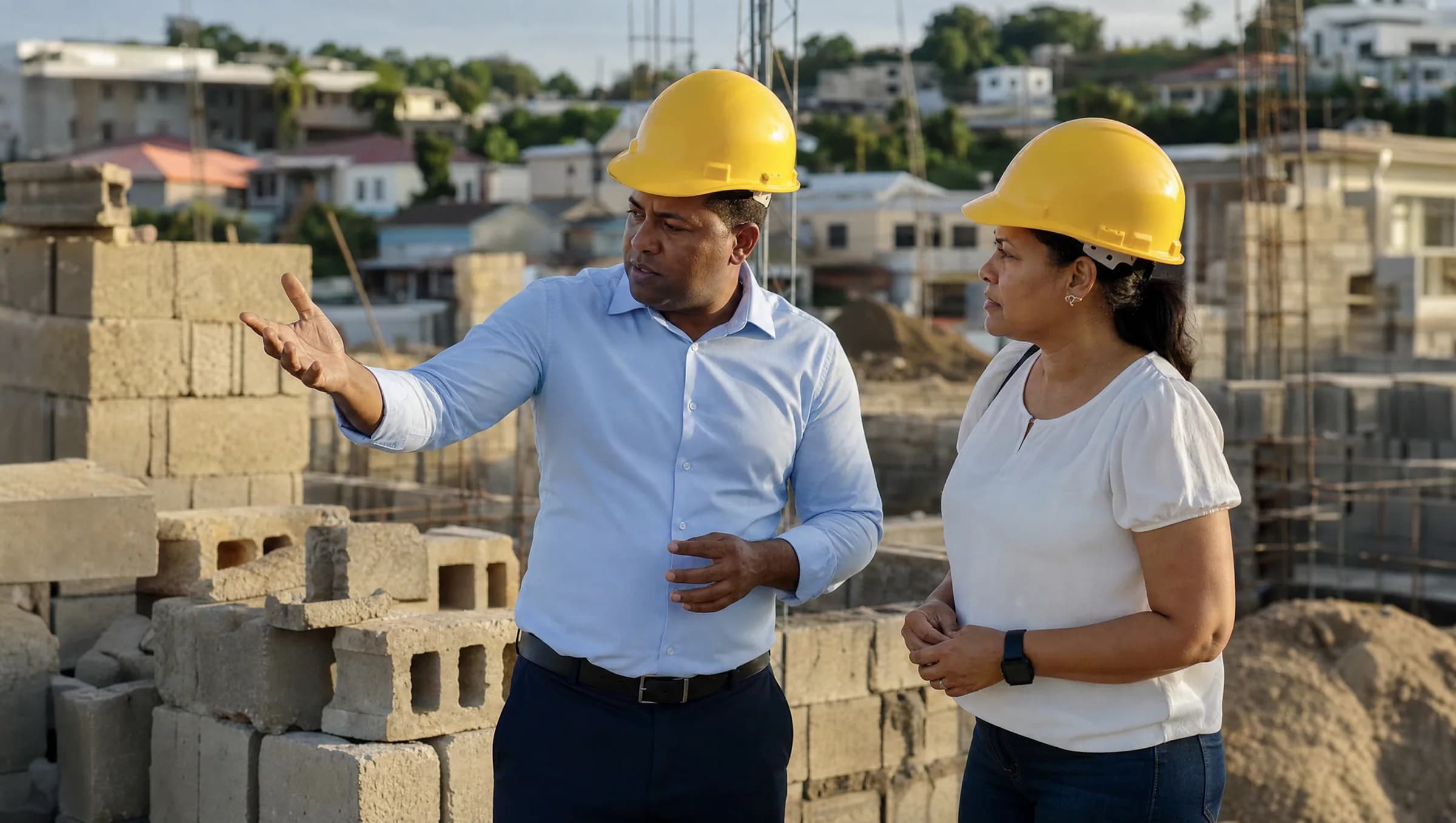
When María decided to build her first home in Santiago, she thought applying for a construction loan in the Dominican Republic would be like getting any other credit: sign, receive the full amount, and start building. Three weeks later, with the contractor waiting for material payments and the bank explaining it would only release the first installment after an inspection, she understood she'd made the most common mistake of first-time builders.
In a market where comprehensive real estate agent regulation still doesn't exist, the difference between talking to a verified professional or an informal intermediary can determine whether you actually understand how construction financing works before you commit.
The Most Common Mistake: Assuming Full Disbursement
The mistake many people make when applying for their first construction loan is signing believing they'll receive all the money at once. In reality, these loans work through partial disbursements tied to construction progress, also called valuations.
Toca Timbre
Propiedades reales. Agentes verificados. Tú decides sin miedo.
Banco Popular, Banesco, La Nacional, and other Dominican entities all use the same system: money is released in stages verified by technical inspection. It's not money available immediately, but capital conditional on the physical progress of construction.
María discovered this when the bank explained she'd only receive the initial 20% after proving she'd started the work, and the rest would be released in monthly installments after certifying each advance with an independent engineer.
How a Verified Agent Would Have Avoided the Confusion
 A real estate agent certified by the Association of Real Estate Agents and Companies (AEI) understands the mechanics of these loans and would have prepared María for three realities:
Personal liquidity needed: Between one disbursement and the next can take a month. You need a bridge strategy to cover immediate expenses.
Coordination with the builder: The construction schedule must align with the valuations required by the bank to avoid delays from cash flow shortages.
Documentation by stages: Each release requires inspection, progress certification, and compliance with specific contract conditions.
This doesn't mean the agent handles the money or verifies titles, but rather understands the process well enough to explain realistic expectations before you commit.
Why Agent Verification Matters in Dominican Republic Construction Loans
When you're discussing financing with large amounts, mortgage guarantees, and complex legal documentation, knowing who you're talking to reduces specific risks:
- Incorrect information about loan conditions, timelines, or appraisal requirements
- Coordination problems between bank, builder, and client from poorly managed expectations
- Incomplete documentation that blocks fund release during critical construction stages
A verified agent has clear incentives to protect their professional reputation and meet ethical standards. Plus, they know what documentation each bank requires and how to prepare you for solid credit analysis.
The Practical Difference: Preparation vs. Surprises
The difference between working with a verified agent and an informal one isn't in accessing the loan—the bank decides that—but in arriving prepared for the process.
María would have understood from the start that she needed:
- Detailed budget certified by engineer
- Construction permits up to date
- Property free of liens to use as collateral
- Personal liquidity for expenses between disbursements
- Realistic schedule coordinated with the bank
Instead of discovering these requirements as she went, she would have arrived at the bank with complete documentation and expectations aligned with the reality of the product.
The Dominican Market Context
In the Dominican Republic, proposed legislation is pushing mandatory certification for real estate agents with requirements like clean criminal records, minimum academic training, and passing specialized exams. As this regulation solidifies, platforms working only with certified agents fill part of the gap.
This means not everyone presenting themselves as an "agent" has the same level of preparation to guide you on financing topics. Prior verification becomes an additional layer of security for conversations involving important financial decisions.
Reflection: Trust as Your Starting Point
Financing a construction project is a technical and regulated process where trust in your contact person is as important as the interest rate. A verified agent doesn't substitute the bank's evaluation or legal advice, but does reduce initial uncertainty and the risk of costly surprises.
The question isn't whether you need an agent to apply for a construction loan—you can do that directly with the bank. The question is whether you'd rather arrive prepared or learn the process while living it.
If you're considering financing for construction, you can explore properties and contact verified agents directly on Toca Timbre. It's an app where buyers can review listings posted by certified professionals and start conversations on WhatsApp with greater clarity about the process. You can explore it here: Toca Timbre
Frequently Asked Questions
How do disbursements work in a construction loan?
Construction loans in the Dominican Republic are released in stages called valuations, not in a single disbursement. The bank delivers an initial percentage (usually 20-30%) after verifying you've started the work, and the rest is released monthly after inspections certifying physical progress. Each bank has its own percentages and timelines.
What documents do I need to apply for a construction loan?
Dominican banks typically require a detailed budget certified by an engineer, plans and construction permits, appraisal by an authorized appraiser, financial statements, income certifications, and proof that the property is free of liens to use as collateral. The specific list varies by institution.
Can I apply for a construction loan without a real estate agent?
Yes, you can apply directly to the bank. A real estate agent isn't a mandatory requirement for the loan, but a verified one can help you prepare the documentation correctly and understand the process before you commit, especially if this is your first time with this type of financing.
Sources
- Banesco — https://www.banesco.com.do/empresas/prestamos/construccion/
- Banco Popular — https://popularenlinea.com/Personas/Paginas/prestamos/prestamo-construccion-en-rd-1ra-y-2da-vivienda.aspx
- La Nacional — https://asociacionlanacional.com.do/docs/info-producto/Info_Producto_Prestamos-Construccion.pdf
- BDI — https://www.bdi.com.do/prestamos/prestamo-hipotecarios-construccion/
- APAP — https://apap.com.do/empresas/financiamientos/
- Toca Timbre — https://tocatimbre.com/blog/que-verificar-antes-de-enviar-dinero-a-un-agente-inmobiliario
- Inmobiliario.do — https://inmobiliario.do/proyecto-de-ley-que-regularia-servicios-inmobiliarios-en-el-pais-define-terminologia-sobre-el-oficio/