Mistakes When Buying in Los Prados: A Guide to Avoiding Them
24 de noviembre de 2026 · 6 min min read
The most common mistakes when buying in Los Prados can cost you thousands. Discover how to avoid legal, tax, and contractual problems before you decide.
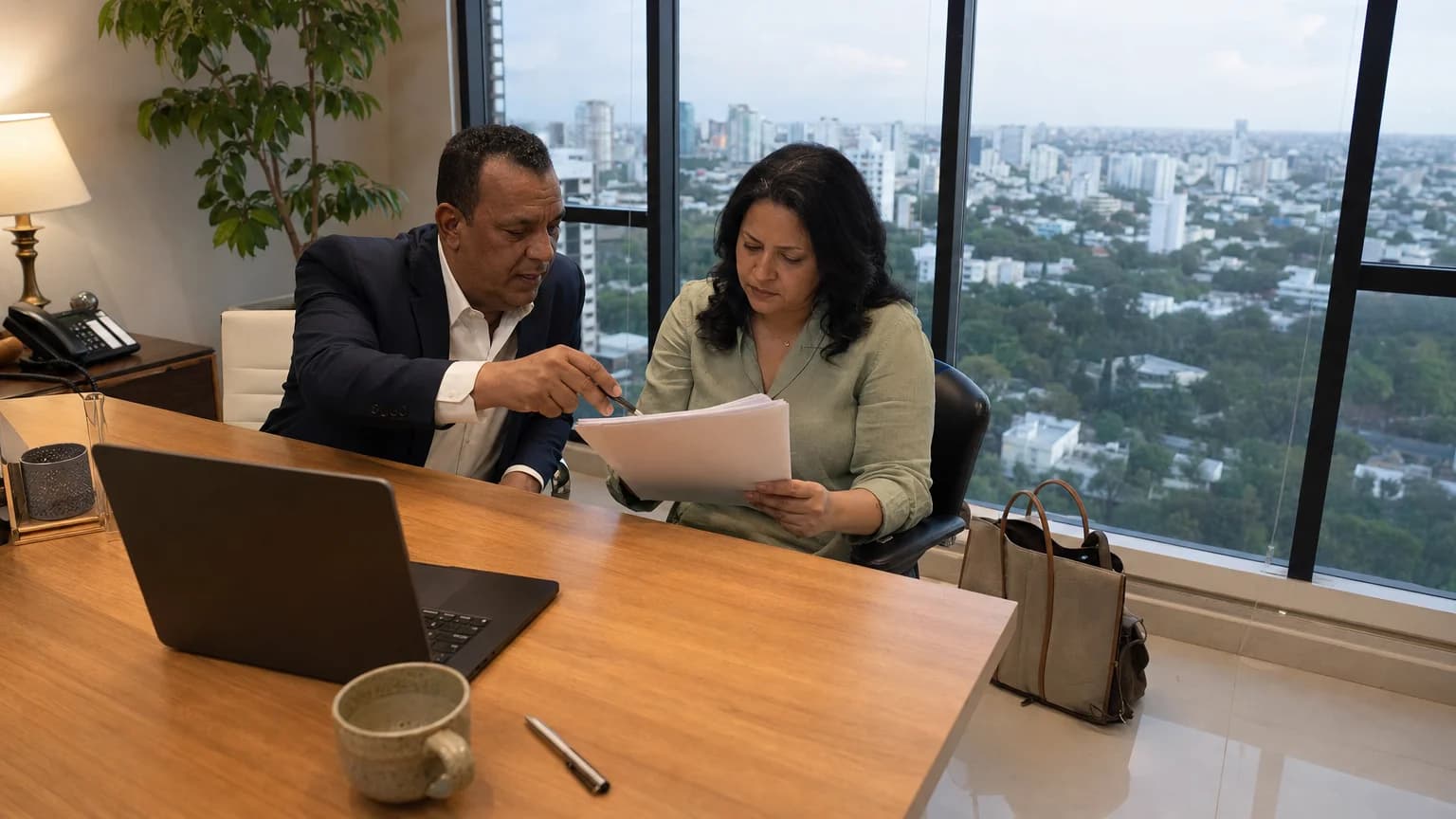
Buying in Los Prados seems straightforward until problems show up. A perfect apartment in photos becomes a legal nightmare when you discover it has an undisclosed mortgage. Or when the "owner" who signed with you turns out to be an unauthorized middleman.
Mistakes when buying in Los Prados don't happen by accident. They come from a real estate market where complete information doesn't always reach the buyer from day one. The good news is that these mistakes are predictable and, therefore, avoidable.
The most costly mistake: trusting only the listing
Carlos found a three-bedroom apartment in Los Prados for US$235,000. The photos showed spacious rooms, the location was perfect, and the price fit his budget. After two visits, he handed over a US$15,000 deposit.
Toca Timbre
Verified properties, certified agents. You just decide.
Two weeks later, his lawyer reviewed the documents. The apartment had a US$180,000 mortgage that the seller "forgot" to mention. The process stopped, but recovering the deposit took four months and additional legal fees.
This scenario repeats because many buyers assume that a professional listing guarantees complete transparency. In Los Prados, as throughout the Dominican Republic, the first real step is requesting basic documentation: registration number, cadastral designation, and a recent Legal Status Certification from the Title Registry.
Property identification problems
 The second frequent mistake is not verifying that the physical property matches the registered description. In Los Prados there are constructions that were sold before completing the boundary demarcation process, which means the Title Certificate may not reflect exactly what you're buying.
An apartment advertised as "116 m²" may correspond to a commercial measurement that includes common areas, while the registered title reflects a different surface area. This discrepancy isn't necessarily fraudulent, but it can affect the real value of your investment and create future registration problems.
Before signing any contract, you must verify that the registered description matches reality: exact location, boundaries, surface area, access, and existing constructions. For apartments, also review the condo regime, the specific unit, assigned parking spaces, and included common areas.
The risk of the wrong person
The third common mistake is not verifying that the seller has legal capacity to sell. Not everyone who shows apartments in Los Prados is the real owner. Some are family members, administrators, or intermediaries who may have limited or nonexistent authorization.
Verifying the seller's identity means confirming full name, ID, marital status, and if applicable, notarized powers of attorney, corporate representation, or specific authorizations from heirs, spouse, or financial entities. This verification should happen before delivering any significant deposit.
A deposit should never go to a personal account without a clear contract, formal receipt, and specific return conditions. The contract must define exact price, currency, payment method and dates, delivery date, tax and expense distribution, and clear breach consequences.
The invisible tax burden
In Los Prados, a US$250,000 apartment generates approximately US$7,500 in transfer taxes (3% of value). But first-time buyers often forget that this 3% is calculated on the tax base, which may differ from the negotiated price.
Beyond transfer tax, the total budget must include legal fees, notary fees, registration fees, appraisal, possible surveying, financing, insurance, and pending condo fees. In Los Prados, maintenance fees can range from US$0.80 to US$2.50 per square meter monthly, depending on the building's amenities.
The DGII requires specific documentation: notarized transfer deed, title copy, and certification that the Real Estate Property Tax (IPI) is current. Confirming these calculations beforehand with the DGII prevents last-minute surprises.
New projects: promises vs. reality
In new projects within Los Prados, the main mistake is paying without verifying the developer, construction permits, land ownership, realistic timeline, definitive specifications, escrow account existence, and actual delivery conditions.
An apartment "ready in 18 months" can become a three-year wait if the developer lacks proven experience or if municipal permits face obstacles. Specifications can change during construction, affecting the final quality of finishes, installations, or promised common areas.
Used properties: what you don't see
In existing Los Prados apartments, physical inspection must be as rigorous as legal inspection. Leaks, electrical problems, faulty plumbing, unmaintained elevators, inoperative power plants, or obsolete security systems can represent significant later expenses.
It's also worth requesting certifications that the condo has no pending debts and reviewing recent assembly minutes to identify possible internal conflicts, costly renovation projects, or changes in maintenance fees.
The organized process to avoid mistakes
A systematic process significantly reduces these risks:
- Define total real budget (including taxes and fees)
- Select a verifiable agent with physical office and checkable references
- Visit and compare multiple options before deciding
- Request complete documentation before any financial commitment
- Hire independent legal review with a real estate attorney
- Perform appraisal and inspection by specialized professionals
- Sign conditional reservation pending satisfactory due diligence results
- Complete payments, registration, and transfer following agreed timeline
- Keep all receipts for future reference
Agent verification is especially relevant because, although there are legislative initiatives to regulate real estate intermediation, a proposed law does not equal a current national license. The buyer must verify identity, company, physical office, checkable references, commission structure, and specific authorization to represent each property.
A more informed decision
Buying in Los Prados doesn't have to be a leap into the unknown. The most costly mistakes come from rushing or assuming others have verified what you need to confirm. An organized process, with the right professionals and complete documentation, turns a complex decision into a predictable transaction.
The Dominican real estate market may seem disorganized, but its rules are clear when you know where to find the right information. The difference between a successful purchase and a costly legal problem usually lies in the details you verify before signing.
To explore options in Los Prados with greater clarity from the start, you can use tools like Toca Timbre, an app where buyers can see properties posted by different agents and contact them directly via WhatsApp to ask the right questions from day one. It's available at Toca Timbre
Frequently asked questions
How long does it take to verify the legal documentation of an apartment in Los Prados?
The Legal Status Certification from the Title Registry typically takes 3 to 5 business days. Complete review by a real estate attorney can take an additional week, depending on case complexity. If charges or inconsistencies appear, investigation can extend 2 to 3 weeks more. It's recommended to include this time in any purchase timeline.
Is it normal for the seller to refuse to show the Title Certificate before the deposit?
It's not normal or advisable. A legitimate seller should be willing to show the registration number and allow the buyer to verify the property's legal status before any financial commitment. Refusal to provide this basic information is a red flag that should be investigated before proceeding.
What happens if I discover legal problems after handing over the deposit?
It depends on the conditions set in the reservation contract. A well-drafted contract should include clauses allowing deposit return if due diligence reveals significant problems. Without these conditions, recovering the deposit may require prolonged negotiation or legal action. That's why it's crucial to sign only contracts that protect the buyer during the verification period.
Sources
- Real Estate Discharge Guide — https://dgii.gov.do/publicacionesOficiales/bibliotecaVirtual/registrados/otros/Documents/4-Guia%2018%20-%20Descargo%20Inmobiliario.pdf
- Real estate tax guide — https://inmobiliario.do/guia-cuanto-paga-en-impuestos-quien-compra-construye-o-alquila-un-inmueble-en-republica-dominicana/
- General norm on property transfers — https://dgii.gov.do/legislacion/normasGenerales/Documents/Otras%20Normas%20de%20Inter%C3%A9s/Norma08-14.pdf
- Real estate regulation bill — https://inmobiliario.do/proyecto-de-ley-que-regularia-servicios-inmobiliarios-en-el-pais-define-terminologia-sobre-el-oficio/
- DGII property transfer guide — https://dgii.gov.do/publicacionesOficiales/bibliotecaVirtual/registrados/otros/Documents/Brochure%20Transferencia%20de%20Inmueble.pdf
- Title Registry — https://ri.gob.do/?page_id=301
- Legal real estate intermediation — https://fc-abogados.com/intermediacion-inmobiliaria/
- Real estate market regulation — https://www.diariolibre.com/economia/vivienda/2026/04/14/la-falta-de-regulacion-ha-permitido-fraudes-y-operaciones-irregulares/3501975
- Property disputes — https://lawzana.com/es/articles/dominican-republic/disputas-de-propiedad-en-republica-dominicana-que-hacer-1889
- Commercial purchase and risks — https://lawzana.com/es/articles/dominican-republic/compra-comercial-en-republica-dominicana-titulos-y-riesgos-2441