Calcular capacidad de pago RD: errores que cuestan miles
9 de septiembre de 2026 · 5 min de lectura
Descubre los 3 errores más caros al calcular cuánto puedes pagar por una casa en República Dominicana. Evita quedar apretado con la cuota.
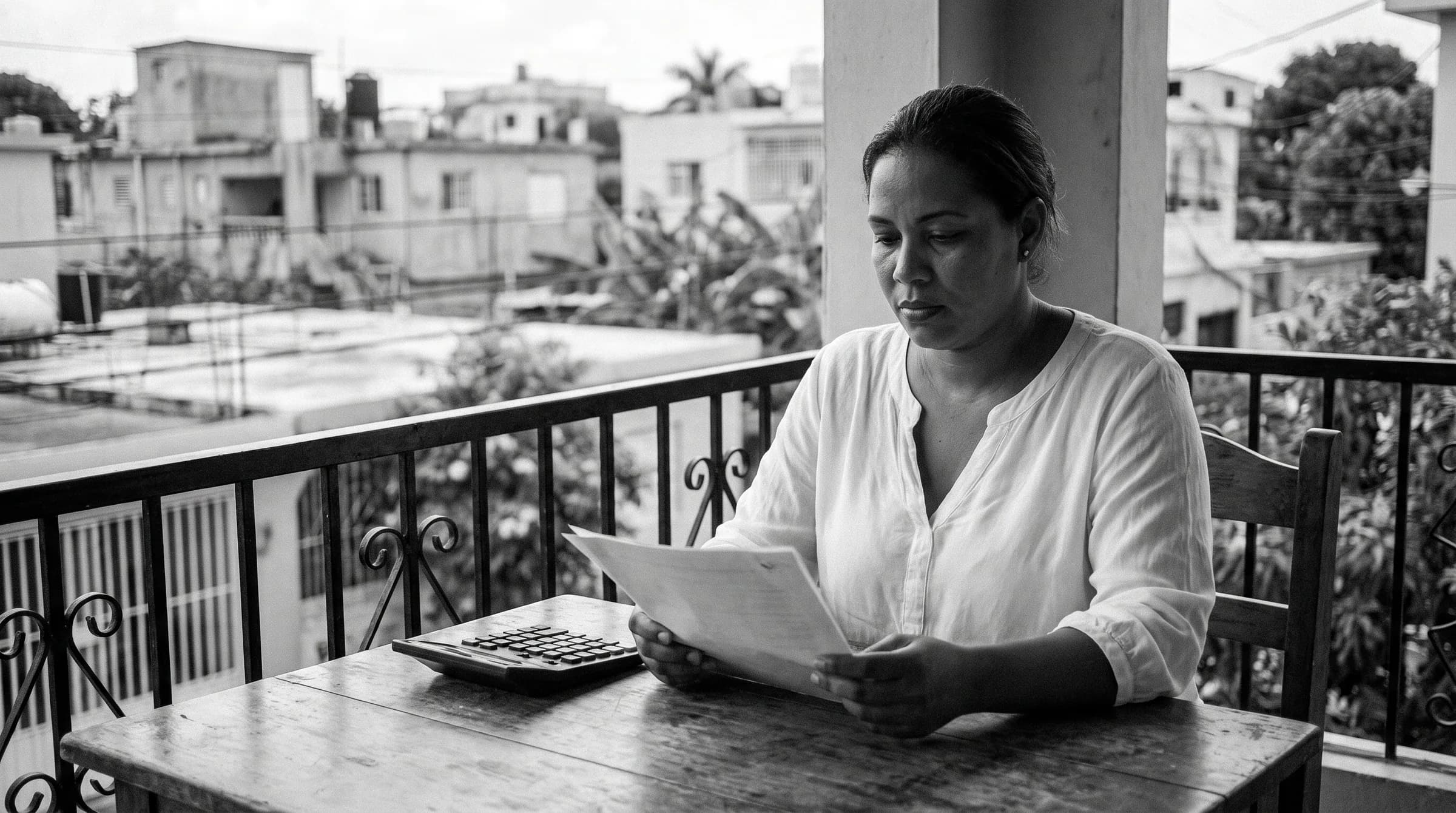
Los 3 errores más caros al calcular tu capacidad de pago en República Dominicana
María había estado mirando casas en Santiago por tres meses. Encontró una perfecta por RD$5.5 millones y se emocionó al ver que la cuota del banco era RD$28,000 mensuales. "Perfecto, gano RD$85,000", pensó. Seis meses después de mudarse, vendió la casa. La cuota sí cabía en su salario, pero no había considerado la cuota de mantenimiento, los seguros, las reparaciones del aire acondicionado y el aumento en electricidad.
Calcular capacidad de pago en República Dominicana va mucho más allá de comparar tu salario con la cuota que te dice el banco. Los compradores primerizos cometen errores que pueden costar decenas de miles de pesos adicionales cada año, o peor aún, los obligan a vender la propiedad por falta de liquidez.
El problema no eres tú. El problema es que el sistema no te explica todo lo que necesitas calcular antes de comprometerte.
Toca Timbre
Propiedades verificadas y agentes certificados. Tú solo decides.
Error #1: Solo mirar la cuota del banco, ignorar el costo real de ser propietario
La mayoría calcula así: "El banco me dice que por RD$4 millones pagaría RD$22,000 al mes. Mi salario es RD$70,000. Sobra plata."
Esa cuenta está incompleta. Ser propietario en República Dominicana incluye:
- Cuotas de condominio: Entre RD$3,000 y RD$15,000 mensuales según el proyecto
- Seguros obligatorios: Vida e incendio, aproximadamente 0.5% del valor anual
- Mantenimiento y reparaciones: Aires acondicionados, plomería, pintura
- Servicios: Aumentos en electricidad, internet, seguridad
- Impuestos: IBI (Impuesto sobre Bienes Inmuebles) anual
Un apartamento de RD$4 millones puede generar gastos adicionales de RD$8,000 a RD$12,000 mensuales. La cuota "real" no son RD$22,000, sino RD$30,000 o más.
Error #2: Usar el salario bruto o comparar con el alquiler actual
 Dos formas comunes de calcular mal:
Primer escenario: "Gano RD$80,000 brutos, el 30% son RD$24,000, puedo pagar esa cuota." Pero los RD$80,000 se vuelven RD$65,000 después de retenciones, seguridad social y pensiones. El 30% de RD$65,000 son RD$19,500, no RD$24,000.
Segundo escenario: "Pago RD$25,000 de renta, puedo asumir una cuota igual." Como inquilino, si se daña el aire acondicionado, llamas al dueño. Como propietario, pagas la reparación de RD$15,000 de tu bolsillo.
Los bancos dominicanos usan como referencia que la cuota hipotecaria no supere el 30-35% de los ingresos netos demostrables. Para una cuota de RD$20,000, necesitas ingresos netos de al menos RD$57,000-RD$67,000.
Calcular capacidad de pago en República Dominicana: el tercer error crítico
El error más costoso: ignorar las deudas actuales al proyectar cuánto puedes pagar.
Los bancos evalúan tu relación deuda-ingresos total. Si ya pagas:
- Tarjeta de crédito: RD$8,000
- Préstamo del carro: RD$12,000
- Préstamo personal: RD$5,000
Total actual: RD$25,000
Con ingresos netos de RD$70,000, ya tienes 36% de endeudamiento. Muchos bancos no aprobarán una hipoteca adicional, aunque individualmente "puedas pagarla".
Compradores se sorprenden cuando el banco les niega el préstamo o les aprueba menos monto del esperado, precisamente por no revisar este cálculo antes.
Cómo calcular tu capacidad real paso a paso
1. Define tu ingreso neto familiar
Suma ingresos mensuales constantes de quienes firmarán el préstamo. Descuenta impuestos, seguridad social y aportes. Solo cuenta ingresos formales que puedas demostrar.
2. Aplica el ratio de endeudamiento
El total de deudas (incluyendo la futura hipoteca) no debe superar 30-35% del ingreso neto. Con RD$70,000 netos, el límite son RD$21,000-RD$24,500.
3. Resta tus deudas actuales
Si ya pagas RD$15,000 en otras deudas, solo tienes RD$6,000-RD$9,500 disponibles para hipoteca. Si el margen es muy pequeño, cancela deudas antes.
4. Suma los costos reales de propiedad
Estima condominio, seguros, mantenimiento y servicios. La pregunta no es "¿puedo pagar RD$20,000 de cuota?" sino "¿puedo pagar RD$20,000 + RD$8,000 de gastos sin desbalancear mi presupuesto?"
5. Calcula el costo de entrada completo
Además de la inicial (20-30% en RD), suma impuestos de transferencia (3%), honorarios notariales, registro de título y comisiones. Para una casa de RD$4 millones necesitas entre RD$920,000 y RD$1,320,000 de entrada total.
6. Simula escenarios difíciles
¿Qué pasa si aumentan los gastos familiares? ¿Si se reduce el ingreso temporalmente? Si el plan solo funciona "en el mejor caso", estás sobreestimando tu capacidad.
El momento de claridad antes de buscar
Con este análisis completo, defines un rango de precio realista antes de abrir Instagram o clasificados. En vez de enamorarte de propiedades fuera de tu alcance, buscas dentro de parámetros que ya validaste con tu presupuesto y con criterios bancarios.
Esta preparación cambia completamente tu experiencia: reduces ansiedad, evitas decepciones y negocias desde una posición informada. El lugar donde empiezas a buscar determina todo lo que viene después.
Si ya tienes claridad sobre tu rango de precio, la app Toca Timbre te permite explorar propiedades filtradas por ubicación y presupuesto, conectándote directamente con agentes por WhatsApp. Es una forma ordenada de iniciar tu búsqueda sin perderte en opciones que no se alinean con tu realidad financiera. Toca Timbre.
Preguntas frecuentes
¿Cuánto debo ganar para comprar una casa de RD$3 millones?
Para una casa de RD$3 millones necesitarías una cuota aproximada de RD$16,000-RD$18,000, más gastos de propiedad (RD$6,000-RD$10,000). Total mensual: RD$22,000-RD$28,000. Aplicando el ratio del 30-35%, necesitas ingresos netos de RD$63,000-RD$93,000 mensuales, sin otras deudas significativas.
¿Qué pasa si ya tengo otras deudas importantes?
Los bancos suman todas tus deudas mensuales y las comparan con tus ingresos. Si ya tienes un alto nivel de endeudamiento, es mejor cancelar algunas deudas antes de solicitar la hipoteca. Esto mejora tu perfil crediticio y aumenta tus opciones de aprobación.
¿Puedo usar ingresos informales o variables para calificar?
Los bancos dominicanos requieren ingresos demostrables: cartas de trabajo, nóminas, estados de cuenta y declaraciones de impuestos. Ingresos informales o muy variables son difíciles de usar como base para una hipoteca. Es mejor formalizar los ingresos antes de aplicar.