5 Key Questions About Eviction Before Buying Your First Home
16 de septiembre de 2026 · 5 min min read
Discover the essential eviction questions every first-time homebuyer should ask to invest with peace of mind in the Dominican Republic.
5 Key Questions About Eviction Before Buying Your First Home
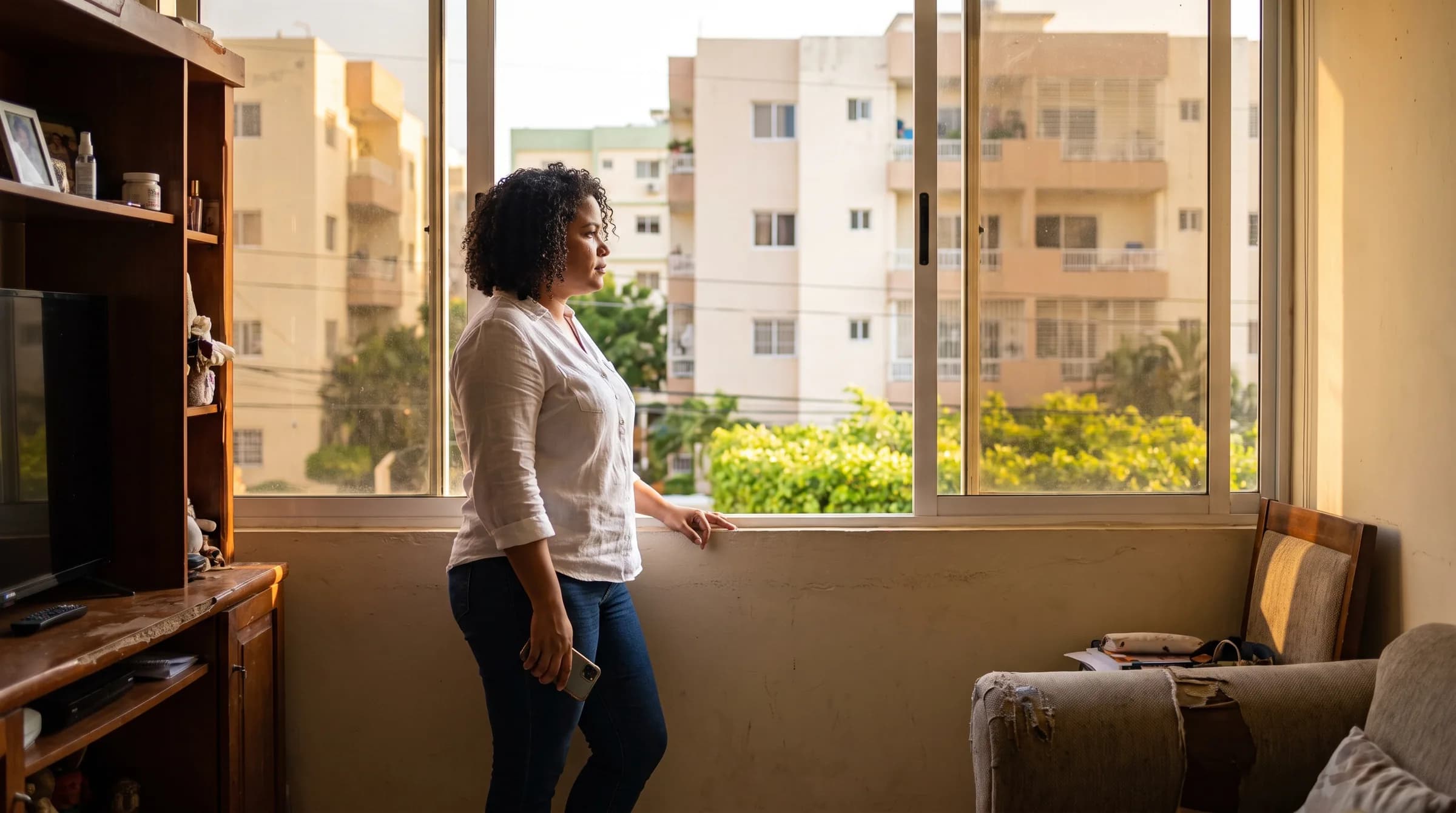
Carla has been viewing apartments in Santo Domingo for three months. Every time she finds one she likes, the same doubt stops her in her tracks: "What if I buy this and then can't get the tenant out?" It's a valid concern, especially when she hears stories of property owners who've spent years trying to recover their properties.
The reality is that the eviction process in the Dominican Republic is more regulated than many buyers believe. The problem isn't a lack of legal tools, but a lack of clarity about how the system works and what questions to ask from the start.
The Myth That Freezes First-Time Buyers
The most common belief is that "if the tenant doesn't pay, you're stuck with nothing you can do for years." This idea comes from extreme cases that were mishandled, not from the legal standard. Actually, Law 85-25 on Rental of Real Estate establishes clear procedures with specific timelines: notice of up to 10 days, a hearing within a maximum of 30 days, and an enforceable ruling even if there are appeals.
Toca Timbre
Propiedades reales. Agentes verificados. Tú decides sin miedo.
But knowing the law isn't enough. What makes the difference is asking the right questions before you sign any purchase documents.
The 5 Questions You Need to Master About Eviction
1. What Type of Occupancy Does the Property Have Today?
This question determines everything that follows. An apartment can have tenants with a formal lease, occupants without documents, or the seller's family living there "temporarily." Each situation involves different procedures and timelines.
If there's a valid rental contract, you need to know when it expires, what kind of notice is required to not renew (90 days for residential, 180 for commercial), and whether deposits are correctly registered with Banco Agrícola as the law requires.
If there's no formal contract, the eviction can be more complex but also more straightforward, since there are no contractual terms to respect.
2. Which Court Would Handle a Potential Eviction?
Not all evictions go to the same court. Cases for non-payment of residential rent are heard in Small Claims Court (Juzgado de Paz), while issues like contract expiration or improper use can go to Court of First Instance (Primera Instancia).
Knowing this lets you calculate costs (attorney fees vary by court) and approximate timelines. A Small Claims Court process is typically faster than First Instance Court.
3. What Are the Legal Maximum Timelines?
Law 85-25 establishes that after notice of non-compliance (maximum 10 days), the judge must schedule a hearing and issue a ruling within no more than 30 days. Then the tenant has at least 15 days to vacate voluntarily before the eviction is executed.
In the best scenario, an eviction for non-payment can be resolved in 2–3 months. In complex cases with appeals, it can extend, but we're not talking about the "years" that many fear.
4. What Is Prohibited for You as a Property Owner?
This is a self-protection question. The law strictly prohibits "self-help" evictions: changing locks, cutting off utilities, removing belongings, or pressuring the tenant to leave.
Doing so can turn you from plaintiff into defendant, with possible criminal penalties. Knowing these restrictions protects you from making costly mistakes out of frustration.
5. What Costs Should I Expect?
An eviction process involves attorney fees (which can range between RD$50,000 and RD$150,000 depending on complexity), costs for court officer acts for notices, and possible execution expenses if public force assistance is required.
You also need to account for months without rent during the process. If you buy an apartment at RD$3,000 monthly and it takes 4 months to recover it, that's an additional RD$12,000 in lost income.
Carla's Real Scenario
Carla found a RD$4.2 million apartment in La Julia with a tenant paying RD$35,000 monthly. The lease expires in 8 months. Before, she would have bought without asking anything about eviction, assuming that "if they pay well, there's no problem."
Now she knows to ask: Does the contract have the clauses required by Law 85-25? Are deposits registered with Banco Agrícola? What notice does she need to give if she doesn't want to renew? Does the tenant have a history of timely payment?
These questions don't guarantee she'll never have problems, but they give her a realistic picture of the risks and let her make an informed decision.
Beyond Fear: A Predictable Process
The eviction system in the Dominican Republic isn't perfect, but it's far more orderly than it appears from the outside. The key is understanding that it's a judicial process with clear rules, not a legal limbo with no way out.
When you master these five questions, eviction stops being a "big fear" and becomes a calculable, manageable risk. The possibility of problems doesn't disappear, but the anxiety of the unknown does.
The difference between a prepared buyer and one paralyzed by fear comes down to asking the right questions from the beginning, with people who handle these issues regularly and can translate legal theory into practical decisions.
If you're starting your property search, consider using tools like Toca Timbre, where you can explore listings posted by verified agents and ask these crucial questions from your first WhatsApp contact. A clear conversation at the beginning can save you months of uncertainty later: Toca Timbre
Frequently Asked Questions
How long does an eviction for non-payment really take?
According to Law 85-25, the formal process can take between 2 and 4 months in uncomplicated cases: 10 days for notice, up to 30 days for a hearing and ruling, and 15 additional days for voluntary vacating. Cases with appeals can extend longer, but the ruling is enforceable from first instance.
Can I buy a property that already has tenants?
Yes, it's perfectly legal and common. The new owner assumes the existing contracts with their original terms and conditions. What's important is verifying that the contracts comply with Law 85-25 and that deposits are correctly registered to avoid future problems.
What happens if the tenant refuses to leave after an eviction ruling?
Once the 15-day voluntary vacating period expires, the judge overseeing execution can authorize public force assistance to carry out the eviction. This is the last legal resort and must always be done with a court order and a court officer present.
Sources
- Law 85-25 on Rental of Real Estate and Eviction — https://phlaw.com/wp-content/uploads/2025/09/Ley-85-25-sobre-Alquileres-de-Bienes-Inmuebles-y-Desahucios-2.pdf
- Practical Guide Law 85-25 — https://www.puntualpago.do/guias/ley-85-25
- Tenant Eviction Dominican Republic Legal Timelines — https://chatleyes.com/articulo/desalojo-inquilinos-republica-dominicana-plazos-legales
- Eviction Process for Non-Payment — https://morillosurielabogados.com/proceso-de-desalojo-de-un-inquilino-por-falta-de-pago/
- Tenant Eviction Upon Lease Termination — https://elnuevodiario.com.do/el-desalojo-del-inquilino-por-la-llegada-del-termino-del-contrato/
- Legal Analysis of Rent Control — https://repositorio.unphu.edu.do/bitstream/handle/123456789/719/An%C3%A1lisis%20Jur%C3%ADdico%20del%20Decreto%204807%20de%201959%20Sobre%20Control%20de%20Alquileres%20y%20Desahucio,%20y%20su%20Inobservancia%20en%20Rep%C3%BAblica%20Dominicana.pdf?sequence=1